The modern NBA locker room after a December loss does not smell like glory. It smells like ice wrap, deep heat rub, and a quiet, radiating exhaustion. If you sit close enough to the training tables, you can hear the exact price a human body pays for being miscast in the wrong theater of war.
Consider a hypothetical forward—let’s call him Marcus. Marcus is six-foot-seven, quick off his feet, and possesses a wingspan that can swallow up passing lanes. For most of his life, he was a giant. But tonight, because the roster is thin and the bruises are piling up, Marcus spent twenty-four minutes pretending to be a center. He spent twenty-four minutes anchored in the paint, trying to deny position to a seven-foot, two-hundred-and-fifty-pound mountain of muscle who treats Marcus's ribs like a speed bag.
By the third quarter, Marcus’s lungs were burning. By the fourth, his jumpshot was flat because his legs had been utterly spent fighting for leverage under the glass.
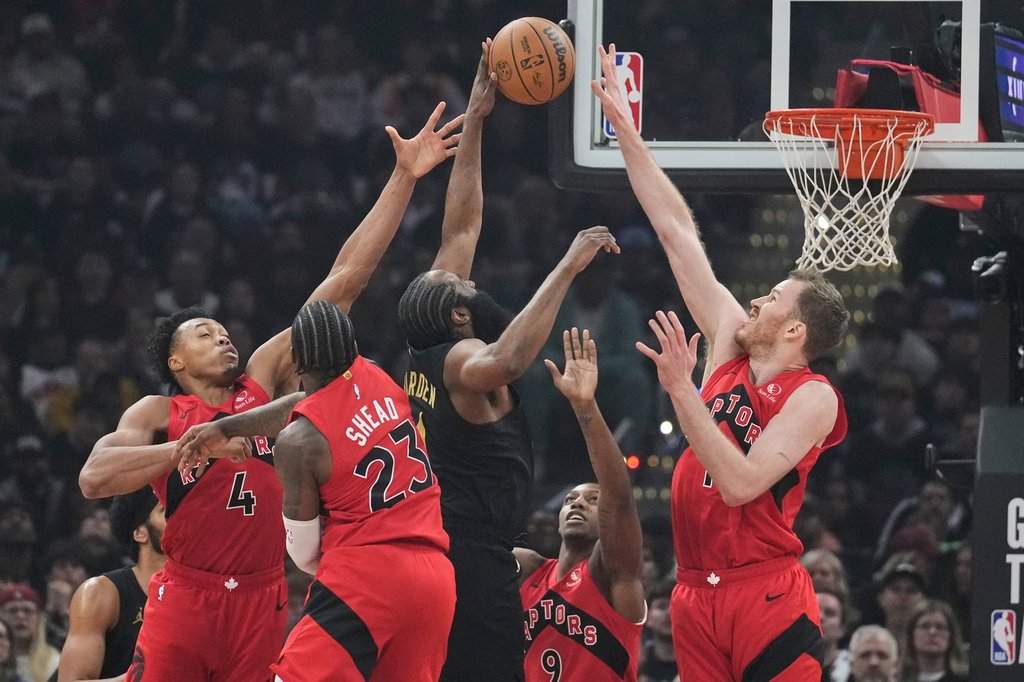
This is the quiet crisis gripping the Toronto Raptors. It is not a crisis of talent, nor is it a crisis of heart. It is a crisis of inches and numbers. When a basketball team lacks genuine size and a reliable secondary line of defense, the tax is extracted directly from the flesh of its remaining stars.
The Mirage of the Versatile Small
For years, basketball theorists fell in love with a beautiful dream: positionless basketball. The idea was seductive. Fill the court with five players who are all six-foot-eight, switch every screen, paralyze opponents with speed, and render the traditional giant obsolete. Toronto even tried to build an entire identity around this theory.
It worked. Until it didn't.
The flaw in the theory is that eighty-two games is a long, grinding winter. Speed burns bright, but mass endures. When you play small, every single defensive possession becomes an exercise in maximum effort. You cannot simply contest a shot; you have to box out someone who outweighs you by forty pounds. You have to scramble, double-team, and sprint to recover.
Watch Scottie Barnes closely during a grueling stretch of games. When he is allowed to play his natural game—roaming like a safety, picking apart defenses with his vision, attacking from the perimeter—he looks like the future of the league. But when the roster thins out, and he is forced to battle true centers in the post because there is simply no one else to do it, the burden changes. You can see it in the slouch of his shoulders during a timeout.
Basketball is a game of skill, but it is also a game of physics. When a smaller player spends the night colliding with a larger one, the kinetic energy has to go somewhere. It goes into the joints. It goes into the lower back.
The Anatomy of the Bench Collapse
Every NBA coach has a secret clock ticking in their head during a game. They know exactly how many minutes their primary stars can handle before their efficiency plummets. In an ideal world, the transition from the starting lineup to the reserves is a smooth passing of the baton. The starters build a lead; the bench maintains the friction.
But when the depth guard is missing, that transition feels less like a baton pass and more like a cliff dive.
Imagine the anxiety of a coaching staff watching a hard-earned six-point lead evaporate in ninety seconds. The starters sit down, their knees instantly wrapped in ice. They look up at the scoreboard. A missed rotation here. A blown defensive rebound there. The opponent goes on an 8-0 run. The head coach paces the sideline, chewing his lip, his eyes darting back to his tired stars on the bench.
Do I put them back in now? It’s only the start of the second quarter.
This pressure creates a toxic feedback loop. Because the bench cannot sustain the defense, the starters are forced back into the game earlier than planned. Their minutes creep up from thirty-two to thirty-eight, then to forty-one. In November, they can survive on adrenaline. By January, the fatigue settles deep into the marrow. By March, the shots start falling short, and the late-game execution crumbles into predictable, stagnant isolation plays.
True depth isn't about finding another twenty-point scorer. It is about insurance. It is about having a trusted veteran or a disciplined specialist who can enter a chaotic environment, commit three hard fouls, grab two tough rebounds, and keep the ship steady for six minutes while the franchise players breathe.
What Happens When the Glass Breaks
There is an old saying in basketball that you don't appreciate a great rebounder until you are forced to play without one.
When a team lacks size, the defensive possession doesn't end when the opponent misses the shot. That is the moment the real panic begins. Without a towering presence to clear the defensive glass, every missed shot becomes a loose-ball scramble. Opponents smell blood. They send three players to the offensive rim, knowing they can out-reach and out-muscle the smaller defenders.
The psychological toll of giving up second-chance points is immense. You play twenty-three seconds of beautiful, synchronized, suffocating defense. You force a contested, fading jumper as the shot clock expires. The ball clangs off the rim.
Then, a taller hand reaches over the crowd, tips the ball back out, and the defense has to start all over again.
It breaks a team's spirit faster than any spectacular dunk ever could. It makes players stop trusting the system. They start leaking out early for fast breaks, or they collapse too deep into the paint, leaving three-point shooters wide open on the perimeter. The entire defensive ecosystem collapses because the team cannot secure the final piece of data: the defensive rebound.
The Strategy Behind the Scarcity
Finding size and depth in the modern NBA is not as simple as scanning a grocery list. Every front office is hunting for the exact same commodity. The seven-foot human beings who can actually run, catch, and defend without being played off the floor by modern spacing are among the rarest biological entities on earth.
The market is unforgiving. If you want a competent big man, you usually have to overpay in trades or draft capital. If you want reliable depth, you have to convince veterans that your city is the place where their careers will be revitalized.
For the Toronto front office, the mandate is clear but incredibly complex. They must balance the development of their young core with the immediate physical protection of that same core. To leave the roster small is to risk the long-term health of the very players you are trying to build around.
The front office must look past the flashy highlights and focus on the unglamorous mechanics of team building. They need the screen-setters. They need the rim-protectors. They need the guys who are willing to do the dirty work in obscurity so that the stars can shine in the spotlight.
The final whistle blows, and the arena clears out, leaving only the hum of the arena lights and the cleaning crews sweeping up discarded cups. In the hallway outside the locker room, Marcus walks slowly toward the team bus, a heavy bag over his shoulder, his gait stiff from the endless collisions near the rim. He will go home, sleep for a few hours, get on a plane, and do it all over again tomorrow night against another giant. He will do it because he has to. But everyone in the organization knows that heroism is not a sustainable roster strategy.