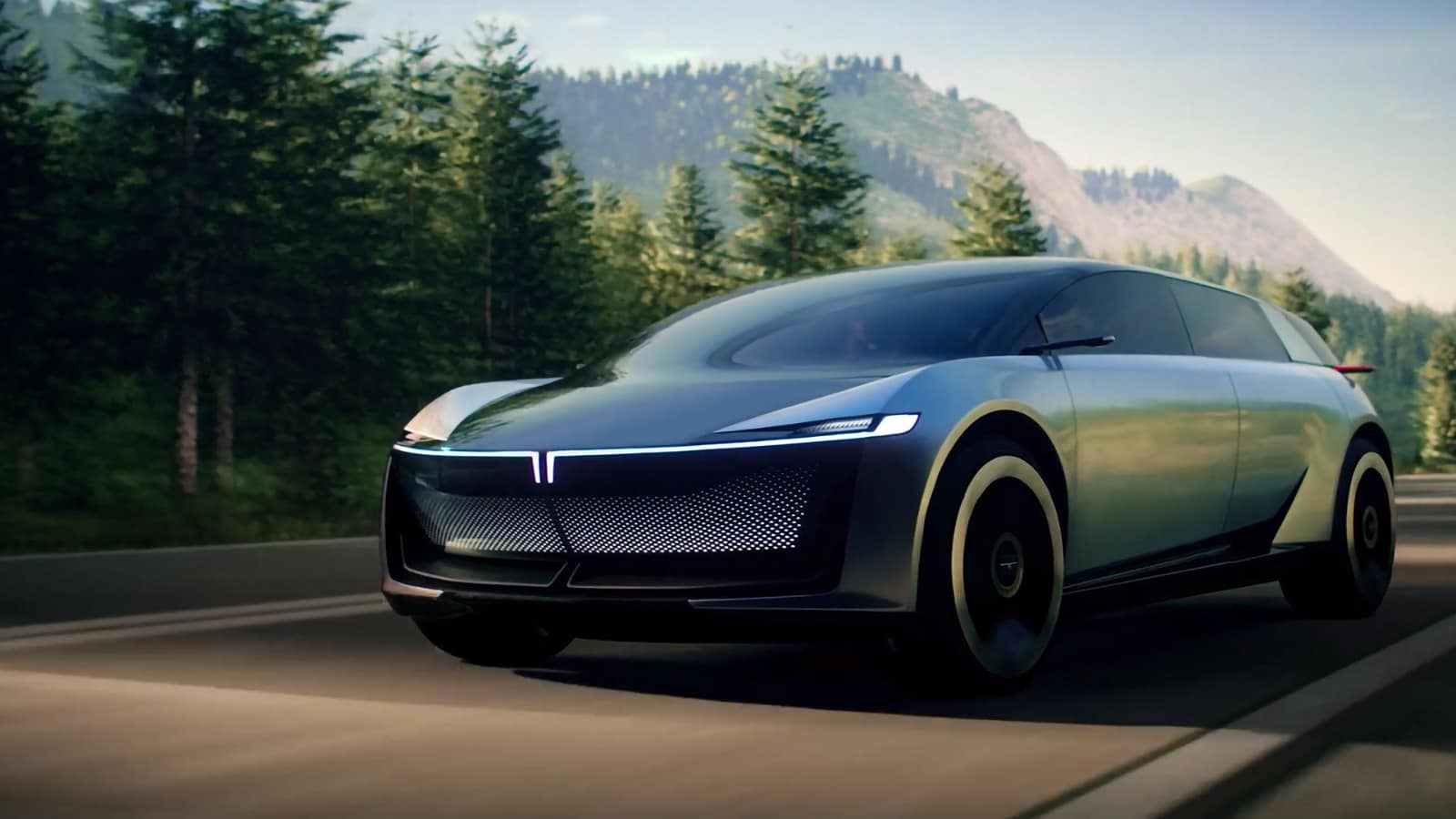
Tata Motors has quietly abandoned its plan to build its flagship Avinya electric vehicle lineup on Jaguar Land Rover's high-end Electrified Modular Architecture. Instead, the Indian automotive giant is pivoting to the Freelander platform, a product of the Chery-Jaguar Land Rover joint venture rooted deeply in China's electric vehicle ecosystem.
The immediate reality is a complete structural reset for India's most ambitious domestic EV project. By dropping JLR's British-engineered EMA platform for a Chinese-engineered architectural backbone, Tata is confronting a harsh economic truth. Ultra-luxury platforms cannot survive on low-volume projections in emerging markets. The shift secures a viable financial future for the Avinya brand, but it also signals a profound admission: to build a globally competitive electric vehicle in the 30-lakh to 40-lakh INR bracket, European engineering is currently too expensive, and China's supply chain is unavoidable. Meanwhile, you can explore other events here: The Illiquidity Panic: Why Partners Group Locking Gating Its Fund is the Best News Private Wealth Has Heard All Year.
The Cost Trap of European Architecture
The original blueprint for Avinya was a masterclass in corporate alignment. Tata Motors intended to borrow JLR's upcoming luxury EV architecture, localized for India, to give the Avinya immediate global credibility. It looked perfect on paper. In practice, the numbers refused to work.
JLR's EMA is a highly sophisticated, low-volume architecture designed for premium global vehicles that command luxury margins. When JLR walked back its broader plans to manufacture EMA-based vehicles at scale within India, Tata Motors was left holding the check. For the Avinya line to absorb the massive capital expenditure of setting up an EMA supply chain alone, it required massive sales volumes that simply do not exist in India's nascent premium EV segment. To explore the bigger picture, check out the detailed report by The Economist.
The math was brutal. Tooling, component sourcing, and structural engineering for a specialized luxury platform require massive economies of scale. Without JLR sharing the localized production burden in India, the bill for Avinya escalated beyond the target price ceiling of 40 lakh INR. Tata could either build an overpriced car that nobody would buy, or find another foundation.
Enter the Chery Alliance
The Freelander platform chosen to rescue the Avinya programme represents a pragmatic detour through China. Developed under the 50:50 joint venture between JLR and Chery Automobile, this architecture relies heavily on Chery's E0X EV platform.
By licensing this ecosystem, Tata avoids years of fundamental research and development. More importantly, it hooks directly into a mature, highly optimized component pipeline.
[Chery E0X Architecture]
       │
       ▼
[Chery-JLR Freelander Platform] ──► [Tata Avinya X (2027 Launch)]
       ▲
       │
[Panapakkam, TN Production Facility]
The engineering advantages of the Freelander platform are significant.
- 800-Volt Architecture: The system supports ultra-fast charging capability, allowing compatible vehicles to accept up to 350 kW of DC fast-charging.
- Powertrain Flexibility: Unlike the EV-only EMA, the Chery-derived platform is highly adaptable. It can accommodate pure battery electric setups, plug-in hybrids, and extended-range electric powertrains.
- Dimensional Scale: The architecture easily underpins vehicles exceeding five meters in length, providing the footprint required for premium SUVs.
This powertrain flexibility offers Tata an insurance policy. While Avinya was introduced as a pure-electric brand, global EV demand has fluctuated, forcing legacy automakers to rethink aggressive all-electric timelines. If pure battery adoption slows in India's premium segments, the Freelander foundation allows Tata to pivot to hybrids or range extenders without junking the entire vehicle development cycle.
Reshuffling the Product Pipeline
The platform swap has upended Tata’s product rollout order. The original Avinya concept, an avant-garde, low-slung sportback crossover known internally as the P1 programme, has been indefinitely shelved. Low-slung profiles do not sell in high-margin segments in India.
Instead, priority has shifted to the P2 programme, a large SUV expected to debut commercially as the Avinya X.
A market launch is targeted for 2027, with engineering prototypes scheduled to hit public roads for testing by late 2026. The change makes sense when looking at consumer behavior. Indian premium buyers overwhelmingly favor the commanding ride height and road presence of an SUV over a sleek sportback. By launching with a high-riding vehicle, Tata aligns its technical pivot with clear market demand. Following the Avinya X, the company is already evaluating a larger three-row luxury SUV designed to challenge full-size global luxury products.
The Software Segregation
Purists may worry that the Avinya will simply become a rebadged Chinese SUV. Tata's engineering teams are working to prevent exactly that by dividing the vehicle's development into distinct mechanical and digital halves.
While the physical chassis, suspension hardpoints, and battery cell sourcing will come from the Chery-JLR ecosystem, the entire electronic architecture is being scrubbed. Tata Motors has deployed its sister entity, Tata Technologies, to completely rewrite the vehicle's software, user interface, and digital network layers. Teams across India, the UK, and China are re-engineering the digital cockpit and connectivity suites from scratch.
The strategy isolates the physical platform from the user-facing technology. The hardware provides the cost efficiency, while Tata's custom software provides the distinct brand identity.
Initial manufacturing will take place at the newly inaugurated manufacturing facility in Panapakkam, Tamil Nadu. The site is designed to handle flexible, multi-brand manufacturing, allowing Tata and JLR to explore joint supplier networks over time. This local ecosystem is expected to expand further as other domestic players seek scale-driven component commonality.
The Multi-Brand Sourcing Reality
Global automotive development has entered an era where corporate pride is consistently sacrificed for cost efficiency. Aston Martin buys its electric powertrains from Lucid. Toyota partners with BYD for electric sedans in Asia. Volkswagen has invested heavily in Xpeng to secure access to competitive EV platforms for the Chinese market.
Tata Motors' decision to use a Chery-developed platform for its premium domestic brand is simply the latest iteration of this macroeconomic reality.
Developing a proprietary, specialized premium EV platform from scratch is a multi-billion-dollar gamble that rarely pays off without guaranteed global volume. By utilizing a shared Sino-British architecture, Tata secures competitive battery pricing—expected to range between 65 kWh and 80 kWh for the initial models—and safeguards its margins. The success of the Avinya brand will no longer depend on whether Tata can out-engineer global luxury brands on hardware, but whether it can deliver a superior ownership experience, sharp software integration, and a premium retail network distinct from its mass-market showrooms. The mechanical foundation is now sorted; the execution of the final product is where the real risk remains.