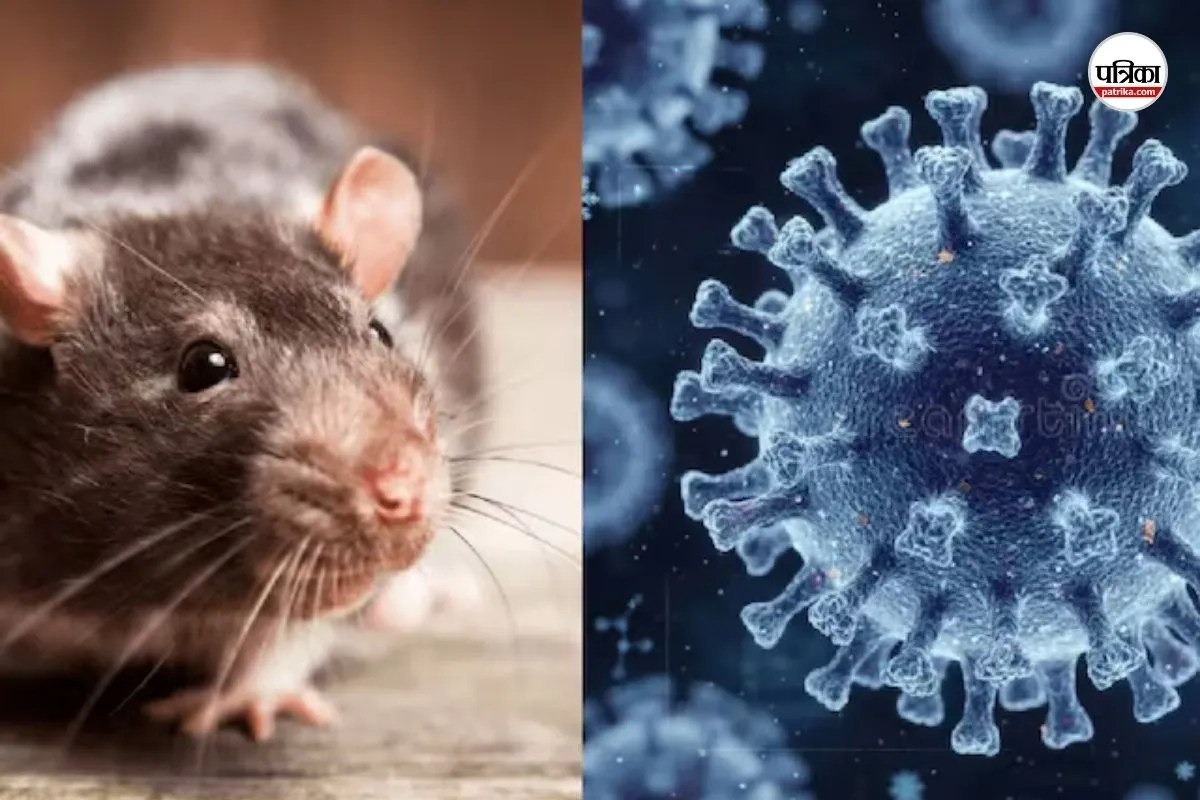
Comparing Hantavirus and Norovirus is not an apples-to-apples exercise in pathology. It is a study in the terrifying trade-off between individual lethality and societal disruption. If you are asking which virus is deadlier, the answer depends entirely on whether you are looking at a single hospital bed or a global economic map. Hantavirus kills at a staggering rate of up to 40%, while Norovirus maintains a fatality rate well below 1%. Yet, Norovirus sickens nearly 700 million people annually, creating a massive footprint of human suffering that Hantavirus, in its current state, cannot match.
The Ghost in the Grain
Hantavirus is the recluse of the viral world. It does not want to be found. It does not spread easily from person to person. Instead, it lingers in the waste of deer mice and other rodents. When a homeowner sweeps out a dusty shed or a hiker disturbs a long-abandoned cabin, the virus becomes airborne. Once inhaled, the clock starts.
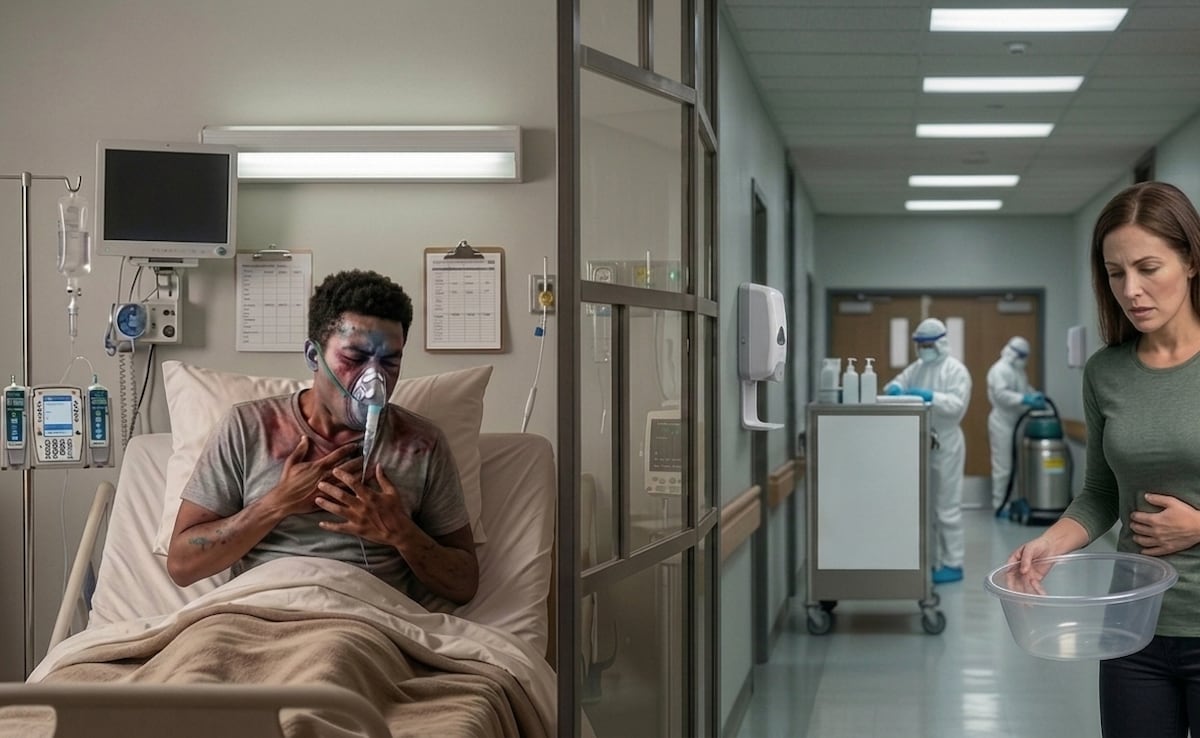
The clinical progression of Hantavirus Pulmonary Syndrome (HPS) reads like a medical horror story. It begins with standard flu symptoms—fatigue, fever, muscle aches—but quickly shifts into a catastrophic failure of the respiratory system. The lungs fill with fluid not because of an external invader, but because the body’s own immune response turns its blood vessels into leaking sieves.
This is the definition of a high-consequence pathogen. In the high-altitude deserts of the American Southwest or the rural stretches of South America, Hantavirus acts with a surgical, lethal precision. It is rare, but when it strikes, the medical establishment is often powerless to do more than provide supportive care. There is no vaccine. There is no "cure" in the traditional sense. You either breathe through the storm, or you do not.
The Great Leveler of Modern Infrastructure
If Hantavirus is a sniper, Norovirus is a carpet bomb. It is the most common cause of acute gastroenteritis worldwide. Its "deadliness" is often dismissed because most healthy adults in developed nations survive a bout with nothing more than a ruined weekend and a deep resentment for the last meal they ate.
However, looking at the raw mortality percentages ignores the sheer volume of the assault. Because Norovirus is incredibly stable—it can survive freezing, heat up to 60°C, and many common disinfectants—it moves through populations with frightening efficiency. It requires as few as 18 viral particles to cause an infection. To put that in perspective, a single gram of feces from an infected person can contain billions of those particles.
In environments where people are confined—nursing homes, cruise ships, military barracks, and hospitals—Norovirus becomes a killer. For the elderly or the immunocompromised, the rapid dehydration caused by projectile vomiting and diarrhea is not a nuisance. It is a terminal event. In the developing world, where clean water is a luxury, Norovirus contributes to a staggering number of childhood deaths every year. It kills by volume, not by potency.
The Economics of Infection
We often measure the "danger" of a virus by how many bodies it leaves behind, but a veteran analyst looks at the systemic damage.
Hantavirus is a tragedy for the individual and the family. It creates localized panics and prompts public health warnings about rodent control. But it does not shut down cities. It does not collapse supply chains. Its biological requirement for a specific animal host keeps it on a short leash.
Norovirus, conversely, is a persistent drain on global productivity. Estimates suggest the virus costs the world roughly $60 billion annually in healthcare costs and lost productivity. When a Norovirus outbreak hits a hospital, it can force the closure of entire wards, delaying life-saving surgeries for patients who don't even have the virus. It is a secondary killer, a force multiplier for chaos.
Why Biology Favors the Weak
Evolutionary biology suggests that a "perfect" virus is one that doesn't kill its host too quickly. If a pathogen drops its victim in 48 hours, it has a very narrow window to jump to the next person. This is why Hantavirus remains a relatively rare, sporadic threat. It is almost too lethal for its own good. It burns through its human hosts so violently that it hits a dead end.
Norovirus has mastered the art of the "just sick enough" strategy. By keeping the host alive and mobile (at least initially), it ensures that the infected individual continues to touch doorknobs, prepare food, and move through public spaces. It utilizes our social nature against us.
The Diagnostic Gap
A major factor in the lethality of these two viruses is how we identify them.
- Hantavirus is frequently misdiagnosed in its early stages as a common cold or the flu. By the time the "leakage" phase begins and the patient cannot breathe, the damage to the pulmonary tissue is often irreversible.
- Norovirus is often underreported. People assume "food poisoning" and stay home. This leads to a massive gap in data, where the actual number of deaths—particularly those categorized as general "renal failure" or "dehydration" in the elderly—might actually be caused by an underlying Norovirus infection.
The Architecture of Risk
We live in an era of encroaching boundaries. As human development pushes further into wilderness areas, the frequency of "spillover" events from rodents carrying Hantavirus increases. We are essentially walking into the virus's living room.
Simultaneously, our hyper-connected logistics and mass-production of food mean that a single contaminated batch of leafy greens or shellfish can distribute Norovirus across three continents in less than 72 hours. We have built a world that is perfectly optimized for a low-mortality, high-contagion pathogen.
Survival is Not a Guarantee
While we talk about "lethality" in broad strokes, the reality on the ground is changing. Climate change is shifting the habitats of the rodents that carry Hantavirus, bringing them into closer contact with urban fringes. Meanwhile, the emergence of new Norovirus strains—GII.4 genotypes—shows a virus that is constantly evolving to bypass the temporary immunity humans develop after an infection.
The danger of Hantavirus lies in its terrifying individual outcome; if you catch it, you are effectively flipping a coin with your life. The danger of Norovirus lies in its ubiquity; it is so common that we have grown complacent, ignoring the fact that for the vulnerable, "the stomach flu" is a death sentence.
Focusing on which virus is "worse" misses the point of modern biosurveillance. One is a nightmare of personal tragedy, the other a structural failure of public sanitation and global health. Both represent the limits of modern medicine’s ability to control the invisible world.
Clean your surfaces with bleach, keep the rodents out of your attic, and understand that in the world of virology, the most dangerous enemy isn't always the one that kills the fastest. It is often the one that stays with us the longest.