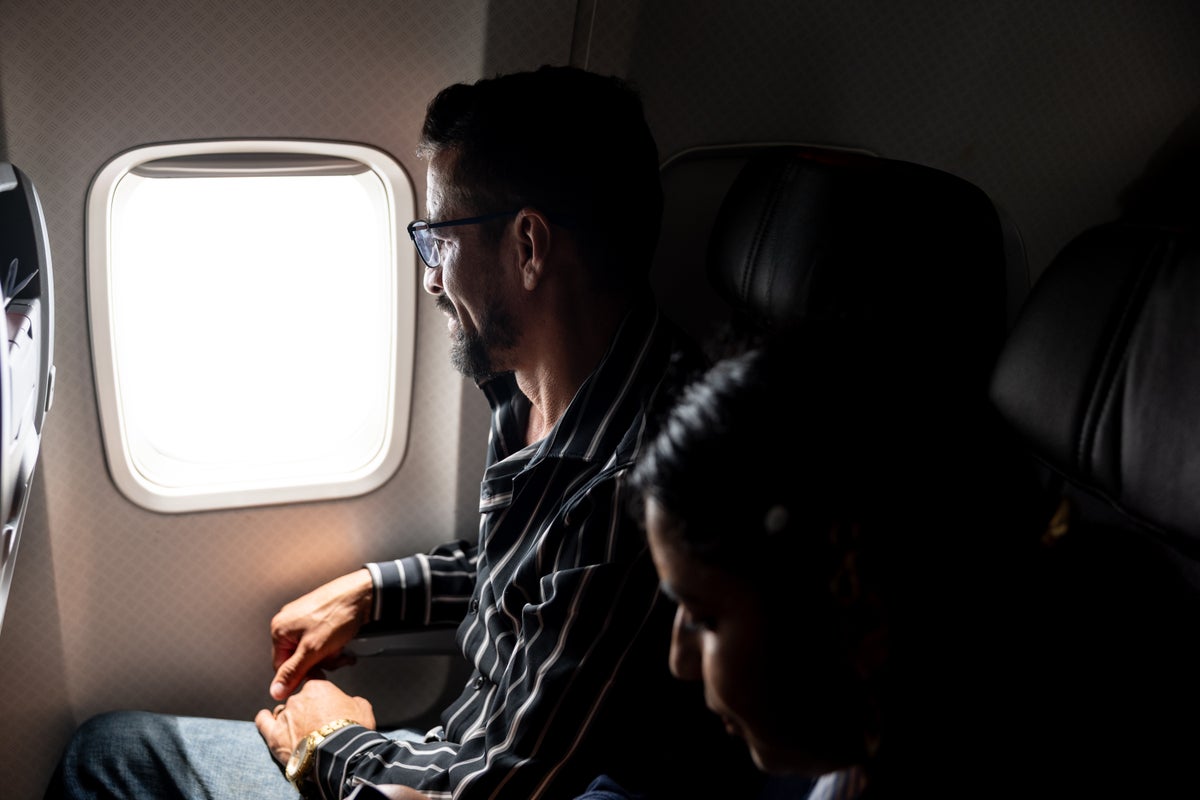
Airlines are quietly attempting to rewrite the literal definition of aviation terms to protect their bottom lines against consumer protection lawsuits. When a passenger pays extra for a window seat, common sense dictates they should be able to look outside. However, major carriers like United Airlines have recently argued in legal proceedings that a window seat merely refers to a specific zone in the aircraft cabin row rather than a guaranteed view of the sky. This semantic shifting is part of a broader industry strategy to maximize auxiliary fee revenue while insulating corporations from breach-of-contract claims when operational realities fail to match consumer expectations.
The friction point lies in the physical layout of modern commercial aircraft. Fuselage frames, air conditioning ducts, and structural supports mean that seats must occasionally align with blank cabin walls. For decades, passengers accepted the occasional missing window as a stroke of bad luck. Today, with airlines unbundling every single component of the travel experience and charging premium fees for specific row assignments, that bad luck has turned into a financial flashpoint.
The Fine Print Economy of Modern Aviation
Aviation pricing has shifted fundamentally over the last fifteen years. Carriers realized they could artificially depress base fares to look competitive on search engines while clawing back profitability through ancillary fees. The seat map became a digital real estate board.
When you select a seat online, the interface presents a clear grid. Window, middle, aisle. The software frequently attaches a premium price tag to the window option, branding it as a preferred location. The consumer believes they are purchasing a specific utility, which is a view and a wall to lean against. The airline, legally speaking, views the transaction as the reservation of a specific coordinate on a grid.
This distinction is crucial. In courtrooms and regulatory filings, corporate lawyers rely heavily on the Contract of Carriage. This is the dense legal document every passenger agrees to when purchasing a ticket. These contracts are meticulously designed to promise almost nothing beyond transportation from point A to point B within a reasonable timeframe. They explicitly state that seat assignments are not guaranteed and are subject to change due to equipment swaps, safety requirements, or operational needs. By extending this logic to argue that a window seat does not inherently require a window, airlines are attempting to create a legal shield against class-action lawsuits targeting deceptive marketing practices.
Structural Realities Meet Marketing Realities
Aircraft are built for structural integrity and thermodynamic efficiency, not for seat map symmetry. The Boeing 737 and Airbus A320 families, the workhorses of domestic fleets, feature sections where window alignment is impossible. Air conditioning risers run up the sides of the fuselage, completely blocking out specific window ports.
When airlines order these jets, they dictate the cabin configuration. To maximize revenue, carriers have consistently reduced seat pitch, which is the distance from one seat headrest to the next. As rows are squeezed closer together to fit more passengers on board, the alignment between the pre-existing physical windows and the newly compressed rows breaks down entirely.
- The Squeeze Factor: Dropping average domestic seat pitch from 34 inches down to 30 inches over two decades completely disrupted row-to-window synchronization.
- The Structural Blanks: Every commercial aircraft has dead zones where structural mandates override passenger comfort.
- The Software Disconnect: Booking engines rarely integrate accurate fuselage schematics, leaving passengers to buy blind.
Independent websites have attempted to fill this information gap for years by crowdsourcing seat maps to warn travelers about windowless window seats. Yet, the commercial carriers themselves refuse to integrate this data into their own booking flows. Doing so would immediately tank the conversion rate for those specific seats or force the airline to discount them. Instead, the industry relies on the ambiguity of the purchase phase and fall back on legal definitions if a passenger complains to customer service.
The Regulatory Vacuum and Consumer Recourse
Passengers often assume the Department of Transportation will step in to police these definitions. The regulatory reality is far more complicated. The Department of Transportation focuses heavily on systemic delays, refunds for canceled flights, and accessibility compliance. It historically avoids dictating the precise dictionary definitions of cabin real estate unless a clear case of systemic fraud can be proven.
This leaves the consumer in a weak position. A passenger who pays thirty dollars extra for a window seat only to stare at a plastic panel for four hours has very little formal leverage. Small claims court is too expensive and time-consuming for the average traveler. Credit card chargebacks are risky, as airlines have been known to ban passengers or freeze frequent flyer accounts if a charge is disputed maliciously.
The defense mounted by airlines hinges on the concept of zoning. In their view, a cabin row is divided into distinct structural zones. The window zone provides the benefit of no adjacent passenger on one side and a surface to rest a pillow against. The airline argues that these physical attributes exist regardless of whether glass is present. It is a sterile, hyper-technical interpretation of a consumer product that ignores human psychology and historical context.
The Operational Shell Game
The problem worsens during involuntary equipment changes. An airline might sell a flight operated by a specific model of aircraft where row 12 has perfect window alignment. Due to mechanical issues, a different variant of the aircraft is swapped in at the last minute. Suddenly, row 12 aligns perfectly with a blank structural column.
Under current industry standards, the airline considers its contract fulfilled because the passenger remained in the chosen row number and the chosen letter designation. The loss of the view is framed as an unavoidable operational variable rather than a failure to deliver a paid product.
This environment persists because the financial penalties for the airlines are virtually non-existent. The revenue generated by unbundled seat fees vastly outweighs the cost of occasional customer service vouchers handed out to disappointed travelers. Until federal regulations mandate that seat maps explicitly disclose obstructed views during the selection process, carriers will continue to exploit the legal gray area between a seat location and a seat view. Travelers must treat the airline seat map not as a literal representation of the aircraft, but as a marketing interface designed to extract maximum capital for minimal guaranteed infrastructure.