A Collin County jury is entering a McKinney, Texas, deliberation room to decide whether a fatal confrontation under a rainy athletic tent constitutes first-degree murder or a tragic act of self-defense. Karmelo Anthony, 19, faces up to life in prison for the April 2025 stabbing death of 17-year-old Austin Metcalf at David Kuykendall Stadium in Frisco. The state contends Anthony baited an unsuspecting rival into a physical altercation before launching a calculated sneak attack. The defense argues a terrified, physically outmatched teenager made a split-second decision to protect himself from imminent harm.
Beneath the legal maneuvering lies a more complex reality that standard court reporting routinely overlooks. This case is not just about a sudden flash of suburban violence. It exposes a volatile mix of school hyper-competitiveness, rigid territorial subcultures, a controversial jury selection process, and the immediate, destructive weaponization of a local tragedy by national internet commentators.
The Battle of the Tent
The physical layout of high school track meets is highly specific. When thunderstorms and torrential downpours delayed the 11-5A district championship event, students scrambled for shelter. In these massive, multi-school events, a team tent serves as a de facto locker room and sacred ground.
Testimony from Frisco Memorial High School track coach Robert Starr emphasized that a tent marks a program's domain. Athletes do not cross those lines uninvited.
On that morning, Anthony, an athlete from Frisco Centennial High School, entered the Memorial High School tent to escape the rain. His own school lacked a tent.
Witnesses testified that Anthony sat down with a backpack on his lap, isolated and unprompted. What followed was a two-minute war of words. Student athletes under the tent told the jury they asked Anthony to leave more than ten times, escalating from polite requests to firm demands.
The state presented this sequence as evidence of intentional provocation. According to student accounts, Metcalf stepped forward and told Anthony he needed to move.
Anthony allegedly kept his hands inside his backpack, looked up, and delivered a chilling warning.
"Touch me and see what happens."
Moments later, Metcalf shoved Anthony with both hands on his shoulders. Anthony immediately produced a five-inch folding knife, thrusting it directly into Metcalf’s chest. The blade pierced the junior linebacker's heart.
Fear Versus Predation
The defense strategy centered entirely on the stark physical disparity between the two teenagers and the intense panic of the moment.
Attorney Mike Howard detailed the mechanics of the confrontation to the jury, presenting a picture of physical intimidation. Metcalf and his twin brother, Hunter, were varsity football players standing 6 feet 1 inch tall and weighing over 210 pounds. Anthony stood 5 feet 8 inches and weighed a mere 130 pounds.
From the defense perspective, Anthony was a small teenager cornered by much larger, hostile athletes in an enclosed space. Self-defense requires a reasonable apprehension of bodily harm, and Howard argued that waiting any longer to act in a chaotic environment would have left Anthony defenseless.
The prosecution countered this narrative by leaning heavily on grainy stadium surveillance footage and Anthony's own immediate statements. First Assistant District Attorney Bill Wirskye argued that a person cannot claim self-defense when they deliberately engineer the confrontation.
The state’s timeline shows Anthony knowingly entered a rival team's space, issued a violent ultimatum, and waited for the predictable physical response.
The aftermath of the stabbing provided some of the trial's most raw moments. Frisco School Resource Officer Eduardo Cortez testified that upon being detained, Anthony explicitly rejected the word "alleged."
"I did it," Anthony told the officer, according to body-camera footage played for the jury. "He put his hands on me. I told him not to."
While the defense characterized these statements as the panicked utterances of a distraught kid who realized the gravity of his actions, prosecutors presented them as a cold, matter-of-fact confession from someone who believed his twisted code of respect justified homicide.
The Battle Over the Jury Box
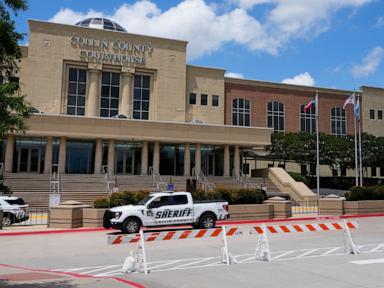
Beyond the facts of the stabbing, the trial triggered intense scrutiny during jury selection, putting Collin County’s judicial process under a national microscope.
Anthony is Black. Metcalf was white. Almost immediately after the incident, external groups and social media accounts attempted to frame the tragedy through a lens of racial warfare, despite explicit pleas from Metcalf’s father, Jeff Metcalf, to stop exploiting his son's death for political points.
The racial tension peaked when the final panel of 12 jurors and six alternates was seated. Not a single juror was Black.
The defense filed a formal Batson challenge, a legal maneuver asserting that the state used its preemptive strikes to systematically exclude Black prospective jurors based on race. The prosecution denied the allegation, countering that the three specific individuals were struck because they worked in traditional education.
Because the crime occurred at a high school event and involved student witnesses, the state argued that traditional educators might carry inherent biases regarding school safety and student discipline.
Judge John Roach Jr. accepted the state's explanation and overruled the defense challenge. While legally resolved inside the courtroom, the decision sparked public protests outside the McKinney courthouse, highlighting a deep societal distrust that the trial could not insulate itself against.
The Myth of Sudden Suburban Violence
Suburban communities like Frisco like to view these incidents as aberrations, lightning strikes of violence that disrupt an otherwise pristine landscape of top-tier schools and manicured athletic complexes.
The evidence suggests otherwise. The escalation from an argument over a nylon tent to a fatal stabbing requires a preexisting cultural foundation where minor perceived slights are met with lethal force.
Anthony did not buy a knife after arriving at the stadium. He arrived at a school-sanctioned athletic event with a five-inch folding weapon already tucked into his backpack.
The trial revealed a tragic intersection of adolescent bravado, tribal team loyalty, and the catastrophic availability of weapons. When young men are taught that backing down is a fate worse than physical violence, a routine dispute over a seating arrangement becomes a fatal trap.
The jury's decision will not bring back Austin Metcalf, nor will it repair the devastation dealt to two local families. It will simply determine whether the state of Texas views a fatal reaction to a schoolyard shove as an act of survival or a act of murder.