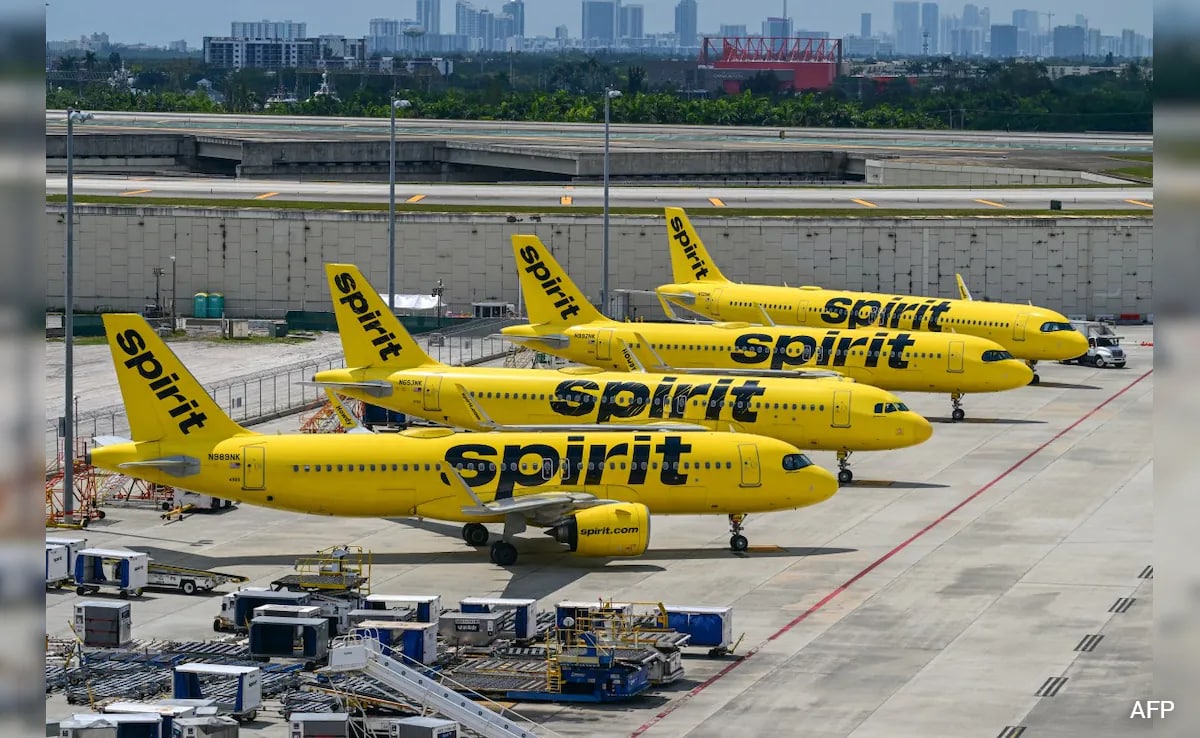
The collapse of a major airline is rarely a quiet affair, and Spirit Airlines’ spiral toward bankruptcy or total liquidation has triggered a predatory frenzy disguised as corporate altruism. Major carriers like United, American, and Delta have rolled out "rescue fares" for passengers stranded by Spirit’s shrinking route map. While these programs look like a lifeline for the budget traveler, they are actually a calculated play to seize market share and permanently reset the pricing floor of the American sky.
Legacy carriers aren't doing this out of the goodness of their hearts. They are vultures circling a dying beast, ensuring that when the yellow planes finally stop flying, the customer base has nowhere to go but toward their own "Basic Economy" tiers.
The Anatomy of a Rescue Fare
A rescue fare is a specialized, short-term discount offered to passengers who hold confirmed tickets on an airline that has ceased operations or canceled flights due to financial distress. In the current Spirit situation, these fares typically require proof of a Spirit booking and offer a last-minute seat at a price far below the standard walk-up rate.
It is a clever PR move. It paints the giant, often-maligned legacy carriers as the heroes of the story. However, the mechanics are strictly clinical. Airlines track Spirit’s most profitable routes—specifically "leisure heavy" corridors like Fort Lauderdale to New York or Las Vegas to Los Angeles—and deploy these fares specifically to capture those flyers before they look at a bus or a train.
The goal is simple: habituation.
Why Spirit Hit the Wall
Spirit didn't just stumble; it was pushed by a combination of regulatory interference and a fundamental shift in how Americans want to fly. The blocked merger with JetBlue was the beginning of the end. When the Department of Justice stepped in to "protect competition," they inadvertently signed Spirit’s death warrant. By preventing the merger, the government left Spirit with a massive debt load and no clear path to scale.
Then came the engine trouble.
Dozens of Spirit’s Airbus A320neo aircraft were grounded due to issues with Pratt & Whitney engines. An airline that can't fly its planes can't make money. Meanwhile, the legacy carriers were busy perfecting their own "unbundled" products. Delta and United realized they could beat Spirit at its own game by offering a seat with no baggage and no seat selection, but with the added reliability of a global network.
The Mirage of Competition
The irony of the "rescue" is that it signals the death of the very thing that kept prices low for twenty years. The Ultra Low-Cost Carrier (ULCC) model forced the big three to keep their prices in check. Without Spirit or a weakened Frontier to keep them honest, those "rescue fares" will eventually evaporate, replaced by a new, higher baseline.
We are entering an era of consolidation by attrition. Instead of buying Spirit, the big airlines are simply waiting for it to dissolve, then picking up the pieces—gate by gate, pilot by pilot, and passenger by passenger—without having to take on Spirit's debt or union headaches.
The Hidden Cost to the Flyer
If you are a traveler holding a Spirit ticket, the rescue fare is a temporary win. You get to your destination. You might even get a better seat. But you are also participating in the narrowing of your own future options.
Data shows that in markets where a budget carrier exits, fares typically rise by 15% to 30% within eighteen months. The legacy carriers use sophisticated algorithms to identify when a competitor's capacity has left a market. They don't just fill the void; they optimize the profit margin of that void.
What You Should Do If Your Flight Is Canceled
- Keep Your Confirmation Number: Most rescue fares require the original PNR (Passenger Name Record) from the failing airline.
- Act Within 72 Hours: These offers are usually time-sensitive and disappear once the initial wave of stranded passengers is absorbed.
- Check Credit Card Protections: If you booked with a premium card, you likely have trip cancellation insurance that covers the price difference of a new ticket, regardless of whether a "rescue" fare is available.
- Demand a Cash Refund: Under US Department of Transportation rules, if an airline cancels your flight for any reason—including bankruptcy—you are entitled to a cash refund, not just a voucher. Get your money back from Spirit before the bankruptcy courts lock the coffers.
The Infrastructure Pivot
The real battle isn't over the seats, but the gates. At airports like Orlando (MCO) and Las Vegas (LAS), Spirit holds prime real estate. The rescue fares are a way for legacy airlines to demonstrate "need" to airport authorities. By showing they are the ones carrying the Spirit load, they make a stronger case for taking over those gates permanently.
This is a land grab in the sky.
The aviation industry has always been a cycle of boom, bust, and consolidation. We saw it with Eastern, Pan Am, and TWA. The difference now is that the "disruptors" are the ones being disrupted. The model of flying people for $29 plus the price of a soda is proving unsustainable in an era of high labor costs and expensive fuel.
The Fate of the Budget Traveler
The demise of Spirit doesn't mean the end of cheap flights, but it does mean the end of the reliable cheap flight. We are moving toward a tiered system where "cheap" means flying at 5:00 AM on a Tuesday with nothing but the clothes on your back.
The rescue fares offered today are the sugar-coating on a very bitter pill for the American consumer. Once the yellow tail fins disappear from the tarmac, the leverage shifts entirely back to the boardrooms in Chicago, Atlanta, and Dallas. They aren't saving you; they are onboarding you.
Watch the ticket prices six months from now in cities where Spirit was once the dominant player. That is where the real story will be told, written in the fine print of a fare hike that no rescue package can fix. Take the cheap seat while it exists, but don't mistake a tactical business maneuver for a helping hand.