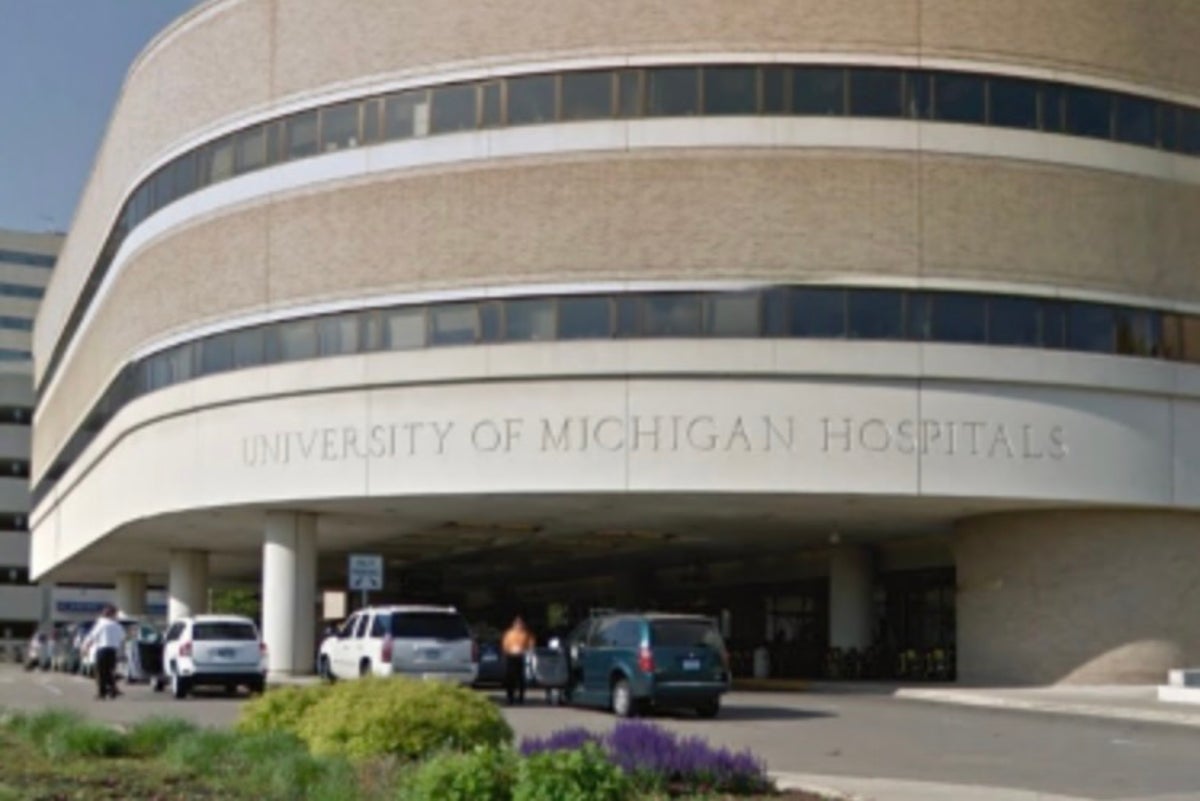
More than 200,000 Michigan residents are currently caught in the crosshairs of a high-stakes financial war between a major regional hospital system and one of the state's dominant insurers. As the contract deadline expires, patients face the very real prospect of losing "in-network" access to their primary care doctors, specialists, and emergency facilities. This is not a simple administrative disagreement; it is a cold calculation of market leverage where the patient's continuity of care is the primary hostage.
The standoff centers on reimbursement rates—the amount of money an insurance company pays a hospital for every stitch, scan, and stay. The hospital system argues that inflation and labor costs have made their current contract unsustainable. The insurer counters that the hospital’s demands are excessive and would force a spike in premiums for every other member in the state. While both sides trade barbs through press releases and slickly produced "patient awareness" websites, the underlying mechanics of the American healthcare industry suggest this crisis was entirely predictable.
The Calculated Math of Medical Ultimatums
Contract disputes in healthcare follow a scripted choreography. For months, negotiators meet in quiet boardrooms, trading spreadsheets that represent millions of dollars in potential revenue or savings. When those talks fail, the "public pressure" phase begins. This is where we are now. By alerting 200,000 people that their heart surgeon or pediatrician may soon be out of reach, both parties hope the ensuing public outcry will force the other side to blink.
It is a game of chicken played with human lives.
Hospital systems in Michigan, like many across the Rust Belt, are grappling with a post-pandemic reality of depleted margins. They point to the rising cost of nursing staff and the soaring price of medical supplies as proof that they need a significant "bump" in rates. They aren't just looking to cover costs; they are looking to protect their ability to expand and compete in an increasingly consolidated market.
On the other side, the insurer holds a different kind of power. If they give in to every hospital's demand for double-digit increases, they lose their competitive edge in the employer-sponsored insurance market. Businesses in Michigan—from small shops to manufacturing giants—cannot afford to see their healthcare overhead jump by 15% in a single year. The insurer positions itself as the "defender of the premium," even if that defense leaves 200,000 people without a local hospital.
The Ghost of Consolidation
We arrived at this point because of two decades of aggressive hospital mergers. When small, independent community hospitals are swallowed by larger systems, the resulting entity gains massive bargaining power. They can tell an insurer, "If you don't pay our price for Hospital A, we will pull all twenty of our facilities from your network."
This creates a monopoly-like environment where the consumer has no choice. In many Michigan counties, there is only one major health system within a thirty-mile radius. If that system goes out of network, the "choice" for a patient is to either pay exorbitant out-of-network rates or drive an hour for basic care.
Insurers have responded to this consolidation by becoming equally massive. They use their enormous member bases as a weapon. They essentially tell the hospital, "If you don't accept our rates, you lose 200,000 customers overnight. Can your balance sheet survive that kind of volume drop?"
This is why these disputes go down to the final hour. Both sides are waiting to see who is more terrified of the financial ruin that follows a "dark" period where no contract exists.
The Hidden Cost of the Extension Game
Often, these standoffs result in a "midnight deal" or a short-term extension. While this provides temporary relief for the patient, it rarely solves the structural problem. Instead, it creates a cycle of uncertainty.
When a contract is only extended by sixty or ninety days, patients are left in a state of medical limbo. They hesitate to schedule elective surgeries. They delay preventative screenings because they aren't sure if the follow-up care will be covered. This "deferred care" has its own cost—both in terms of patient health outcomes and the eventual price of treating a condition that was allowed to worsen during the dispute.
Furthermore, these "wins" for either side are usually passed directly to the consumer. If the hospital gets its way, the insurer will raise premiums next year to recoup the loss. If the insurer wins, the hospital may cut "unprofitable" services like mental health clinics or rural outreach programs to balance the books. The patient loses in both scenarios.
Why the No Surprises Act Isn't a Total Safety Net
Many patients believe that recent federal legislation, specifically the No Surprises Act, will protect them if their hospital goes out of network. This is a dangerous misconception.
The No Surprises Act is primarily designed to protect patients from "balance billing" in emergency situations or when they unknowingly receive care from an out-of-network provider at an in-network facility. It does not force an insurer and a hospital to agree on a long-term contract for elective care, routine check-ups, or ongoing specialist visits.
If the Michigan standoff isn't resolved, a patient with a scheduled knee replacement or an ongoing oncology treatment plan may still find themselves facing thousands of dollars in uncovered costs. The law provides a shield, but it isn't a permanent home for medical care.
The Regional Economic Fallout
The ripple effects of a 200,000-person healthcare disruption extend beyond the clinic walls. Large employers in the region use health benefits as a primary tool for talent retention. If a major local employer’s insurance plan suddenly loses the city's largest hospital, that employer faces a workforce crisis.
Employees don't just complain; they start looking for jobs with companies that offer plans with better hospital access. This forces local businesses to jump into the fray, often putting pressure on local politicians and the state insurance commissioner to intervene.
However, state regulators have limited power in these private contract disputes. They can monitor for "network adequacy"—ensuring the insurer has enough doctors to theoretically serve its members—but they cannot force one private company to pay another private company a specific price for a chest X-ray.
Redefining the Patient as a Product
In this environment, the patient is no longer the customer. They are the product being sold. The hospital sells the patient’s "needs" to the insurer, and the insurer sells the patient’s "access" back to the employer.
This commodification of care is what makes these standoffs so clinical and detached. The executives in these negotiations aren't looking at patient charts; they are looking at actuarial tables and EBITDA projections. The 200,000 people at risk are simply a data point on a slide deck titled "Market Share Vulnerability."
The Reality of Out of Network Status
If the deadline passes without a signature, the practical reality for a Michigan family is chaotic:
- Emergency Care: You can still go to the ER, but the subsequent inpatient stay might trigger a billing nightmare.
- Continuity of Care: Pregnant women in their third trimester or patients in active cancer treatment can often apply for a grace period, but the paperwork is dense and approval is not guaranteed.
- The Search for New Doctors: Thousands of people will flood the phone lines of the remaining in-network doctors, leading to months-long wait times for simple appointments.
The Myth of the Fair Price
There is no such thing as a "fair price" in healthcare because the market is not transparent. One hospital might charge $1,200 for an MRI while the one ten miles away charges $4,000 for the exact same scan. Insurers pay different rates to different hospitals for the exact same procedure based entirely on who has more leverage in that specific zip code.
This Michigan standoff is a symptom of a system that lacks a "check" on price escalation other than total service termination. Until there is a fundamental shift in how hospital pricing is regulated or how insurance networks are structured, these 200,000-patient crises will become a seasonal occurrence across the country.
The Michigan standoff is a warning shot. It reveals a system where the "safety net" is held together by nothing more than a temporary, fragile contract between two corporations that prioritize their own survival over the stability of the community they serve.
Patients must stop waiting for a miracle and start demanding transparency in the negotiation process. They need to know what is being asked and what is being offered long before the 11th hour. Without that transparency, the residents of Michigan remain nothing more than bargaining chips in a game where the house—either the insurer or the hospital—always wins in the end.
Check your provider’s status today. Do not wait for the "network change" letter to arrive in your mailbox, because by then, the boardrooms will have already decided your medical future.