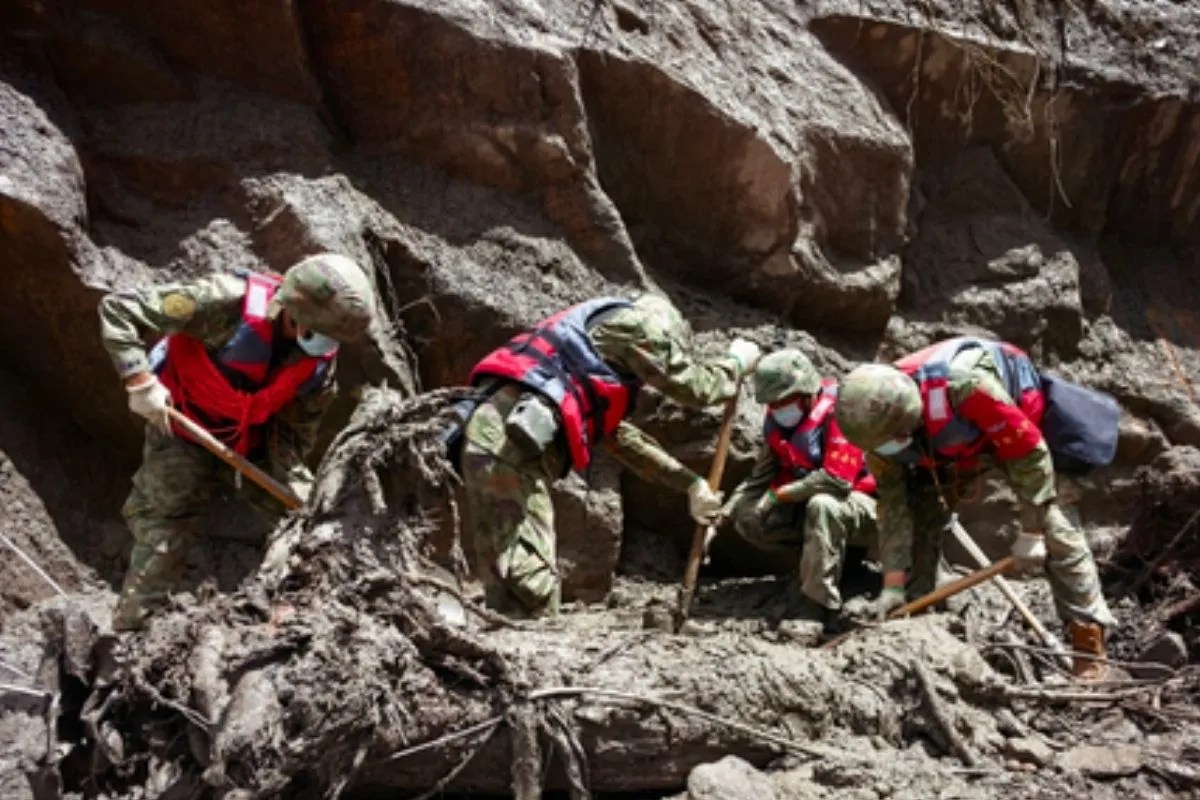
On the morning of August 26, 2026, a catastrophic wall of water triggered by a suspected glacier collapse obliterated the Gyirong Port crossing between Tibet and Nepal. In Nepal, the horror is public and documented, with over 600 confirmed dead and thousands missing. But on the Chinese-controlled side of the border, the disaster has been systematically erased. The Chinese Communist Party is frantically scrubbing the internet of all visual evidence, deleting WeChat survivor videos, and banning the accounts of those pleading for rescue. This algorithmic blackout is not standard operational secrecy. It is the direct weaponization of a massive, pre-existing digital crackdown designed to mask a staggering humanitarian failure under the guise of an internet cleanup.
To understand the scale of the cover-up, one must first look at the scale of the destruction. The precipitating geological event occurred near Langtang Lirung in the Himalayas. Geomorphologists hypothesize that a collapsed portion of an unnamed glacier, measuring some 610 meters in width, fell thousands of feet. The sheer velocity and friction of the impact melted the ice instantly. This resulted in a magnitude 5.2 tremor detected by global seismometers, immediately followed by a massive displacement of the river valley below. If you enjoyed this post, you should read: this related article.
Seven minutes after the tremor, the resulting debris flow hit the Gyirong Port complex. This is the primary gateway for trade and tourism between China and Nepal. In a matter of seconds, it ceased to exist.
The Seven Minute Warning
A single piece of video evidence managed to escape the Chinese internet before the digital iron curtain slammed down. It shows a mammoth wall of floodwater swallowing the immigration center at Gyirong Port as hundreds of people run frantically for their lives. That footage went viral globally. Inside Tibet, however, Beijing’s censors eradicated it in the blink of an eye. State television has only allowed a single, carefully selected frame of the footage to be broadcast. For another perspective on this development, see the recent update from TIME.
This was the opening move in a masterclass of informational suppression. Several smaller, state-run Chinese media outlets initially published interviews with witnesses and secured footage of the devastated settlements housing thousands of locals. Within hours, those articles were taken offline.
The vacuum left behind was quickly filled by desperate citizens turning to social platforms. Victims began uploading clips of the destruction and pleading for rescue on WeChat. The state's response was swift and merciless. Accounts posting disaster footage were not merely censored; they were permanently banned. Human Rights Watch has long noted that Tibetans are subjected to mandatory phone apps equipped with built-in government surveillance, making the tracking and silencing of these individuals a matter of automated routine. People drowning in mud were effectively silenced by an algorithm before the water even receded.
The Mathematics of Denial
The starkest evidence of Beijing's manipulation lies in the official casualty figures. A disaster of this magnitude does not respect international borders.
In Nepal, a country that has allowed journalists to freely move through the disaster zones of Rasuwa, Nuwakot, and Dhading, the toll is apocalyptic. Authorities confirm at least 626 people dead, nearly 1,500 injured, and close to 2,000 missing.
Across the border in Gyirong County, where the topography and exposure to the Trishuli River are virtually identical, Chinese authorities claim a miraculously different reality. As of Friday, state media reported exactly seven fatalities.
They do, however, admit to 554 people missing. Among that number are 260 foreigners. The disparity between seven confirmed dead and over five hundred missing is a statistical absurdity designed to delay domestic outrage. The foreign element deeply complicates Beijing's usual containment strategy. With hundreds of tourists from 34 different countries—including Indian nationals, Americans, Ukrainians, Malaysians, and Australians—caught in the regional devastation, international pressure for transparency is mounting. Foreign embassies are scrambling to locate their citizens, while Chinese traffic authorities have preemptively closed all arterial roads into Gyirong County for a minimum of seven days.
No independent journalists can verify the ground truth. Foreign press cannot enter Tibet without explicit government permission. The blackout is absolute.
The Shadow of the Qinglang Campaign
Why was the Chinese censorship apparatus able to react with such unprecedented speed to a sudden natural disaster? The answer lies in a political initiative launched exactly ten weeks earlier.
On June 18, 2026, the Central Cyberspace Affairs Commission initiated a three-month campaign titled "Qinglang: Rectifying the Chaos in Account Name Information". Ostensibly framed by state media like Xinhua and CCTV as a consumer-protection measure against scams and "identity disguise," the Qinglang drive operates as a blunt instrument for political control.
In the heavily surveilled Tibetan regions, this campaign was already running at maximum capacity when the floods hit. Tibetan netizens were already facing widespread platform discrimination. Livestreaming in the Tibetan language on platforms like Douyin and Kuaishou frequently resulted in warnings or outright bans. Accounts posting images of traditional Tibetan clothing or discussing environmental concerns were being aggressively suspended under the guise of removing "negative energy". Furthermore, China's new Ethnic Unity and Progress Law, implemented on July 1, tightened these restrictions even further.
When the Trishuli River overflowed, the CCP did not have to build a new censorship framework to hide the catastrophe. They simply fed a new set of keywords into the existing Qinglang machinery. The infrastructure designed to erase Tibetan cultural expression was seamlessly pivoted to erase Tibetan flood victims.
Staging the Rescue Reality
With the organic reality of the disaster wiped from the public record, the state broadcaster was free to construct a more palatable narrative.
While global headlines focused on the monstrous flash floods and the staggering death toll in Nepal, China’s main news bulletin on Friday opened with a completely different priority. The lead story was the publication of President Xi Jinping’s new book, a curated selection of his "most important and fundamental works".
When the state media finally addressed the floods, the coverage was exclusively focused on performative heroism. Viewers were shown dramatic footage of specialist search teams scaling mountains and crossing raging rivers to reach the hardest-hit regions. Xi Jinping personally chaired a meeting to direct the rescue work, dispatching Premier Li Qiang to visit the impacted area and demanding that all efforts be made to search for missing persons.
What remains entirely absent from these broadcasts is the aftermath. There are zero interviews with survivors. There are no specific details regarding which villages have been completely washed away. There is no platform for the families of the victims to share their grief or coordinate aid. The state controls both the disaster and the salvation, rendering the actual victims invisible participants in their own tragedy.
The Border Where the Bodies Wash Away
The physical reality of a natural disaster eventually overpowers digital containment. The CCP can ban WeChat accounts and delete videos of drowning citizens, but they cannot censor the river itself.
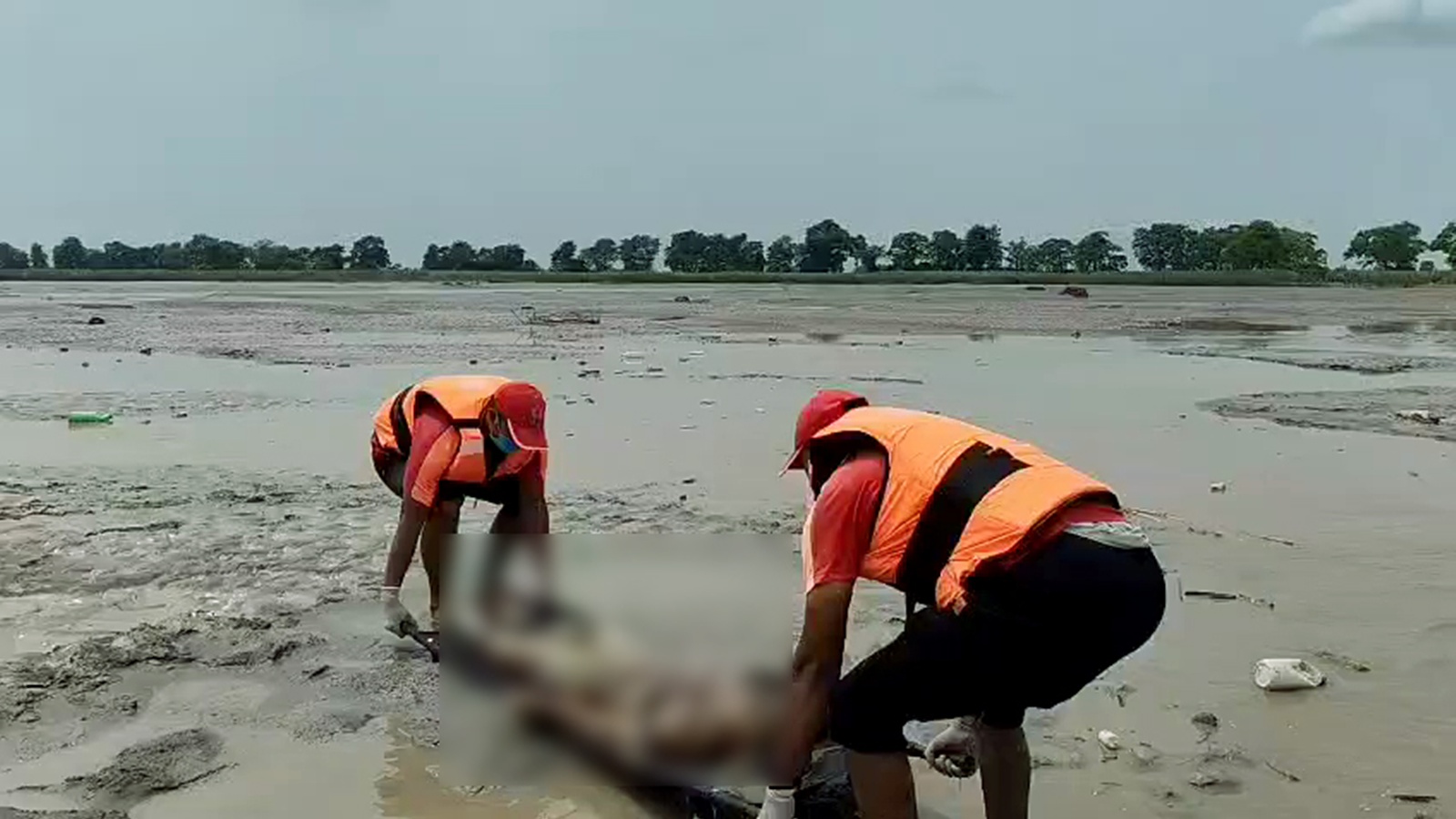
The volume and ferocity of the August 26 debris flow was so immense that it did not simply destroy settlements; it geographically relocated the victims. The floodwaters carried bodies up to 240 kilometers away.
While the digital space in Tibet remains immaculately curated by the state, the physical evidence of their failure is floating across international lines. Recovered bodies are washing up as far downstream as the Nawalparasi District in Nepal, and crossing into the Maharajganj and Kushinagar districts of Uttar Pradesh, India.
Families inside Tibet are staring at disabled cellular networks and frozen social media accounts, waiting for answers the state refuses to provide. They are locked inside a system that views unapproved grief as a threat to public order. While Beijing officially counts seven dead to preserve the illusion of invulnerability, the true toll is being tallied by neighboring countries pulling the disappeared from the water.