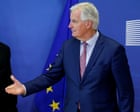
The UK could legally bypass the euro if it ever applied to rejoin the European Union, yet Brussels would strictly enforce the return of free movement as a non-negotiable price of admission. That is the stark reality laid bare by veterans of the Brexit negotiations, stripping away years of political wishful thinking on both sides of the Channel. While Westminster politicians frequently debate whether Britain could reclaim its old bespoke opt-outs, the legal architecture of the European treaties tells a far less forgiving story.
Understanding this trade-off requires looking past domestic campaign slogans and examining how European accession actually works. When a country applies to join the EU under Article 49 of the Treaty on European Union, it does not get to pick and choose from a menu of past privileges. The bespoke opt-outs Britain once enjoyed—covering the single currency, the Schengen passport-free zone, and certain justice protocols—evaporated the moment the UK left the bloc in January 2020. Those concessions were hard-won anomalies negotiated over decades by governments that still held a veto inside the room. An external applicant holds no such cards.
Yet the distinction between the single currency and the free movement of people reveals how Brussels separates technical compliance from ideological bedrock. One is a macroeconomic benchmark that can be indefinitely delayed; the other is the foundational pillar of the entire European project.
The Euro Loophole That Brussels Quietly Tolerates
On paper, every new member state is legally obligated to adopt the euro once it meets specific economic criteria. There is no permanent opt-out available to newcomers, because the Maastricht Treaty binds all subsequent entrants to eventual monetary union. If you read the strict letter of European law, a rejoining Britain would have to commit to replacing the pound sterling.
Reality operates differently. To adopt the euro, a country must meet the convergence criteria, which govern inflation rates, public debt, budget deficits, and exchange rate stability. Crucially, one of those requirements is spending at least two years inside the Exchange Rate Mechanism II (ERM II), the waiting room for the single currency.
Joining ERM II is entirely voluntary.
Sweden has exploited this exact procedural gap since joining the EU in 1995. Despite having no formal opt-out, Stockholm has simply declined to enter ERM II, effectively keeping the Swedish krona indefinitely without triggering legal infringement proceedings from the European Commission. Poland, Hungary, and the Czech Republic sit in similar holding patterns. Brussels tolerates this arrangement because forcing an unwilling, major economy into a currency union creates systemic financial risk for the entire eurozone. A hypothetical British application would almost certainly follow the Swedish precedent—offering a nominal commitment to the euro in principle while avoiding the mechanism required to make it happen in practice.
Why Free Movement Remains the Red Line
If the euro is a flexible commitment, free movement is an immovable wall. During the Brexit negotiations, British ministers repeatedly attempted to separate access to the single market from the free movement of labor, arguing that goods and capital should flow freely without the accompanying migration rights. Brussels rejected that premise every single time, and its stance has only hardened since.
The European Union views the Four Freedoms—goods, capital, services, and people—as an indivisible legal ecosystem. Allowing a major European economy like Britain to cherry-pick tariff-free trade while restricting EU citizens from living and working in the UK would dismantle the internal cohesion of the bloc. If Britain got a pass on free movement, smaller member states in Central and Eastern Europe would immediately question why they must accept Western competition in their domestic markets without the reciprocal right for their citizens to seek higher wages abroad.
For former top Brexit negotiators, this is the point where domestic British politics collides with European institutional survival. Any UK government seeking full membership—or even deep single-market integration—would have to pass legislation restoring the right of hundreds of millions of EU citizens to settle in Britain without a visa. In a political environment where net migration figures dominate front pages and topple prime ministers, no major British party has shown the appetite to champion that policy.
The Myth of the Bespoke Deal
A persistent illusion in Westminster is that Britain’s sheer economic size, military weight, and intelligence capabilities would compel Brussels to invent a custom-made associate membership. Proponents of this view argue that the EU needs British security guarantees and financial markets too much to insist on standard accession rules.
History suggests the exact opposite. The European Union is a rules-based legal order, not a transactional marketplace. During the Article 50 withdrawal talks, the EU27 maintained remarkable unity precisely because every member state understood that giving the UK a better deal outside the club than inside would trigger an existential crisis. That logic applies with double force to a potential return.
Consider what a rejoining process would actually entail:
- Unanimous ratification: Every single one of the 27 member states would have to approve the UK's accession treaty, giving countries like Spain—which holds long-standing grievances over Gibraltar—or France immense leverage to extract bilateral concessions.
- Budgetary contributions: Britain would lose its famous budget rebate, originally secured by Margaret Thatcher in 1984, instantly making the UK one of the largest net contributors to the EU budget without its historical discount.
- Regulatory alignment: The UK would have to reverse years of post-Brexit regulatory divergence across financial services, agriculture, environmental standards, and state aid rules before accession talks could even conclude.
- Schengen pressure: While Ireland maintains a Common Travel Area with the UK that complicates Schengen entry, Brussels would still push hard for closer border alignment than Britain ever accepted during its previous membership.
None of these hurdles are insurmountable on a technical level, yet together they represent a political mountain that would consume multiple parliamentary terms.
The Structural Trap Facing Westminster
This brings the debate down to an uncomfortable strategic reality for British policymakers. Right now, the UK sits in an awkward middle ground—too large to be a passive rule-taker like Norway, yet too intertwined with European supply chains to thrive in complete isolation. Attempting to incrementally soften Brexit through veterinary agreements, youth mobility schemes, and security pacts offers modest economic relief without reopening the constitutional wounds of 2016.
However, incrementalism has a hard ceiling. Youth mobility schemes—which allow young people aged 18 to 30 to live and work across borders for a limited period—are routinely treated by British political leaders as a Trojan horse for full free movement. Brussels, meanwhile, views those exact schemes as a basic baseline for friendly neighbors, not a major concession. When the two sides cannot even agree on temporary visas for students and young workers, talk of rejoining the single market or the EU itself borders on fantasy.
What Rejoining Actually Demands
Strip away the rhetoric from Brussels and Westminster, and the terms of any future British return are entirely transparent. The European Union is not going to rewrite its foundational treaties to soothe British domestic anxieties. If the United Kingdom ever decides it wants back inside the room where European rules are made, it can keep the pound in its pocket, quietly shelve the euro indefinitely, and rely on the Swedish precedent to satisfy the lawyers in Brussels.
In exchange, Britain would have to open its borders to European workers once again, pay full price into the central budget, and accept the jurisdiction of the European Court of Justice without a single opt-out to cushion the blow. Until a British prime minister is willing to stand at the dispatch box and defend the return of free movement to the electorate, the door to Brussels remains locked from the inside.