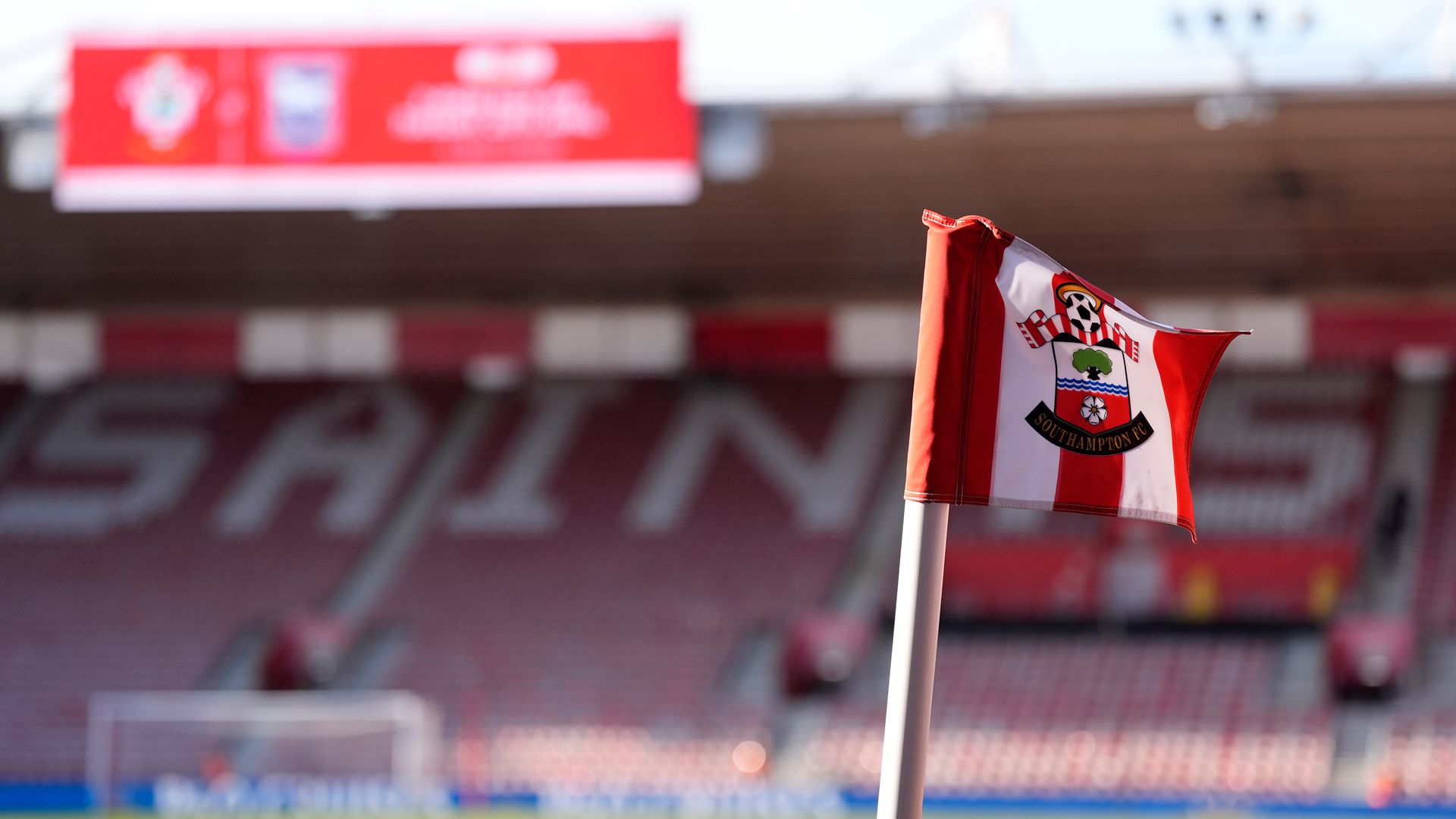
Southampton Football Club faces heavy scrutiny and formal charges following allegations that the club monitored a closed-door Middlesbrough training session. This breach of conduct, often dismissed as gamesmanship, strikes at the heart of the Football Association’s integrity rules. While the headlines focus on the immediate charge, the underlying reality reveals a desperate scramble for tactical advantages in a multi-billion pound promotion race. The English Football League (EFL) must now decide if this was an isolated lapse in judgment or a symptom of a wider, more predatory culture of surveillance within professional football.
Modern football is a game of marginal gains. Every set-piece routine, every tactical shift, and every injury update carries immense financial weight. When a club is accused of peeking behind the curtain, it isn't just about "seeing" a lineup. It is about devaluing the weeks of preparation an opponent has invested in secrecy.
The High Cost of the Hidden Camera
The allegations suggest that Southampton representatives were positioned to observe Middlesbrough’s tactical drills ahead of their competitive fixture. This is not the first time the sport has wrestled with the ethics of the "eye in the sky." We saw a similar explosion of controversy with Leeds United during the Marcelo Bielsa era. However, the context has shifted. In a landscape where data analysts can track a player's heartbeat from three miles away, the physical act of sending a scout to hide in a bush or a nearby building feels both primitive and remarkably bold.
The charge revolves around a breach of Section 3 of the EFL regulations, which demands that clubs behave toward one another with the "utmost good faith." It is a vague term that acts as a catch-all for behavior that the rulebook didn't specifically anticipate. When you send someone to record or observe a private session, you are not acting in good faith. You are attempting to rig the result before the whistle even blows.
Middlesbrough’s staff reportedly identified the individual and raised the alarm immediately. This led to a formal complaint and a subsequent investigation that has culminated in the current charges. The fallout for Southampton could range from a significant fine to a points deduction, though the latter remains a rare and extreme measure.
Beyond the Bielsa Precedent
When Marcelo Bielsa admitted to spying on every opponent during the 2018-2019 season, he argued that it was a common practice in South America and didn't actually provide a decisive advantage because the information was already available through rigorous analysis. The EFL disagreed, hitting Leeds with a £200,000 fine.
The Southampton case is different because it happens in an era of heightened security and clear warnings. Following the Leeds incident, the EFL introduced a specific rule prohibiting clubs from viewing opposition training sessions in the 72 hours before a match. Southampton cannot claim ignorance of the rules. If the charges are proven, the club has ignored a clear directive designed to maintain a level playing field.
This isn't just about a guy with a pair of binoculars. It represents a failure of leadership at the institutional level. Whether this was a "rogue" staff member or an authorized mission is irrelevant under the principle of vicarious liability. The club is responsible for the actions of its employees. If a culture exists where staff feel they must resort to espionage to secure a win, that pressure comes from the top down.
The Tactical Information War
What does a spy actually see? They see the specific movements of the back four. They see who is taking the penalties. Most importantly, they see who is limping.
If Middlesbrough were planning a specific pressing trigger to exploit a Southampton weakness, that entire strategy is neutralized the moment Southampton knows it is coming. The "why" is simple: survival. For a club like Southampton, aiming for a return to the Premier League, the difference between an automatic promotion spot and the playoffs is worth roughly £100 million. In that context, a £200,000 fine is just the cost of doing business.
Why Technical Surveillance is Harder to Stop
The industry has moved beyond the "man in a tracksuit" model. We are seeing reports of drones being used at various levels of the game. Some clubs have even invested in anti-drone technology to sweep the skies above their training grounds.
- Drones: Hard to track, easy to deploy, and capable of high-definition recording from a distance.
- Neighboring Property: Training grounds located near residential areas or public footpaths are notoriously difficult to secure.
- Digital Leaks: Sometimes the "spy" is an internal staff member or a disgruntled player leaking tactics via encrypted messaging apps.
Southampton’s alleged blunder was getting caught in person. It suggests a lack of sophistication that is almost as embarrassing as the ethical breach itself. In a world of high-tech espionage, getting caught standing on a ladder or sitting in a car with a notepad is a spectacular failure of tradecraft.
The Integrity Crisis Facing the EFL
The EFL is in a difficult position. If they issue a slap on the wrist, they effectively legalize spying for any club wealthy enough to pay the fine. If they deduct points, they risk altering the outcome of the league based on off-field antics, which usually triggers a wave of legal challenges.
The "good faith" clause is the only thing keeping the league from turning into a cold war. If every club decides that the rules are merely suggestions, the sporting merit of the competition evaporates. Fans pay to see a contest of skill and strategy, not a contest of who has the better private investigator.
Middlesbrough manager Michael Carrick has been vocal about the sanctity of the training ground. For coaches, the training pitch is a laboratory. It is the one place where they can fail, experiment, and refine without the eyes of the world watching. When that space is violated, the professional trust between managers is broken.
The Ripple Effect on Recruitment
This scandal also impacts how staff move between clubs. There is already a high level of paranoia regarding "gardening leave" for analysts and coaches. If a club is known to engage in these tactics, other teams will be even more hesitant to share information or engage in collaborative projects. It creates a siloed, hostile environment that hurts the development of the English game as a whole.
The pressure on Southampton manager Russell Martin is also mounting. While there is no direct evidence currently linking him to the instruction, the head coach is always the primary beneficiary of such intel. He has to answer the questions, face the cameras, and deal with the "Spygate" labels that will follow his team for the rest of the campaign.
Rebuilding Trust in the Championship
The immediate step for Southampton must be a transparent internal audit. They need to identify exactly who authorized the surveillance and ensure it never happens again. Simply denying the charges or fighting them on a technicality will only prolong the reputational damage.
For the EFL, the solution might involve more than just fines. They need to consider mandatory "integrity officers" or standardized security protocols for all training grounds. The current system relies too heavily on a gentleman’s agreement that clearly no longer exists.
The obsession with winning at all costs has led football to a dark place. When a club feels the need to lurk in the shadows of an opponent's training ground, they aren't showing their strength; they are exposing their fear.
Southampton’s defense will likely focus on the intent of the individual involved, but the league must look at the impact on the competition. The message needs to be loud and clear: the pitch is for the players, the training ground is for the coaches, and the scouts should stay in the stands where they belong. The integrity of the game isn't a luxury; it is the product. Without it, the results on the scoreboard are meaningless.
As the investigation moves into its final phase, the eyes of the footballing world are not on the training pitch, but on the boardroom where the verdict will be delivered. The sport cannot afford to let this become the new normal. If the price of a win is your reputation, you've already lost the game. Stop looking over the fence and start looking in the mirror.