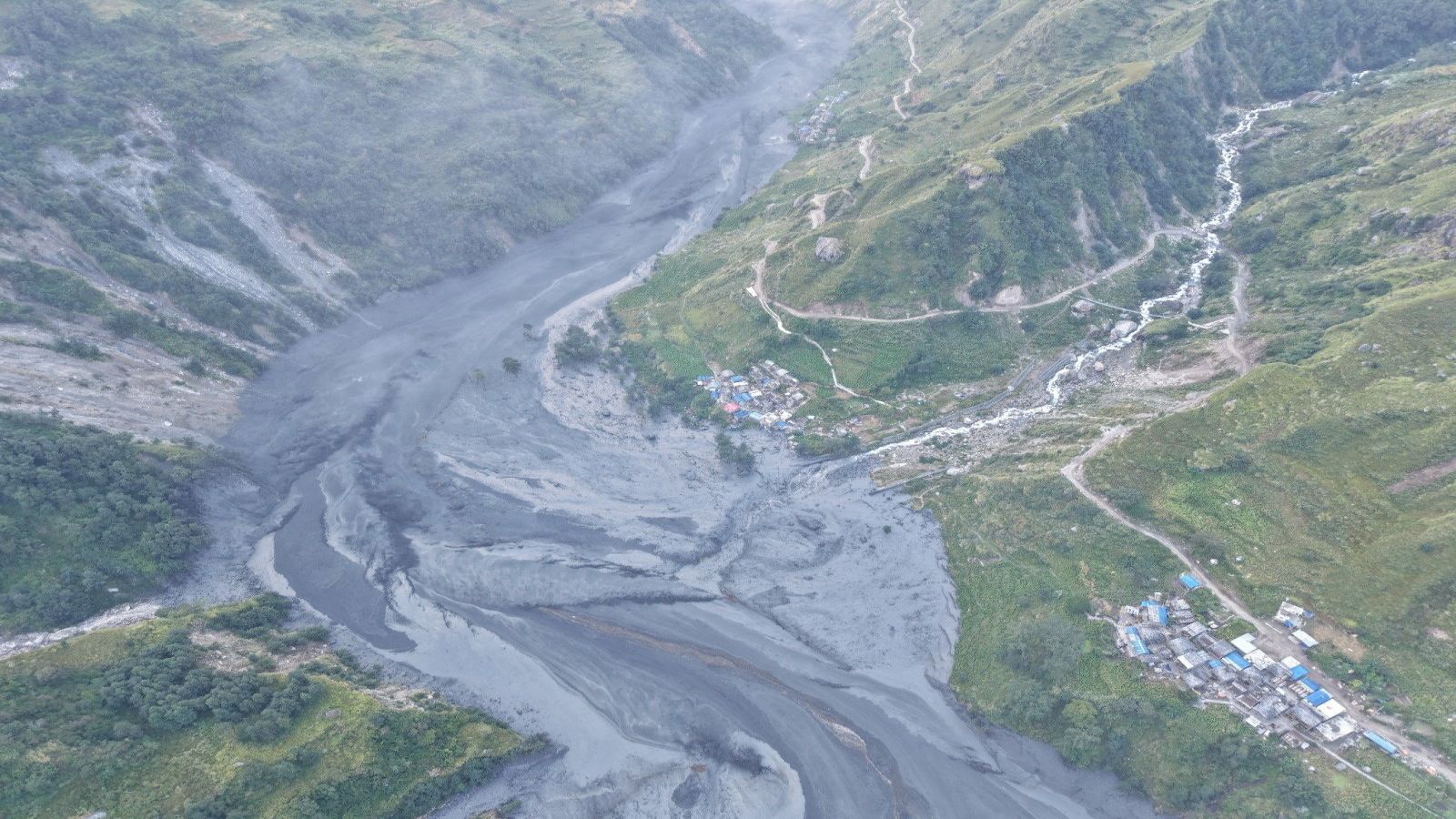
Water doesn’t always arrive as a slow, rising tide. Sometimes it moves like an express train, smashing through remote Himalayan valleys before anyone has time to check their phone. That is exactly what happened when a sudden, violent surge tore down the Budhi Gandaki River basin in Nepal's Gorkha District.
Within hours, ten people vanished into the churning brown water. Six others were pulled out alive by military rescue teams, but the landscape of the upper districts was rewritten overnight. If you've ever tracked Himalayan weather patterns, you know how quickly micro-climates turn lethal. But this event caught locals off guard, proving once again that remote mountain communities remain terribly exposed to sudden hydrological shocks.
The Anatomy of a Himalayan Flash Flood
The numbers coming out of Gorkha paint a grim picture. According to the National Disaster Risk Reduction and Management Authority (NDRRMA), the river’s water level spiked from an ordinary 3.66 meters early in the morning to an alarming 8.43 meters in less than two hours. The danger mark sits firmly at five meters.
When a river nearly doubles its height in minutes, bridges don't stand a chance. The surge obliterated six critical spans across the basin, including two vital motorable bridges at Arughat, Tripurasundari, and Soti-Manbu, alongside four major suspension bridges that locals and trekkers rely on daily. Footbridges connecting vital paths like Machhikhola to Karauja and Ghattekhola to Philim were ripped off their anchors.
Nearly 35 houses in the Painyu and Bagar areas of Chumnubri Rural Municipality simply ceased to exist, swept clean off their foundations. Settlements like Jagat, Salleri, Dovan, and Ghattekhola suffered heavy structural damage.
Why This Disaster Caught Everyone Off Guard
What makes this particular flash flood terrifying is the absence of immediate, heavy local rainfall. Residents reported clear skies or minimal local precipitation while the wall of water tore down from the upper reaches. Hydrologists and disaster management teams have scrambled to pinpoint the exact trigger, pointing toward remote upstream blockages, sudden glacial melt anomalies, or localized landslide dams breaking loose higher up in the mountains.
When a landslide temporarily dams a Himalayan river, it creates an invisible ticking time bomb. The water pools behind a wall of loose earth and debris until the pressure becomes too high. When the dam fails, it releases a wall of slurry that gathers momentum, picking up boulders, trees, and infrastructure like matchsticks.
The Race Against Time in Gorkha
Rescue operations swung into action as soon as communications flickered back online. The Nepal Army deployed air and ground units, pushing a Joint Rapid Response Team into the rugged terrain from Kathmandu, nearly 184 kilometers away. Helicopters braved erratic winds to conduct aerial surveys and pull survivors from isolated pockets of land.
Home Minister Sudan Gurung took to public channels to issue urgent safety warnings, urging anyone living along the precarious banks of the Budhi Gandaki to evacuate immediately. Officials set up an emergency hotline through the Ministry of Home Affairs to coordinate distress calls, while local authorities kept a tense, round-the-clock watch on fluctuating water levels that refused to stabilize.
Search teams continue combing downstream banks, knowing that every hour counts when people are missing in fast-moving alpine currents. As Nepal continues to grapple with recurring climate-induced shocks and pushes international forums for dedicated loss-and-damage funding, the immediate reality for the survivors in Gorkha is much simpler: rebuilding homes from the mud up, and watching the river with a permanent sense of dread.