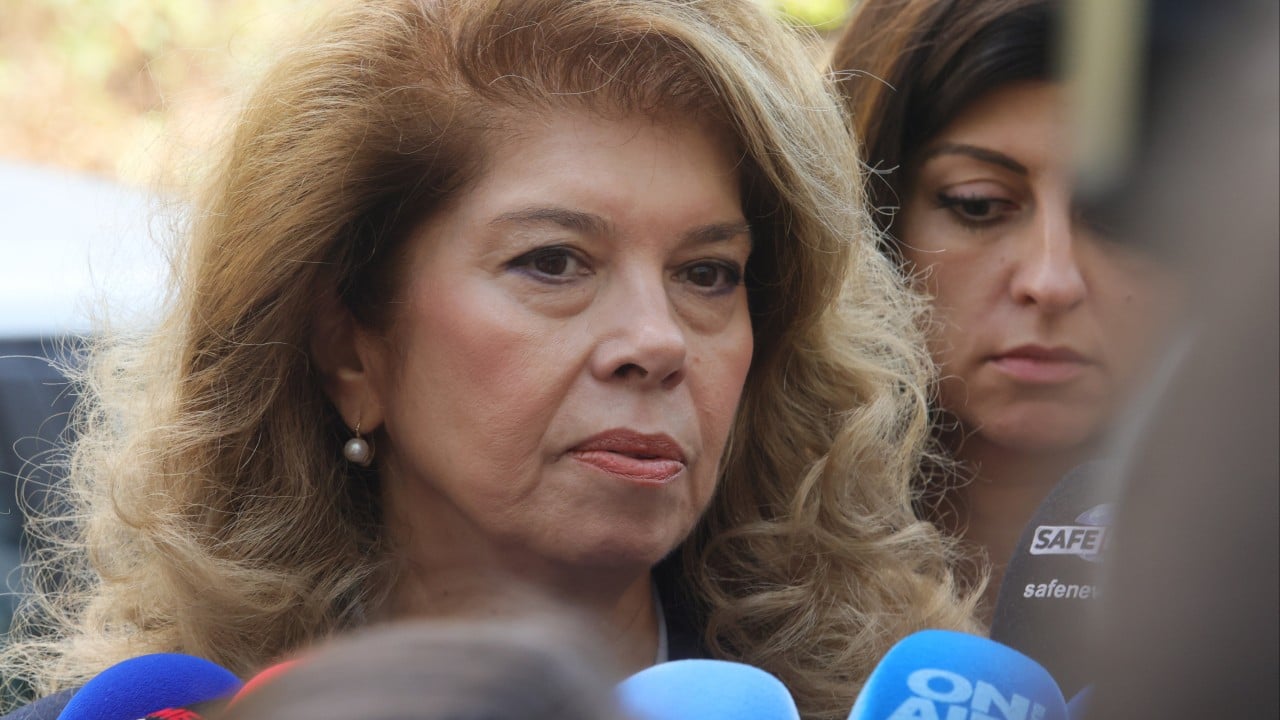
Bulgaria's presidential race is heading to a second-round run-off after the first round recorded the lowest voter turnout in the country's post-communist democratic history. Because no single candidate secured more than 50 percent of the vote—a constitutional threshold that requires at least half of all eligible voters to participate for a first-round victory—the top two finishers must now face off in a decisive second ballot where a simple majority wins regardless of participation.
Most coverage stops at the headline numbers. The wire reports tally the percentages, note the apathy, and move on to horse-race predictions for the second round. That approach misses the real story. When millions of citizens refuse to walk into a polling station, they are not merely expressing boredom with the candidates. They are staging a silent, structural boycott of a political class that has spent years trapped in a cycle of inconclusive elections, caretaker cabinets, and unfulfilled institutional reforms. Also making waves recently: Why Victoria Banned Vegemite Behind Bars and What the Legal Battle Really Exposed.
The Anatomy of a Democratic Walkout
To understand why the presidential race in Bulgaria stalled in the first round, you have to look at the mechanics of the Bulgarian constitution alongside the exhaustion of the electorate. Under Article 93 of the Bulgarian Constitution, a presidential candidate wins outright in the first round only if two conditions are met simultaneously. First, the candidate must receive more than half of the valid votes cast. Second, more than half of all registered voters must actually show up to the polls.
When turnout collapses, the second condition becomes mathematically impossible to meet. Even if a single candidate won 90 percent of the ballots cast, a participation rate hovering in the low thirties automatically triggers a run-off. In the second round, the turnout requirement disappears entirely. Whoever gets the most votes wins, even if only a fraction of the country bothers to participate. Additional insights regarding the matter are explored by Reuters.
This constitutional quirk creates a perverse dynamic. Low turnout does not invalidate the election, nor does it force the political establishment to reset. Instead, it hands disproportionate power to controlled voting networks and hardcore party loyalists. When the broader public stays home, the relative weight of every mobilized, compensated, or coerced ballot doubles.
In Sofia, Plovdiv, and Varna, polling stations sat eerily quiet for hours on election Sunday. Election workers spent the afternoon scrolling on their phones, watching empty corridors. Meanwhile, in smaller municipalities and economically depressed regions where local mayors and business oligarchs hold sway over employment and social assistance, turnout remained suspiciously steady.
Election Fatigue and the Caretaker Trap
Bulgarians have been dragged to the ballot box with numbing regularity over the past several years. Repeated parliamentary collapses forced a succession of snap elections that failed to produce durable governing coalitions. Each cycle promised a clean break from corruption, judicial capture, and entrenched patronage. Each cycle ended in bitter parliamentary deadlock or fragile, short-lived marriages of convenience between ideological rivals.
During those prolonged periods without a regular government, the presidency ceased to be a merely ceremonial post. Under the Bulgarian system, when parliament cannot form a cabinet, the president appoints a caretaker government to run the country until new elections are held. While recent constitutional amendments attempted to restrict the president's unilateral power over caretaker appointments by limiting choices to a specific pool of senior state officials, the office remains the single most visible lever of executive continuity during political crises.
Voters know this. They watched the presidency transform from a unifying national symbol into an active, combative player in day-to-day partisan warfare. Instead of standing above the fray, the presidency became a trench from which to shell parliament, and parliament returned fire by stripping presidential prerogatives. For an ordinary citizen struggling with inflation, crumbling infrastructure, and underfunded hospitals, watching the nation's top institutions cannibalize each other breeds cynicism rather than civic duty.
The Vanishing Middle
A closer look at the demographic breakdown of the non-voters reveals an alarming trend. The people staying home are not the politically illiterate. They are disproportionately urban, educated, working-age Bulgarians who participated heavily in the anti-corruption protests earlier in the decade.
These voters once believed that casting a ballot for reformist coalitions would dismantle the capture of the prosecution service and the judiciary. When those reformist parties entered government, compromised with the very figures they had vowed to investigate, and fractured under internal ego clashes, the reform-minded electorate felt betrayed.
You can only ask citizens to hold their nose and vote for the "lesser evil" so many times before they decide that abstention is the only honest choice left. In a hypothetical scenario where a voter faces two finalists in a run-off—one representing the entrenched status quo and the other representing populist nationalism—staying home becomes a rational refusal to legitimize either option.
The Ghost Roll Problem
Any honest analysis of Bulgarian turnout must also confront a statistical distortion that artificially depresses the official percentages. Bulgaria's electoral rolls are notoriously inflated.
The central voter registry is compiled from municipal civil registration databases that still list hundreds of thousands, potentially over a million, Bulgarians who have emigrated permanently to Western Europe, North America, and elsewhere. Many of these citizens maintain a formal permanent address in Bulgaria for property or administrative reasons, even though they have lived, worked, and paid taxes in Germany, the United Kingdom, or Spain for decades.
Because these expatriates remain on the domestic denominator, the baseline number of "eligible voters" is dramatically higher than the actual adult population residing inside the country. When the Central Electoral Commission calculates turnout as a percentage of total registered voters, the final figure looks several percentage points worse than the true participation rate among residents.
Yet even when veteran election analysts adjust for the diaspora distortion, the downward trajectory is unmistakable. True domestic turnout has eroded steadily across consecutive election cycles. The ghost voters on the rolls explain part of the mathematical shock, but they do not explain why lines outside polling stations in Sofia's residential districts have vanished.
Machine Voting, Paper Ballots, and Distrust
Trust in the mechanics of voting itself has also taken a beating. Over recent election cycles, Bulgaria has ping-ponged between electronic machine voting and traditional paper ballots, driven by partisan disputes over which method is easier to manipulate.
Reformist parties championed voting machines, arguing that electronic terminals eliminate invalid ballots—historically a massive problem in Bulgaria—and prevent local precinct commissions from falsifying tally sheets at the end of the night. Traditional parties pushed back, demanding the return of paper ballots under the guise of protecting elderly and rural voters intimidated by touchscreens.
The resulting compromise—a hybrid system where machines print paper receipts that are then hand-counted alongside traditional paper ballots—managed to combine the worst of both worlds. Precinct commissions stayed up until dawn manually recounting slips of paper, exhaustion led to widespread clerical errors in the protocols, and live-streamed counting sessions broadcast images of confused officials crossing out numbers and rewriting totals.
When citizens watch video feeds of election workers struggling to reconcile basic arithmetic on official tally sheets, confidence in the integrity of the count evaporates. People do not queue in the autumn chill to cast a ballot if they suspect the tally will be mangled in a chaotic backroom count at two in the morning.
What Happens in a Low-Turnout Run-Off
As the presidential race moves into the second round, the strategic calculus shifts entirely. In the first round, candidates campaigned to define their brand and consolidate their core base. In the run-off, the race becomes a brutal exercise in negative mobilization.
Neither finalist can win by inspiring a wave of enthusiastic new voters. That wave does not exist. Instead, campaign strategists will spend the coming days trying to frighten their own supporters into showing up while discouraging the rival's voters from leaving their apartments.
The Role of Kingmakers
Because the two finalists together failed to command a clear mandate in the first round, eliminated candidates immediately become high-stakes power brokers. Every third- and fourth-place finisher holds a slice of electorate that could tip a close run-off.
Behind closed doors in Sofia, negotiations are already underway. Eliminated party leaders will demand policy concessions, future cabinet support, or administrative appointments in exchange for endorsing—or quietly instructing their local structures to mobilize for—one of the two remaining contenders.
However, endorsements in Bulgarian politics rarely transfer cleanly. Voters are increasingly independent of party bosses. A party leader can stand before television cameras and urge supporters to back a specific finalist, only for half of those supporters to ignore the directive or cast a "None of the Above" protest ballot.
The Shadow of Geopolitics
A Bulgarian presidential run-off is never purely a domestic affair. Sitting on the eastern flank of NATO and the European Union, bordering the Black Sea, Bulgaria occupies a sensitive geopolitical fault line.
The presidency carries significant weight in foreign policy, defense posture, and intelligence oversight. One strain of Bulgarian political thought emphasizes deep Euro-Atlantic integration, unwavering support for NATO commitments, and alignment with Brussels on regional security. Another strain favors strategic ambiguity, skepticism toward Western military aid in the region, and economic pragmatism toward eastern energy and trade networks.
Low turnout amplifies the stakes of this geopolitical divide. When moderate, pro-European urbanites stay home out of frustration with domestic corruption, organized nationalist and Eurosceptic networks gain outsized influence over who occupies the presidential palace on Dondukov Boulevard. A president elected on the back of a historically tiny electorate still wields the exact same constitutional powers to veto legislation, appoint ambassadors, represent the state at international summits, and shape national security doctrine.
The Legitimacy Deficit
Winning a run-off with a razor-thin participation rate solves the immediate constitutional requirement of filling the office, but it leaves the victor crippled by a severe legitimacy deficit.
A president who claims to represent the entire Bulgarian nation while having received the actual votes of barely fifteen or twenty percent of all registered citizens enters office with weak moral authority. Every veto will be dismissed by parliamentary opponents as the obstructionism of a minority figure. Every call for national unity will ring hollow in a country where four out of five eligible citizens declined to endorse the winner.
The political establishment in Sofia treats low turnout like bad weather—an unfortunate inconvenience to be lamented on election night and forgotten by Tuesday morning once the spoils of office are divided. That complacency is dangerous. Democracy does not usually collapse in a dramatic coup; more often, it hollows out from the inside as citizens quietly walk away from the ballot box and leave the state to be carved up by the few who still profit from the system.
Until Bulgaria's political class cleans up its bloated voter rolls, stabilizes its chaotic election rules, and delivers tangible judicial accountability rather than endless coalition theater, the empty polling stations will remain the loudest verdict in the country.


