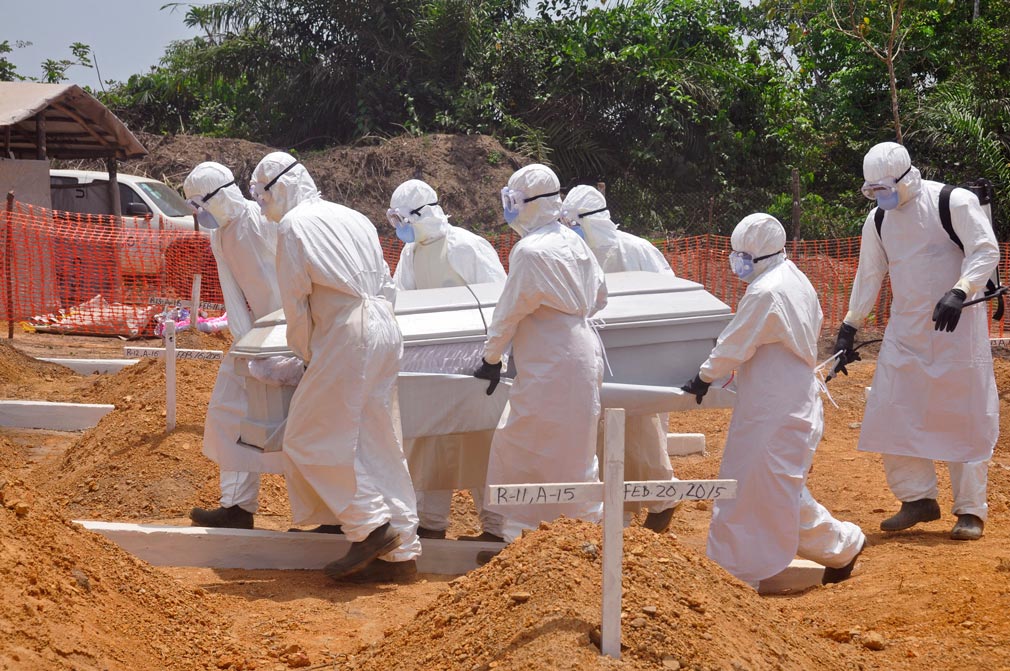
A fresh Ebola headline usually triggers visions of the terrifying 2014 West African epidemic or the high-mortality outbreaks in the Democratic Republic of the Congo. Those catastrophes were driven by the Zaire strain, a pathogen with a kill rate that can rocket up to 90%. Because it kills so efficiently and dramatically, it gets all the funding, the media coverage, and crucially, the vaccines.
But right now, a different monster is causing quiet panic among global health experts. For a different view, consider: this related article.
The Bundibugyo ebolavirus variant carries a case fatality rate hovering around 30% to 50%. On paper, that sounds like a relief compared to its deadlier cousin. In reality, that lower kill rate is exactly what makes it a massive nightmare for disease detectives trying to contain it.
When a virus doesn't immediately kill its host, it gets more time to travel, mingle, and jump to the next person. Combine that biological reality with zero approved vaccines and zero specific treatments, and you have a recipe for an uncontainable crisis. Further reporting on the subject has been shared by Medical News Today.
The Stealth Transmission Trap
Public health officials track a metric called the secondary attack rate. It measures how fast an infection spreads within a group of close contacts. For the Bundibugyo strain, that number is deceptively stable, but the clinical reality on the ground tells a much messier story.
When someone contracts the Zaire strain, they get visibly, violently ill very fast. They bleed, they crash, and they either get isolated in a high-confinement hot zone or they die. It sounds brutal because it is. But from an epidemiological standpoint, a flamboyant virus is easier to spot and corral. You can trace the contacts because the source case is unmistakable.
Bundibugyo doesn't play by those rules.
Its early symptoms mimic standard regional ailments like malaria, typhoid, or basic gastrointestinal bugs. An infected person might experience a mild fever, muscle aches, and a sore throat. They might assume it's a passing flu and go about their week. They take a bus, visit relatives, or go to work. By the time the classic hemorrhagic manifestations or severe organ dysfunction kick in, they have already left a trail of infected biological footprints across multiple communities.
The lower lethality means patients stay ambulatory longer. A walking host is a spreading host.
Zero Approved Vaccines and No Targeted Cures
If you catch the Zaire strain today, medicine has tools to fight back. We have approved vaccines like Ervebo that can be deployed via ring vaccination to create an immediate immunological firewall around an outbreak. If you still get sick, monoclonal antibody cocktails like Inmazeb can drastically improve your odds of survival.
For the Bundibugyo strain, the medical toolkit is completely empty.
Those life-saving monoclonal antibodies? They are highly specific molecular keys designed to fit only the Zaire lock. They do absolutely nothing against Bundibugyo. The vaccines don't cross-protect either. If an outbreak explodes today, frontline health workers cannot line up for a protective shot before entering the isolation wards.
Treatment is stuck in the mid-20th century. Doctors are limited to intensive supportive care. That means aggressive intravenous rehydration, balancing electrolytes, maintaining blood pressure, and treating secondary bacterial infections. If your immune system can't figure out how to neutralize the virus on its own with the help of a fluid drip, you become part of the 30% to 50% mortality statistic.
The Chaos of a Belated Diagnostics Framework
The real danger amplifies during the initial weeks of a spillover event. When an outbreak hits a remote area, local clinics lack advanced genetic sequencing machines. They rely on basic symptom checklists or rapid diagnostic tests that are often optimized for the Zaire strain or common local parasites.
[Symptom Onset] ──> [Misdiagnosed as Malaria] ──> [Community Spread] ──> [Severe Organ Crash] ──> [Belated Lab Confirmation]
This diagnostic blind spot creates a dangerous lag time. By the time a blood sample travels to a capital city laboratory, undergoes proper PCR testing, and confirms a Bundibugyo outbreak, the virus has already secured a multi-week head start. The contact tracing web grows exponentially larger and harder to manage with every single day of delay.
Furthermore, historical data shows that Bundibugyo outbreaks are rare but geographically erratic. Since its discovery in 2007 in Uganda, it has only caused a handful of major documented events. This rarity is a curse for pharmaceutical development. Drug companies rarely invest hundreds of millions of dollars to run clinical trials for a pathogen that disappears for a decade at a time. The candidate vaccines that do exist are languishing in early phase testing, waiting for an outbreak to occur just so researchers can test if they actually work in the field.
How to Protect Communities When the System Fails
We cannot rely on a pharmaceutical silver bullet that doesn't exist. Stopping a non-Zaire Ebola outbreak requires aggressive, boots-on-the-ground public health intervention and flawless local execution.
If you operate a clinic, travel through high-risk rural corridors, or manage community health programs, you have to pivot your strategy immediately.
- Implement Universal Isolate-First Protocols: Do not wait for lab confirmation to isolate a patient presenting with sudden fever and gastrointestinal distress. Treat every suspicious hemorrhagic fever case as a worst-case scenario until proven otherwise.
- Deploy Broad-Spectrum Diagnostic Sieve Strategy: Ensure local triage points rule out malaria and typhoid via rapid tests within the first hour of admission. If those are negative and symptoms persist, immediately trigger a sample transport chain to a regional reference laboratory capable of testing for all orthoebolavirus species.
- Mandate Dry-Burial and Safe Community Audits: Traditional funeral practices involving washing the deceased are primary super-spreading events. Because Bundibugyo keeps people alive longer, the viral load in the body peaks right around the time of death, making the corpse highly infectious. Establish dignified, safe burial teams before an outbreak escalates.
- Aggressive Fluid Resuscitation Training: Since specific therapeutics don't exist, survival relies entirely on the quality of supportive care. Train local health workers on exact fluid management protocols to prevent hypovolemic shock, which is the primary killer in these cases.
Relying on the hope that a virus will stay contained because it has a lower mortality rate is a fatal mistake. The biology of the Bundibugyo strain rewards human complacency. True protection means assuming the worst and acting while the rest of the world is still waiting for a laboratory test result.