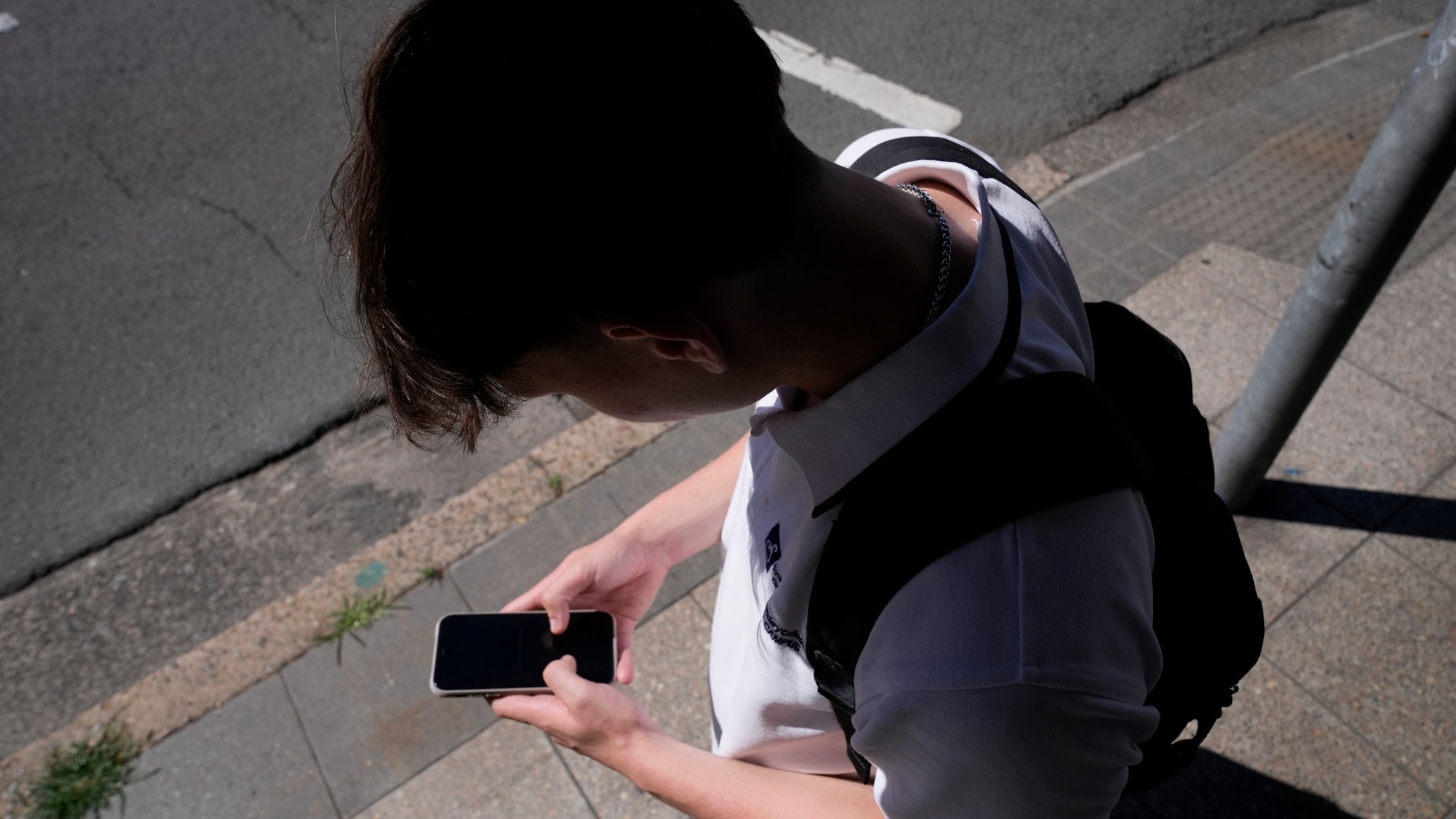
You know the feeling. It is 11:43 at night, and your thumb has developed a life of its own. You opened your phone to check the weather for tomorrow, but twenty minutes later, you are knee-deep in a digital trench of outrage, micro-trends, and videos of people aggressively organizing their refrigerators. Your eyes burn. Your brain feels like static electricity. You did not choose to go down this rabbit hole. The algorithm chose it for you.
Algorithms are invisible architects. They live in the dark corners of code, watching how long you pause on a tragic headline, tracking the micro-twitches of your pupils, measuring your heartbeat through the velocity of your swipes. They have learned a dark truth about human nature: we look away from peace, but we stare at the fire. So they keep building fires in our pockets.
Australia is drawing a line in the sand.
Lawmakers there are proposing legislation designed to force social media giants to give users a radical, long-overgiven power: the ability to turn off the algorithm entirely. Imagine waking up to a feed that looks like a literal diary of your real-world friends and the chronological posts of people you actually chose to follow. No sponsored outrage. No phantom ghost-accounts pushing conspiracy theories because your pause duration spiked for three seconds. Just a quiet, chronological stream.
Data from behavioral studies shows that when people are stripped of algorithmic feeds, their screen time plummets by up to forty percent within weeks. Anxiety rates drop. The cortisol hangover clears. Yet, the tech giants scream that this will break the internet. Why? Because an unmanipulated human being is a terrible customer for hyper-targeted advertisements.
Consider Sarah, a hypothetical graphic designer living in Melbourne, who represents millions of digital citizens. Sarah uses social media to find freelance clients, but she finds herself trapped in a cycle of comparison and political dread every single morning. Her morning coffee tastes like anxiety because an invisible equation decided that anger keeps her logged on longer than joy. Under the proposed Australian laws, Sarah would find a simple toggle switch in her settings. Chronological mode. Off.
When you flip that switch, something strange happens. Time slows down.
Critics argue that users do not know what they want, that algorithms democratize content by serving us what we secretly desire. But this defense ignores a fundamental imbalance of power. You are matching your fragile, evolving human psychology against a supercomputer trained on billions of behavioral data points. That is not a choice. That is a trap.
Think about how a casino works. There are no clocks on the walls. There are no windows. The lights hum at a frequency that suppresses fatigue, and the slot machines are engineered with variable ratio reinforcement schedules—the exact same psychological hook used by social media infinite scrolls. We recognized long ago that casinos have a duty of care toward vulnerable patrons. We built regulatory guardrails around gambling, finance, and food safety.
Yet, our attention economy remains the Wild West.
The Australian proposal is not about banning technology. It is about consent. Right now, algorithmic manipulation is mandatory. You cannot use the modern digital public square without submitting your mind to a behavioral profiling machine. Giving people an opt-out mechanism changes the social contract. It respects human autonomy.
Change is coming, whether Silicon Valley wants it or not. Lawmakers across the globe are starting to realize that the attention crisis is not a personal failure of willpower; it is a systemic design flaw. When millions of people across continents feel the exact same crushing mental fatigue, it stops being an individual quirk and starts being a public health emergency.
We built these digital highways to connect the world, but we allowed automated billboards to blind the drivers. The option to turn off the engine of manipulation is overdue.
The screen goes dark when you press the power button. But the real darkness is what happens when you leave it on, letting a machine dream your life for you.