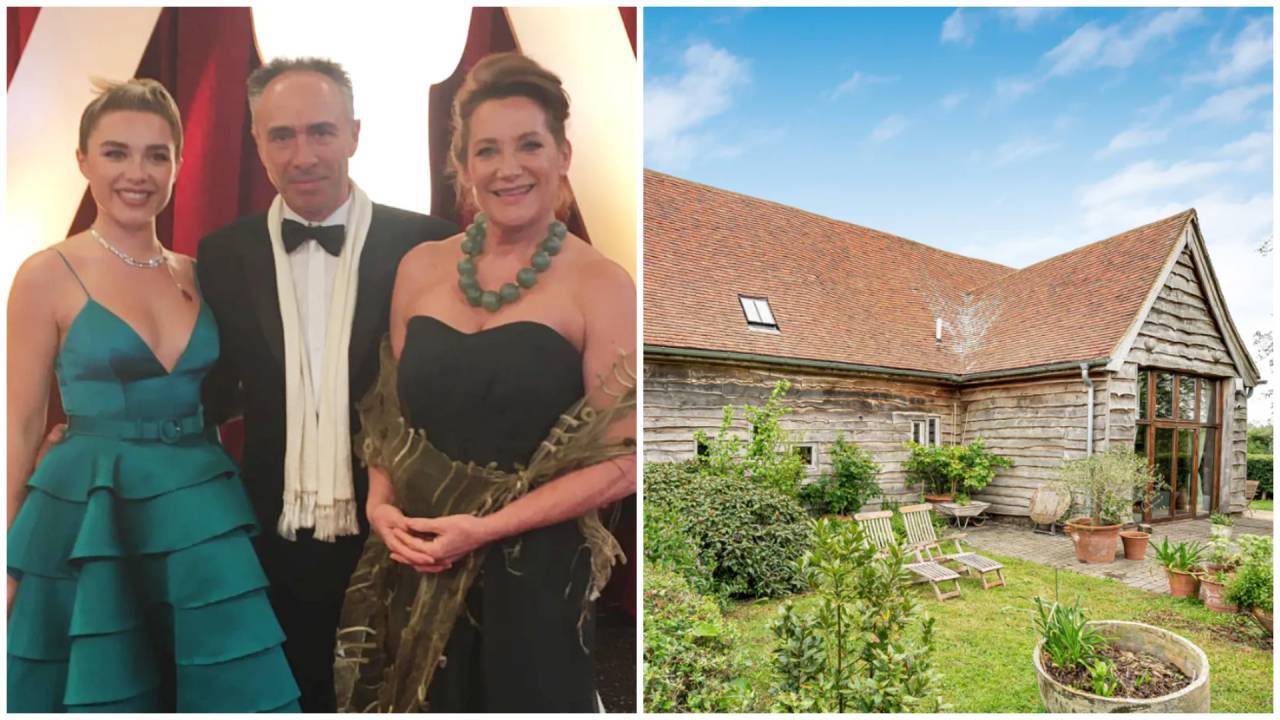
The celebrity real estate industrial complex wants you to believe that brick and mortar absorb Oscar nominations by osmosis.
Every time an A-list actor’s childhood home hits the market, lifestyle tabloids churn out the exact same breathless copy. They gush over exposed beams, rustic charm, and the romantic notion of sleeping under the same roof where a future Hollywood heavyweight once practiced monologues. When Florence Pugh’s parents, Clinton and Deborah Pugh, listed their £1.65 million converted barn in Oxfordshire, the press followed the script to the letter. They framed it as a rare slice of Oppenheimer history nestled in the idyllic English countryside.
They are selling a fairy tale. The reality on the ground is a masterclass in illiquid assets, maintenance nightmares, and the dangerous economics of the "celebrity halo."
If you have £1.65 million burning a hole in your portfolio, buying a converted agricultural building in Oxfordshire because a famous actress spent her teenage years there is one of the fastest ways to destroy your net worth. Let’s strip away the glossy brochure photography and look at what is actually happening in the prime UK rural property market.
The Myth of the Celebrity Halo
Tabloid property reporters love to imply that fame adds permanent equity to a deed. It does not.
In the luxury real estate sector, there is a massive distinction between a trophy asset and a provenance curiosity. A trophy asset is a brutalist concrete compound in Beverly Hills designed by Tadao Ando, or a Grade I-listed townhouse in Belgravia. Those properties hold value because the architecture, zoning scarcity, and land value are irreplaceable.
A converted barn in Oxfordshire—even one owned by the parents of a generational acting talent—is a provenance curiosity.
I have watched high-net-worth buyers overpay by 15% to 20% for properties tied to musicians, actors, and tech founders, convinced they are buying an appreciating piece of cultural history. Five years later, when they try to offload the property, the market does not care who ate breakfast in the kitchen in 2012. Real estate appraisers at major private banks like Coutts or Knight Frank do not have a line item on their valuation spreadsheets for "Academy Award nominee childhood bedroom." They value square footage, comparable local sales, roof condition, and energy efficiency ratings.
Once the press cycle dies down and the novelty wears off, you are left holding a standard rural asset that you bought at a peak emotional premium. You paid a Hollywood price for an agricultural footprint.
The Brutal Economics of UK Barn Conversions
To understand why a £1.65 million price tag in Oxfordshire requires extreme skepticism, you have to understand what a converted barn actually is. At its core, it is a 19th-century utilitarian structure built to house grain, livestock, and farm equipment—not humans who expect central heating and dry drywall.
When developers or homeowners convert these structures, they are fighting against the original physics of the building.
- Thermal Bridging and Heat Loss: Vaulted ceilings with exposed oak trusses look magnificent in magazine spreads. In January in Oxfordshire, they are thermodynamic black holes. Hot air rises straight into the rafters, leaving the living space freezing while your boiler burns through oil or electricity at a catastrophic rate.
- The Listed Building Straightjacket: Many historic barns in the Cotswolds and surrounding Oxfordshire villages are either Grade II-listed or sit within strict Conservation Areas. Want to replace those drafty single-glazed timber windows with modern acoustic double glazing? Prepare for a six-month war with the local council conservation officer, followed by a rejection letter. Want to install solar panels on the slate roof? Denied. You are legally obligated to maintain historical accuracy using traditional materials—lime mortar, handmade clay tiles, seasoned oak—that cost three times as much as modern equivalents.
- Moisture and Subsidence: Barns were built without modern damp-proof courses. When you seal up a breathable stone or brick structure with modern plaster and insulation, trapped moisture has nowhere to go. It rots the timber framing from the inside out.
Savills and Knight Frank research consistently shows that prime country houses in the UK have faced intense price sensitivity over the last 24 months. Buyers are no longer throwing blank checks at rural retreats like they did during the pandemic exodus of 2020 and 2021. High borrowing costs and soaring maintenance inflation have forced affluent buyers to scrutinize running costs. A sprawling barn conversion with an Energy Performance Certificate (EPC) rating of E or F is no longer seen as charmingly rustic; it is viewed as a liability.
Why the Pughs Are Selling Now (And Why You Should Pay Attention)
Look at the timing and the sellers. Clinton Pugh is a seasoned restaurateur who spent decades running successful establishments in Oxford like Cafe Coco and Kazbar. Deborah Pugh is a former dancer and teacher. They are not naive homeowners stumbling into the market; they are savvy operators who know the local Oxfordshire economy inside and out.
Selling a family home after the children have grown and moved on is a completely normal life transition. Florence Pugh is now based primarily between London and Los Angeles, operating at the absolute pinnacle of global cinema. Maintaining a large rural property in Oxfordshire makes zero logistical sense when your family’s center of gravity has shifted.
From a seller's perspective, listing at £1.65 million while Florence’s cultural cachet is at an all-time high—riding the wave of Oppenheimer, Dune: Part Two, and We Live in Time—is brilliant timing. It guarantees global press coverage without spending a single penny on international PR agencies. Every major entertainment outlet from People to the Daily Mail becomes an unpaid marketing arm for the estate agent.
The seller wins. The estate agent wins. The buyer who falls for the PR trap loses.
Dismantling the "Oxfordshire Dream" Narrative
Let’s address the questions buyers actually ask when they look at properties like this, and strip away the estate agent spin.
Is Oxfordshire real estate a guaranteed safe haven for wealth?
Not anymore. The "Golden Triangle" of Oxfordshire—roughly bounded by Oxford, Banbury, and Chipping Norton—saw unsustainable price inflation driven by London commuters and the Soho Farmhouse effect. When private members' clubs colonize rural counties, local prices detach from local wages and intrinsic utility. When liquidity tightens, those exact markets experience the sharpest corrections and the longest days-on-market metrics. In many Oxfordshire villages right now, properties priced above £1.5 million sit unsold for nine to twelve months unless sellers aggressively slash their asking prices.
Can you monetize the Florence Pugh connection as a luxury short-term rental?
Imagine a scenario where a clever investor buys the barn, leaves the aesthetic intact, and lists it on Airbnb Luxe or Plum Guide at £1,200 a night as "The Florence Pugh Childhood Retreat." On paper, it sounds like a cash-flowing machine.
In reality, it is an operational nightmare. First, rural Oxfordshire parishes have aggressive rules regarding commercial change-of-use for residential properties. Neighbors in quiet English villages will report commercial holiday lets to the local planning authority within weeks. Second, insurance underwriters load premiums massively when a property is advertised using a celebrity’s name, due to heightened risks of trespassing, stalkers, and obsessed fans showing up at the front gate. You will spend your entire profit margin on liability coverage, commercial waste collection, and rural property management.
Does celebrity ownership speed up resale when you want to exit?
It actually does the exact opposite. When you buy a property famous for its previous owner, you inherit their digital footprint. Every time someone Googles your home address, the top results are tabloid articles detailing the layout, the garden access, and the interior photos from years ago. High-net-worth buyers—the exact demographic you need to sell a £1.65 million house to in the future—value privacy above almost everything else. They do not want to buy a house whose floor plan is permanently archived on celebrity gossip sites.
What Smart Money Actually Buys at £1.65 Million
If you want the Oxfordshire lifestyle—the rolling hills, the proximity to London Paddington via Didcot Parkway or Oxford station, the gastropubs, the clean air—you do not buy an aging barn conversion with a celebrity markup.
Here is how disciplined real estate investors deploy £1.65 million in the exact same postcode:
- Target Unmodernized Georgian or Victorian Rectory Stock: Instead of an agricultural building forced to act like a house, buy a structure that was actually engineered for human habitation. Georgian proportions offer natural light, symmetrical floor plans, and superior resale liquidity. You pay £1.2 million for a tired property and deploy £450,000 into modernizing the plumbing, electrical, and thermal envelope to your exact standards.
- Audit the EPC and Heating Infrastructure Before Making an Offer: Never fall in love with exposed stonework before checking the boiler room. In rural UK properties off the mains gas grid, transitioning from aging oil tanks to air-source or ground-source heat pumps requires massive upfront capital—often £30,000 to £50,000—plus upgrading every radiator in the house to handle lower flow temperatures. Use those exact figures to negotiate the asking price down by six figures.
- Separate Emotional Utility from Capital Preservation: Admit the downside of taking a purely analytical approach: you will never get to brag at dinner parties that you own the bedroom where Midsommar was rehearsed. If you are buying a house purely as a personal indulgence and you are happy to treat £300,000 of the purchase price as a sunk consumption cost, buy whatever makes you happy. Just do not lie to yourself and call it an investment.
The Verdict on Celebrity Real Estate
The next time a headline flashes across your screen announcing that a Hollywood star’s family home is up for grabs, read it for what it actually is: a masterclass in public relations leverage.
Famous names sell newspapers, generate clicks, and get estate agents invited onto morning television. They do not fix leaking roofs, they do not lower your council tax band, and they certainly will not bail you out when you try to sell an overpriced rural property in a stagnant market.
Leave the celebrity nostalgia to the tabloid readers, keep your capital in assets that generate real yield, and never pay an A-list premium for a B-grade floor plan.