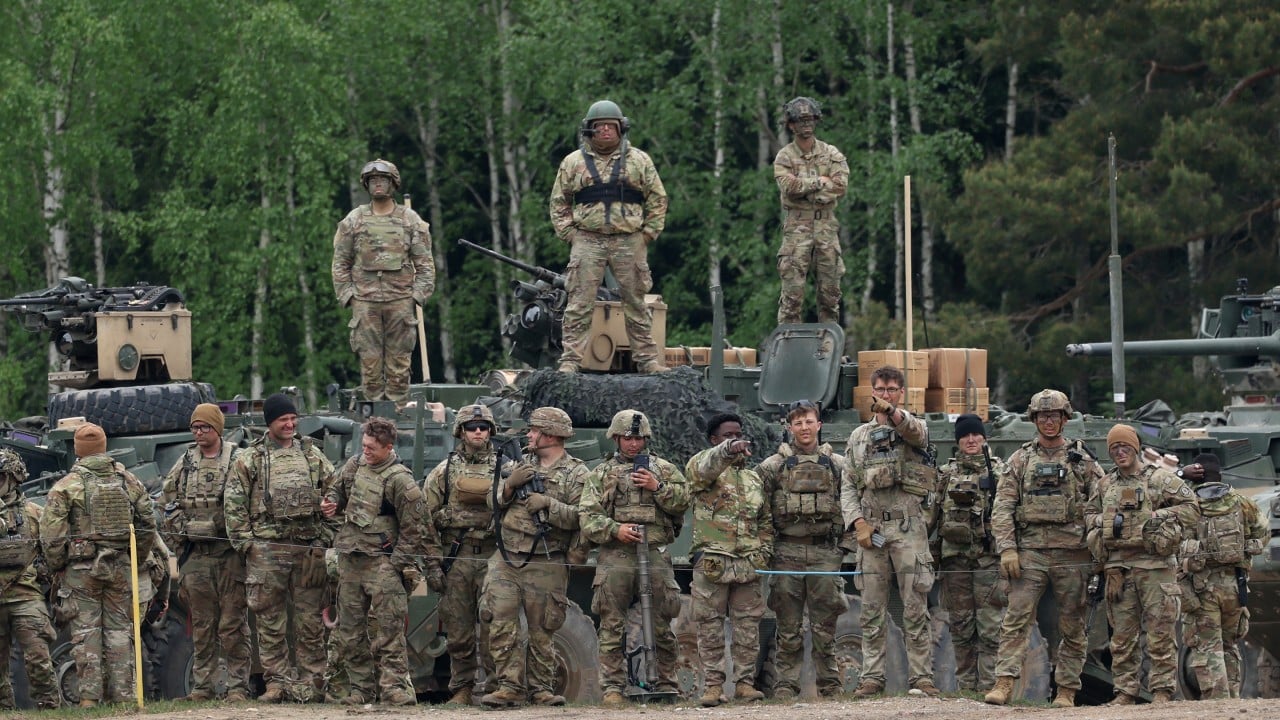
Every time Washington and Warsaw start whispering about a permanent, heavy-metal American garrison on Polish soil, the champagne corks pop in the capital. Headlines blare about major progress, historic security guarantees, and the ultimate deterrent against eastern aggression. They even resurrect the vanity moniker of a presidential namesake to seal the geopolitical deal.
It is a comforting fantasy. It is also a catastrophic strategic delusion.
The lazy consensus in international relations is that planting thousands of permanent American boots on a borderland frontier creates an unbreakable steel tripwire. The logic goes that no adversary would ever dare cross a line where American body bags are guaranteed on day one. I have watched defense analysts blow millions of words and endless hours of television punditry treating permanent bases as magical amulets of absolute safety.
They are missing the entire evolution of modern warfare.
Permanent, static mega-bases are not shields. They are multi-billion-dollar stationary bullseyes. In an era defined by hypersonic maneuver, persistent drone swarms, and precision standoff strike complexes, building a massive, fixed concrete installation is the 20th-century equivalent of lining up wooden sailing ships in a tight row and hoping the wind smells nice.
Let us look at the mechanics of what Warsaw is actually volunteering to finance. When a government offers to bankroll billions in infrastructure for a foreign power, it is buying a glorified museum piece of Cold War deterrence. A permanent U.S. base of brigade size does not project flexible power; it creates a fixed administrative anchor that rusts in place, consumes local defense budgets that should be going toward indigenous asymmetric capabilities, and ties American strategic flexibility to a single fixed set of coordinates.
True modern deterrence is mobile, distributed, and lethal. It looks like dispersed HIMARS batteries hiding in Polish forests, integrated drone-production ecosystems, and indigenous command-and-control networks that do not rely on transatlantic permission slips to function. When you pay someone else to garrison your backyard, you sub-contract your strategic autonomy. You trade the freedom of rapid tactical adaptation for the psychological comfort of an American flag on a flagpole.
Worse yet, this obsession with static foreign basing creates a dangerous strategic complacency. Polish defense planners look at the prospect of a heavily funded U.S. garrison and breathe a sigh of relief, assuming the umbrella is open. But umbrellas tear in category-five hurricanes. If a major crisis erupts, a static base in central or western Poland becomes an immediate priority target for pre-emptive suppression, absorbing incoming saturation strikes before local forces can even mobilize.
Look at the financial ledger. Warsaw is lining up billions to foot the bill for facilities, service hubs, and logistical support. That is capital drained away from domestic defense manufacturing and domestic technological innovation. Instead of building a self-sustaining sovereign defense powerhouse that makes any invader choke on their own teeth, Poland risks turning into an expensive landlord renting out prime real estate to a superpower tenant that answers ultimately to voters in Ohio and Pennsylvania, not Podkarpackie.
Stop treating foreign garrisoning as the gold standard of national security. Real sovereignty is not renting your defense; it is owning your survival.
If you want a truly secure Europe, stop building monuments to American presidents and start building a distributed, un-nukable, highly decentralized web of domestic combat power that doesn't need Washington's permission to fight back.
Stop paying for Fort Trump. Build an iron wall you own yourself.
Shocking: US Gives Green Light for "Fort Trump," Poland Becomes New Defense Powerhouse
This video provides additional context regarding the ongoing political and media discussions surrounding the proposed U.S. military footprint in Poland.


