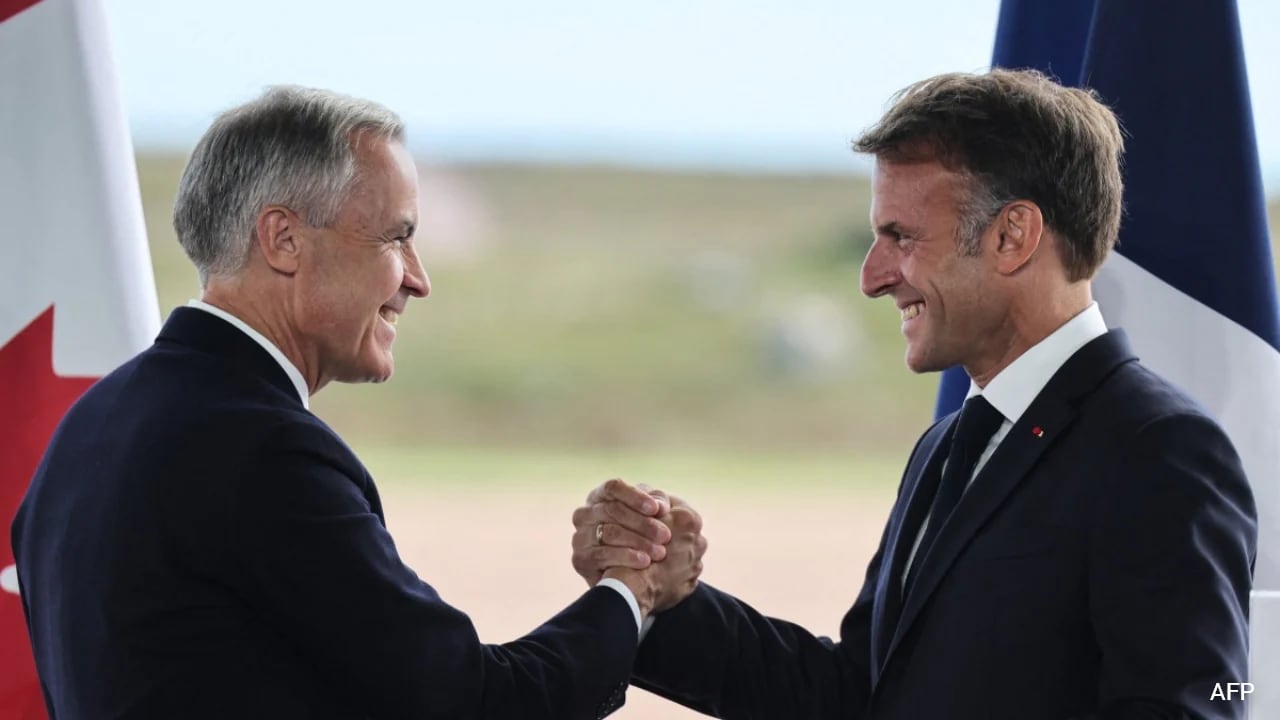
Geopolitical earthquakes rarely start with a bang. They start in quiet conference rooms, draft agreements, and sudden shifts in trade strategy. When French President Emmanuel Macron threw his weight behind a proposal to make Canada the European Union’s very first associate member, the diplomatic playbook of North America shifted overnight. Canadian Prime Minister Mark Carney isn't just looking for alternative trading partners; he is actively insulating Ottawa from escalating economic and political friction with Washington.
If you think this is just a symbolic handshake between old friends, look closer at the numbers and the underlying anxieties driving it. Transatlantic relations are entering uncharted territory, and middle powers are scrambling to secure their economic futures.
The Breaking Point in North American Trade
For decades, Canada’s economic gravity was simple. You traded south, you aligned north, and the border took care of itself. But intense trade pressures and aggressive rhetoric from the United States have forced a radical rethink in Ottawa. When tariffs loom, supply chains weaponize, and political stability south of the border turns erratic, relying on a single dominant market becomes an existential threat.
Enter the European Union. With a massive internal market, Brussels offers an attractive counterweight. The idea of "associate membership"—though legally unmapped and entirely unprecedented for a North American nation—provides a structural framework to bypass traditional trade walls. It is a calculated bet that deeper integration with European standards, defense procurement, and technology frameworks can offset heavy reliance on the American economy.
What Associate Membership Actually Means
Let’s be honest about the legal hurdles. The EU doesn't have a ready-made template for a non-European, G7 country to slide into an associate status. CETA (the Comprehensive Economic and Trade Agreement) took years to negotiate, and parts of it still face domestic ratification hurdles across Europe.
An associate model would likely carve out specialized access across targeted sectors rather than a blanket adoption of the EU single market. We are talking about deep cooperation in:
- Critical minerals and energy security
- Defense equipment and joint manufacturing
- Space exploration and telecommunications
- Regulatory alignment on digital technology and climate resilience
Macron sees this alignment as a win for European strategic autonomy. By pulling Canada closer into the European orbit, France and other EU leaders gain a resource-rich, politically stable ally that shares democratic values but sits safely outside Washington’s direct sphere of influence.
Navigating the Pushback and Reality Check
Skeptics point out obvious geographic and economic realities. You cannot simply airlift Canada across the Atlantic Ocean. Shipping costs, legacy supply chains, and decades of continental integration mean the United States will remain Canada's primary trading partner. You can't rewrite geography over a weekend summit.
Furthermore, getting all EU member states to agree on a novel associate status for an external country is a bureaucratic marathon. Internal European divisions over sovereignty, budget contributions, and trade protections mean Carney and Macron will face fierce headwinds from Brussels technocrats and wary national capitals.
Yet, the political will is real because the alternative is worse. When traditional alliances strain under the weight of protectionism, middle powers must diversify or get squeezed out.
What Happens Next
Ottawa and Brussels are charting a brand-new diplomatic category. Watch for bilateral working groups to formalize definitions of what associate status entails over the coming months. If Canada successfully anchors itself to European regulatory and defense frameworks, it sets a massive precedent for how middle powers survive a fractured global economy.
Don't expect an overnight miracle. Do expect a fundamental rewiring of how Canada protects its economic sovereignty on the global stage.