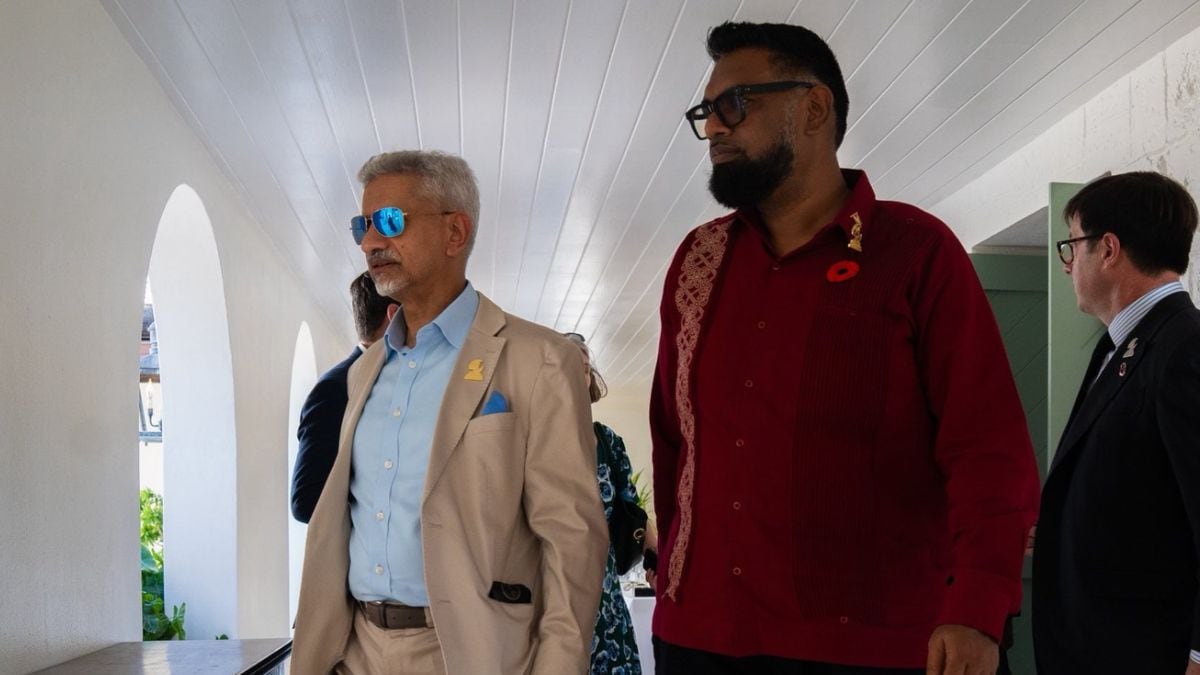
Bilateral soft loans are rarely acts of altruistic foreign aid; they are structured market-entry mechanisms designed to subsidize domestic exporters while securing long-term geopolitical and resource optionality. When India structures a $500 million concessional credit facility for Guyana—a nation undergoing one of the fastest gross domestic product expansions in modern economic history due to offshore oil discoveries—the transaction operates as an asymmetric risk-transfer model. New Delhi absorbs the upfront financing risk through sovereign-backed export credit agencies to bypass Western and Chinese incumbents, while Georgetown acquires below-market capital to resolve acute infrastructure bottlenecks without immediately depleting its nascent sovereign wealth reserves.
To evaluate this bilateral arrangement accurately, we must strip away diplomatic rhetoric and analyze the underlying financial architecture, supply-chain routing, and execution risks governing both economies.
The Structural Architecture of Concessional Credit Lines
A $500 million soft loan, typically routed through the Export-Import Bank of India (EXIM Bank) under the Indian Development and Economic Assistance Scheme (IDEAS), is fundamentally distinct from a direct cash transfer. Understanding the mechanics of this capital flow reveals how the nominal value of the loan translates into actual economic output.
Tied-Aid Procurement Mandates
Concessional Lines of Credit (LOCs) carry strict origin rules. Under standard EXIM Bank frameworks, a minimum percentage—historically 75% of the contract value, though occasionally adjusted to 65% for complex engineering projects—must be sourced from Indian entities. Goods, engineering services, and project management contracts must originate in India. The $500 million figure does not represent liquid currency entering the Bank of Guyana; it represents a credit ceiling available to Indian contractors executing approved projects within Guyanese territory.The Interest Rate Differential and Sovereign Guarantee
The "soft" nature of the loan derives from an interest rate subsidy provided directly by the Indian Ministry of Finance. EXIM Bank raises capital at market rates and lends to the borrowing government at concessional terms—often featuring interest rates between 1.5% and 2.0%, a 5-year moratorium on principal repayment, and a 15-to-20-year tenure. In exchange, the Guyanese government issues a sovereign guarantee. For Georgetown, the net present value of this debt is significantly lower than commercial borrowing rates, which remain elevated for frontier markets despite high growth projections.Balance Sheet Offloading for the Borrower
Guyana sits on recoverable oil reserves exceeding 11 billion barrels in the Stabroek Block. However, under standard production-sharing agreements, early-stage oil revenues are heavily weighted toward cost recovery for the operating consortium led by ExxonMobil. Consequently, Guyana faces a classic liquidity-versus-solvency mismatch: immense long-term asset wealth paired with immediate fiscal constraints regarding capital expenditure. A concessional credit line bridges this temporal gap, allowing the state to build roads, drainage systems, and energy grids today against future hydrocarbon cash flows.
Deconstructing India's Strategic Return on Capital
New Delhi’s allocation of $500 million to a South American nation of roughly 800,000 people is governed by three intersecting strategic imperatives: resource diversification, commercial beachhead establishment, and geopolitical counter-balancing.
The Hydrocarbon Diversification Equation
India imports over 85% of its crude oil requirements, leaving its current account deficit and domestic inflation acutely vulnerable to Middle Eastern geopolitical shocks and OPEC+ supply management. While Guyana is not an OPEC member, its rapid production ramp-up makes it a critical non-aligned supplier.
Extending concessional infrastructure financing does not automatically grant India discounted crude oil—Guyanese crude is sold on the open market at Brent-linked prices. Instead, the capital builds institutional familiarity and bilateral goodwill that facilitate long-term term-contracts for Indian state-owned refiners like Indian Oil Corporation (IOC) and Bharat Petroleum (BPCL). Securing steady, sweet-grade crude from the Atlantic Basin reduces India's geographic concentration risk in the Strait of Hormuz.
Subsidized Market Entry for Indian EPC Firms
The global Engineering, Procurement, and Construction (EPC) sector is fiercely competitive. Indian infrastructure conglomerates frequently struggle to win open international tenders in the Western Hemisphere due to higher logistics costs and a lack of established local supply chains.
The LOC acts as a protected sandbox. By financing the project, India eliminates non-Indian competitors from the bidding pool. Once an Indian EPC firm mobilizes heavy machinery, establishes local joint ventures, and navigates Guyanese regulatory frameworks on a sovereign-backed project, its marginal cost of bidding on subsequent, commercially funded projects drops precipitously. The soft loan absorbs the initial market-entry friction.
Countering the Belt and Road Footprint
Geopolitically, the Caribbean and northern South America have seen aggressive capital deployment from Beijing under the Belt and Road Initiative (BRI). Chinese state-owned enterprises have constructed major ports, highways, and energy infrastructure across the region, often utilizing commercial-rate loans backed by natural resource collateral.
India cannot match China’s balance sheet scale dollar-for-dollar. Therefore, New Delhi employs a targeted, high-impact capital strategy. Guyana possesses a unique demographic profile: approximately 40% of its population is of Indo-Guyanese descent, descendants of indentured laborers brought from British India in the 19th century. While cultural affinity does not dictate macroeconomic policy, it lowers the political friction of bilateral agreements. India positions its LOC as a transparent, non-predatory alternative to Chinese debt financing, securing diplomatic alignment in multilateral forums and expanding its naval and commercial reach into the Atlantic.
Guyana's Absorptive Capacity and the Resource Curse
From Georgetown's perspective, accepting $500 million in external credit requires careful macroeconomic calibration. Rapidly injecting half a billion dollars into a small economy introduces severe structural risks, primarily related to Dutch Disease and institutional bottlenecks.
Infrastructure Bottlenecks as Growth Limiters
Guyana’s physical infrastructure was built for an agrarian and extractive economy of minimal scale. Its deep-water port facilities are limited, its road network is concentrated along a vulnerable coastal plain below sea level, and its electricity grid suffers from chronic reliability issues and high generation costs.
Without immediate capital upgrades, these physical constraints create supply-side inflation. When oil service companies and construction firms compete for limited port capacity, warehousing, and local labor, operational costs skyrocket. Deploying Indian credit toward specific, high-multiplier sectors—such as agricultural mechanization, coastal drainage, renewable energy grids, and healthcare facilities—directly attacks these supply bottlenecks.
The Execution Deficit and Institutional Drag
Capital availability is rarely the primary constraint in frontier markets; absorptive capacity is. Guyana’s civil service and project management apparatus are historically small and are currently stretched thin managing the regulatory oversight of the offshore oil boom.
Tied-aid projects via EXIM Bank historically suffer from protracted gestation periods. The workflow requires multiple layers of bureaucratic clearance:
- Project identification and Detailed Project Report (DPR) drafting by the borrowing government.
- Technical vetting by Indian agencies and the Ministry of External Affairs.
- Tendering processes restricted to pre-qualified Indian firms.
- Mobilization of equipment across two oceans.
If Georgetown lacks the project management bandwidth to clear land acquisition, environmental permits, and customs bottlenecks swiftly, the $500 million facility risks stalling in the pipeline. Unutilized credit lines incur commitment fees while failing to deliver the immediate productivity gains needed to offset the eventual debt service.
Comparative Risk Matrix: Concessional Debt vs. Sovereign Wealth Deployment
To evaluate whether Guyana is optimizing its capital structure, one must compare the utilization of an Indian soft loan against tapping its own Natural Resource Fund (NRF).
| Capital Source | Cost of Capital | Procurement Flexibility | Execution Speed | Currency Risk |
|---|---|---|---|---|
| Indian LOC ($500M) | Low (1.5%–2.0% subsidized interest) | Low (65%–75% tied to Indian origin) | Slow (Multi-stage bilateral approvals) | Moderate (USD-denominated debt service) |
| Guyana NRF (Oil Revenue) | Zero (Opportunity cost of lost investment yield) | High (Open global competitive bidding) | Fast (Direct budgetary allocation) | Low (Direct USD revenue matching) |
| Commercial Eurobonds | High (7.0%–9.5% frontier market yields) | High (Unrestricted vendor selection) | Moderate (Market-dependent issuance) | High (Refinancing and rate volatility risk) |
The economic logic of utilizing the Indian credit line rests entirely on arbitrage. If Guyana can invest its Natural Resource Fund assets in global capital markets yielding 5% to 7% annually, while borrowing from India at 1.75% to fund domestic infrastructure, the state captures a positive spread of 325 to 525 basis points.
However, this financial arbitrage evaporates if the tied-aid procurement restriction inflates project costs. In open competitive bidding, global contractors might execute a road or power project for $100 million. If restricted to a smaller pool of Indian EPC firms facing high trans-oceanic logistics costs, the winning bid might come in at $120 million. A 20% capital expenditure premium instantly nullifies the interest rate subsidy over the life of the loan. Therefore, the true cost of the soft loan is a function of both its interest rate and the pricing efficiency of the Indian supply chain.
Sector-Specific Allocation Strategy
Maximizing the return on this $500 million facility requires strict sector selection. Deploying tied Indian credit into sectors where India lacks global comparative advantage guarantees cost overruns and sub-par asset quality. Conversely, aligning the credit line with India's core industrial strengths maximizes value-for-money.
Agro-Processing and Food Security Infrastructure
Guyana has been designated to lead the Caribbean Community's (CARICOM) regional food security initiative, which aims to reduce the region's massive food import bill by 25%. India possesses deep expertise in tropical agriculture, irrigation engineering, and mid-scale food processing machinery. Utilizing the LOC to import Indian irrigation pumps, rice milling technology, and cold-chain logistics infrastructure aligns perfectly with India's manufacturing base while diversifying Guyana's economy away from pure hydrocarbon dependence.Decentralized Renewable Energy and Grid Modernization
While Guyana is developing a major gas-to-energy project to utilize associated natural gas from offshore wells, its vast hinterland communities remain off-grid, relying on expensive imported diesel. Indian firms are global leaders in utility-scale solar deployment and rural micro-grid engineering, driven by massive domestic scale. Financing solar farms and transmission upgrades via the LOC provides immediate operational cost reductions for Guyanese state utilities.Pharmaceuticals and Healthcare Delivery
India’s generic pharmaceutical manufacturing and hospital management sectors offer unmatched cost-to-quality ratios. Structuring a portion of the credit facility to build regional diagnostic centers, supply medical equipment, and establish local pharmaceutical packaging plants directly addresses Guyana’s human capital deficits without the inflated costs typical of Western medical suppliers.Coastal Defense and Drainage Systems
Over 90% of Guyana’s population lives along a narrow coastal strip protected by an aging seawall and canal network originally built by Dutch colonizers. Climate change and rising sea levels pose an existential threat to this economic zone. Indian civil engineering firms with experience in large-scale water management and coastal embankments can execute these upgrades efficiently, provided hydrological surveys are completed prior to tender issuance.
Operationalizing the Bilateral Playbook
For policymakers and private sector operators navigating this $500 million corridor, execution discipline determines whether the facility becomes an economic catalyst or a bureaucratic liability.
For Guyanese Contracting Authorities:
Do not bundle disparate small-scale needs into fragmented tenders. Aggregate infrastructure requirements into large, bankable packages exceeding $50 million per project. Larger contract sizes are mandatory to attract Tier-1 Indian EPC contractors (such as Larsen & Toubro or Tata Projects) rather than Tier-3 intermediaries who lack the balance sheet to manage trans-Atlantic supply chains. Enforce strict liquidated damages clauses in all EPC contracts to penalize mobilization delays, and mandate local content partnerships that require Indian firms to train Guyanese engineers and technicians, preventing the creation of isolated foreign labor enclaves.
For Indian EPC and Manufacturing Bidders:
Treat the first LOC-funded project as a loss-leader for market entry, not a standalone profit center. Establish permanent warehousing and maintenance depots in Georgetown rather than shipping spare parts on-demand from Mumbai or Chennai; maritime transit times across the Atlantic will otherwise destroy project schedules and trigger penalty clauses. Price bids aggressively to preserve the interest-rate arbitrage for the Guyanese Ministry of Finance, ensuring Georgetown remains incentivized to draw down subsequent tranches of the credit facility.