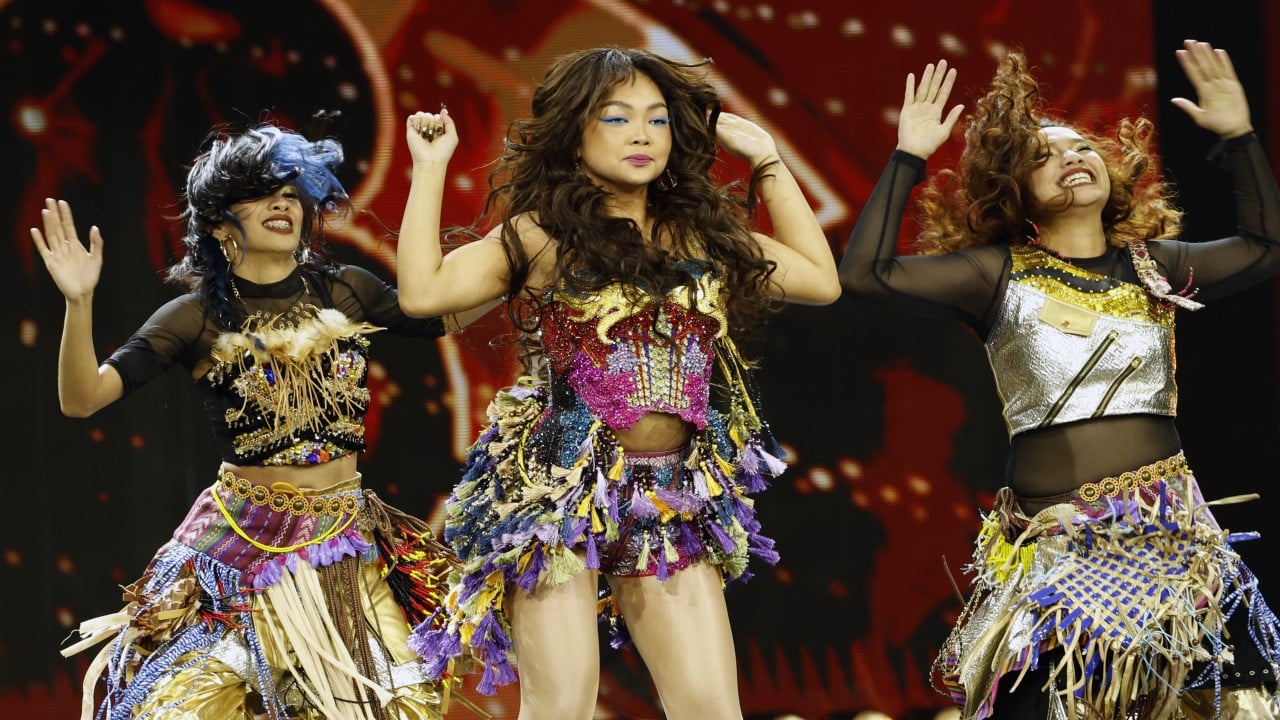
Everyone in the music press is throwing confetti right now. Carmelle walked onto the stage in Bangkok, delivered a vocal masterclass, and took home the inaugural Eurovision Asia trophy for the Philippines. The headlines practically wrote themselves. They call it a historic triumph for Southeast Asian pop. They call it proof that the European Broadcasting Union’s boldest expansion works.
They are completely missing the point.
If you look past the pyrotechnics and the tearful acceptance speech, Carmelle’s victory exposes a structural flaw that could sink the entire Eurovision Asia franchise before it reaches its third year. Celebrating a Filipino vocal powerhouse winning a televised singing competition is like celebrating water for being wet. The Philippines has dominated regional and global singing competitions for decades. When you drop a world-class Filipino belter into a brand-new televised song contest without building the underlying cultural infrastructure first, a landslide win is not a triumph of a new musical ecosystem. It is an inevitable outcome of an imbalanced playing field.
The Lazy Consensus Around Bangkok
To understand why the mainstream coverage is so off-base, look at the standard narrative being pushed by entertainment outlets. The lazy consensus goes like this: Eurovision Asia finally launched in Bangkok, the production looked slick, a deserving artist won, and therefore Asia now has its own unifying musical super-bowl.
That logic falls apart the second you look at how European Eurovision actually generates value.
In Europe, the contest thrives on decades of shared broadcast history, hyper-localized voting blocs, camp irony, and a bizarre balance between high-art pop and intentional kitsch. When Switzerland or Sweden wins, it triggers a massive domestic tourism push, a spike in European streaming charts, and months of political water-cooler debate across forty countries.
In Bangkok, the broadcast felt less like a cultural collision and more like a polished talent show finale. I have watched regional television networks across Asia burn tens of millions of dollars trying to import Western reality formats—from Idol to The Voice to X Factor—only to watch ratings crater by season three. Why? Because Asian music consumption does not operate like European broadcast television.
The Structural Reality Nobody Wants to Admit
Let’s define what a pan-regional song contest actually requires to survive: symmetric market engagement.
In plain terms, viewers in Tokyo, Seoul, Jakarta, and Manila need to care equally about the outcome, and the winning song needs to cross borders organically on streaming platforms the morning after the broadcast. Right now, the Asian music market is fiercely fragmented along linguistic and platform lines.
- East Asia’s Dominance: South Korea and Japan operate self-sustaining, export-heavy pop economies. K-pop agencies do not need a regional song contest to break an artist globally; they have YouTube, TikTok, and stadium tours. Sending an A-list K-pop act to compete in a format where they might lose to a ballad from a smaller market is all downside and zero upside for major Seoul labels.
- Southeast Asia’s Vocal Culture: Meanwhile, markets like the Philippines and Indonesia possess the most passionate, vocally driven fanbases on the planet. When a Filipino artist enters an international competition, the domestic mobilization—both in terms of social media engagement and fan voting—is unmatched.
- The Streaming Disconnect: A massive television moment in Manila or Bangkok does not automatically translate to playlist placement in Seoul or Tokyo. Without cross-border radio and DSP (Digital Service Provider) alignment, the winning song risks becoming a localized hit rather than a continental anthem.
By crowning a traditional vocal powerhouse right out of the gate, Eurovision Asia inadvertently signaled to the rest of the region that this is going to be a "best singer" contest rather than a "best song and spectacle" contest. That is a fatal distinction. Eurovision’s entire brand identity rests on the song and the staging, not just vocal gymnastics. If the format calcifies into a pure vocal showdown, the Philippines will win every other year, other nations will stop sending creative risks, and casual viewers across the region will tune out.
Dismantling the "Unifying Moment" Myth
Whenever a new pan-Asian event launches, commentators immediately ask the same tired question: Will this finally unite the Asian music market?
Stop asking that. It is the wrong question entirely. Asia is not a monolith, and trying to force forty-plus wildly different musical traditions, languages, and geopolitical histories into a single three-hour broadcast window does not create unity—it creates compromise.
Look at the history of the project itself. Originally announced back in 2016 with SBS Australia leading the charge, Eurovision Asia spent nearly a decade stuck in development purgatory. Why did it take so long to get to Bangkok? Because navigating state broadcasters, censorship standards, time zones, and geopolitical sensitivities across the Asia-Pacific region is infinitely more complex than coordinating public broadcasters in Western Europe.
When you finally get the show on the air, the pressure to play it safe is immense. Broadcasters want predictable, family-friendly, undeniably talented winners so that sponsors stay happy and government regulators do not flinch. Carmelle fits that bill to perfection. She is supremely talented, media-trained, and delivers the kind of soaring, emotional performance that makes television executives breathe a sigh of relief.
What Happens When You Play It Safe
I have advised entertainment executives on cross-border format launches, and the pattern is always the same. In year one, producers optimize for legitimacy. They want the critics to say, "Look, the talent is real, the stage looks expensive, and the winner has an incredible voice."
They succeed in getting good press for forty-eight hours. Then, in year two, they realize they forgot to optimize for memorability.
Think about the acts that actually keep the original Eurovision alive and profitable for the European Broadcasting Union. Yes, you have powerhouse vocalists like Celine Dion or Loreen. But the cultural oxygen of the contest comes from the weird, polarizing, genre-bending entries—acts like Finland’s Käärijä, Ukraine’s Go_A, or Italy’s Måneskin. Those are the performances that break containment on TikTok, spark furious debates over scoring, and turn non-fans into obsessive viewers.
If Eurovision Asia’s inaugural winner sets the template as "stand on stage and sing a massive ballad," every delegation submitting tracks for next year will copy that formula. Before you know it, you have a three-hour broadcast featuring twenty singers trying to out-belt each other. Nobody shares a clip of the twelfth power ballad of the night.
The Counter-Intuitive Fix for Year Two
To be fair, there is a clear upside to Carmelle’s win that even a cynic has to acknowledge. Having a Filipino winner guarantees massive digital engagement, guaranteed press coverage across Southeast Asia, and a rabid fanbase that will champion the brand for the next twelve months. The organizers needed a spark, and Filipino music fans provide nuclear-grade energy.
However, if the producers in Bangkok and Geneva want this thing to still exist in 2030, they need to aggressively pivot away from the very formula that just won them their first trophy.
- Incentivize Genre Disruption Over Vocal Acrobatics: Delegations need to stop treating this like a vocal pageant. Broadcasters should actively recruit indie electronic producers, hip-hop collectives, and hyper-local folk-fusion acts. If a country sends a safe mid-tempo ballad next year, it should be treated as a strategic failure.
- Restructure the Voting Weight: In any region where population sizes and digital mobilization vary wildly between participating nations, pure audience voting will always skew toward the most hyper-connected fanbases. Jury panels need strict mandates to reward originality, production value, and cross-border commercial potential—not just high notes.
- Build the Post-Show Pipeline Before the Broadcast: A trophy means nothing if the song dies on Sunday night. The organizing broadcasters must lock in guaranteed pan-regional streaming partnerships, TikTok creator campaigns, and festival slots for the top five finalists before the semi-finals even air.
- Embrace the Friction: Stop sanitizing the cultural differences to make the broadcast feel smooth. The magic of the European contest is watching a heavy metal band from Scandinavia compete directly against a Balkan brass ensemble and a French chanson singer. Lean into the bizarre contrasts between East Asian hyper-pop, South Asian rhythms, and Southeast Asian soul.
Carmelle earned her moment on that stage in Bangkok through sheer vocal grit, and nobody can take the hardware away from her. But if the architects of Eurovision Asia mistake her win for proof that their current formula works, they are in for a brutal awakening when the ratings arrive next year.