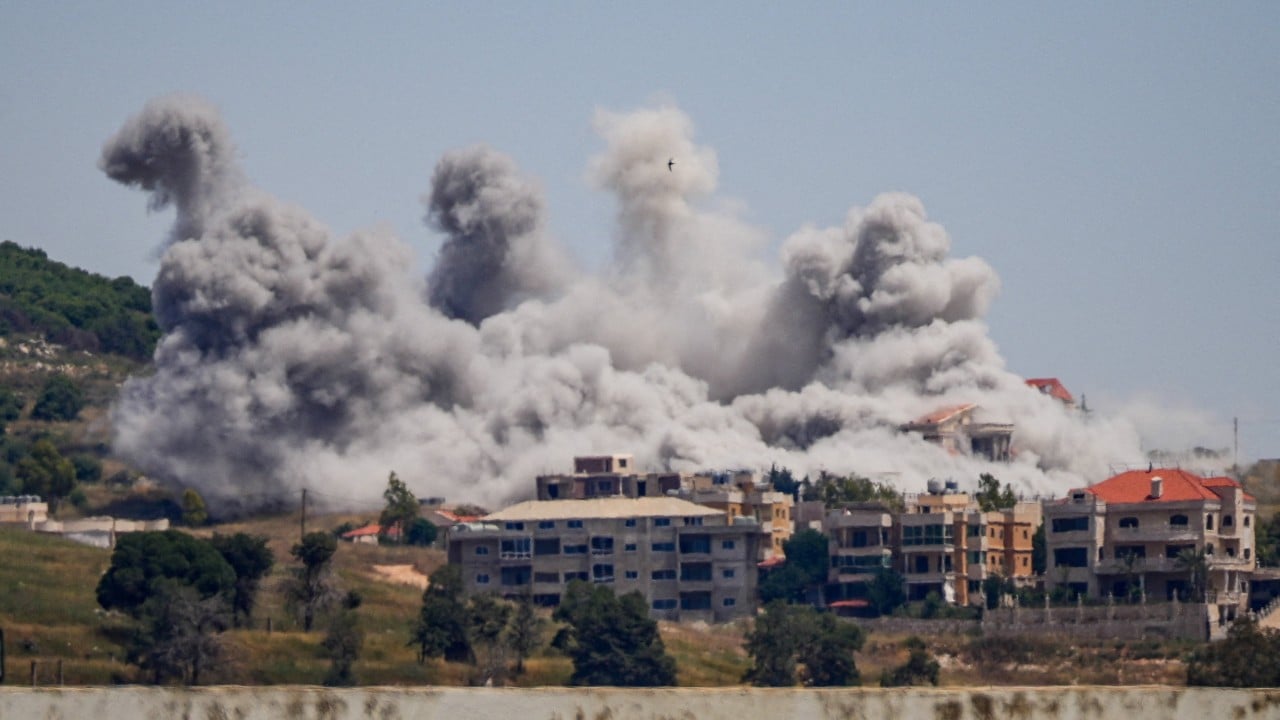
Diplomats love ink. They treat signed pieces of paper as if they possess magical properties capable of altering the physical reality on the ground. The latest round of international applause celebrating a renewed, fragile ceasefire between Israel and Lebanon—complete with promises of "Hezbollah-free zones" south of the Litani River—is a masterclass in geopolitical theater.
It is also an absolute fantasy.
The mainstream media covered this agreement with the usual lazy consensus: a mix of cautious optimism, tracking maps, and quotes from UN officials who haven’t left their fortified compounds in Beirut or Jerusalem in years. The consensus narrative suggests that enforcement mechanisms, international monitors, and the Lebanese Armed Forces (LAF) can create a buffer zone.
They cannot. They will not. To understand why, you have to look past the political grandstanding and look at the actual architecture of modern asymmetric warfare.
The Asymmetry Matrix: Why Maps Lie
The foundational flaw of any "Hezbollah-free zone" is the assumption that a non-state military force operates like a conventional army. Conventional armies rely on visible supply lines, large barracks, and identifiable uniforms. You can push a conventional army behind a river.
You cannot push an ideology or a decentralized network behind a river.
Hezbollah is not merely an occupying force in southern Lebanon; it is the local infrastructure. For decades, the group integrated its military assets directly into the civilian fabric of hundreds of Shiite villages. We are talking about dual-use infrastructure: missile silos disguised as agricultural sheds, underground command centers beneath family homes, and fiber-optic communication networks buried alongside municipal water lines.
Conventional Military Buffer vs. Asymmetric Reality

[Conventional Thinking]
Israel Border ========> [ Empty Buffer Zone ] ========> Enemy Army Base

[Asymmetric Reality]
Israel Border ========> [ Civilian Village / Embedded Assets ] ========> Rocket Network
When an agreement states that Hezbollah must withdraw its fighters from the south, it ignores a basic sociological reality. The fighter is the local farmer. The logistics coordinator is the village grocer. They do not pack up their bags and march north across the Litani River. They simply lock their weapon in a hidden cache, change out of their tactical gear, and remain in their homes.
I have watched international observers attempt to verify these kinds of demilitarization agreements in various conflict zones for fifteen years. The pattern is always identical. UN monitors drive down main roads in marked white SUVs. The local actors look completely benign. The moment the SUVs turn the corner, the operational readiness returns to 100%. Expecting the UN Interim Force in Lebanon (UNIFIL) or the underfunded Lebanese Armed Forces to dismantle this embedded network is a terminal misunderstanding of the local power balance.
The Technology Fallacy: Sensors Do Not Stop Rockets
A core component of the new enforcement narrative relies on advanced surveillance technology. The media reports on automated sensor grids, drone patrols, and satellite imagery designed to detect any hostile movement in the buffer zone. This sounds impressive to a tech-enthusiast public, but it fails under real combat conditions.
Asymmetric forces adapted to the modern surveillance state years ago. They do not move in large convoys. They use low-tech counter-measures that render multi-million dollar sensor suites completely useless:
- Subterranean Logistics: Transporting materials through deep, hand-dug tunnels that block thermal imaging and ground-penetrating radar.
- Commercial Drone Mimicry: Using off-the-shelf hobbyist drones that blend into civilian air traffic, masking recon flights.
- Decoupled Launchers: Utilizing remote-detonated, pre-positioned rocket tubes buried in the dirt months in advance. The operator can trigger the launch from a smartphone in Beirut, miles away from the "Hezbollah-free" zone.
Technology only records the failure of diplomacy; it does not prevent it. A sensor can tell you a rocket just fired from an orchard, but it cannot stop the rocket from being placed there in the first place when the enforcement mechanism relies on a weak Lebanese state that fears a civil war more than it fears a treaty violation.
Dismantling the Premise of the "Peace Process"
When analyzing public sentiment, people frequently ask variants of the same flawed question: How can international monitors make this ceasefire permanent?
The question itself is broken. It assumes a permanent ceasefire is the actual goal of the participants. It is not.
For Israel, a ceasefire is an operational pause. It allows the military to rest reserves, replenish iron dome interceptors, gather fresh intelligence, and refocus on other regional threats. For Hezbollah and its patrons in Tehran, a ceasefire is a tactical retreat to rebuild shattered command structures, import newer guidance kits for their precision-guided munitions, and wait out the political will of the Israeli electorate.
The uncomfortable truth nobody admits is that both sides view the ceasefire agreement as a continuation of war by other means.
The Fatal Flaw of the Lebanese Armed Forces
The mainstream press constantly positions the Lebanese Armed Forces as the savior of this agreement. The strategy relies on the LAF deploying thousands of troops to the south to hold the line.
Let's look at the actual capacity of the LAF. Lebanon is trapped in an unprecedented, multi-year economic collapse. Soldiers in the national army are paid in a hyper-inflated local currency, often making less than $100 a month. The army relies heavily on foreign aid, including food rations provided by external donors, just to prevent mass desertion.
More importantly, the LAF is a multi-confessional army reflecting Lebanon’s delicate sectarian balance. It contains Sunni, Christian, Druze, and Shiite soldiers. If the political leadership orders the LAF to aggressively disarm Shiite Hezbollah fighters in the south, the army will fracture along sectarian lines. The leadership knows this. Therefore, the LAF will adopt a strategy of passive observation. They will setup checkpoints, check IDs, and look the other way when the real military traffic moves through the backroads.
The Risk of Our Own Perspective
To be intellectually honest, challenging the ceasefire narrative carries its own analytical risks. The main downside to this contrarian view is that it can minimize the temporary relief these agreements bring to civilian populations. For a few months, or even years, the rockets stop. Families return to their homes. Economic activity restarts.
It is easy to mistake this quiet for peace. But confusing a temporary absence of violence with a structural resolution to a conflict is the exact mistake that makes the next escalation far more destructive. By pretending a piece of paper solved the underlying geopolitical reality, policymakers fail to prepare for the inevitable breakdown.
The Reality of Regional Logistics
A ceasefire does not change geography. Lebanon shares a long, porous border with Syria. That border is the primary pipeline for advanced weaponry flowing from Iran.
The Resupply Pipeline

[ Iran ] ======> [ Iraq / Transshipment ] ======> [ Syria Border ] ======> [ Lebanon / Bekaa Valley ] ======> [ Southern Front ]
As long as the Syrian corridor remains open, any equipment destroyed in southern Lebanon will be replaced. A true buffer zone would need to encompass the entire region, sealing off the Bekaa Valley and the northern borders. Since no international coalition has the stomach for an operation of that scale, the southern "free zone" remains an isolated theater box while the backstage remains fully operational.
Stop looking at the signatures on the document. Stop listening to the self-congratulatory speeches in New York and Paris. The map is not the territory, the treaty is not the reality, and the zone is far from free. Turn off the news, ignore the artificial quiet, and watch the supply lines. That is where the next war is already being built.


