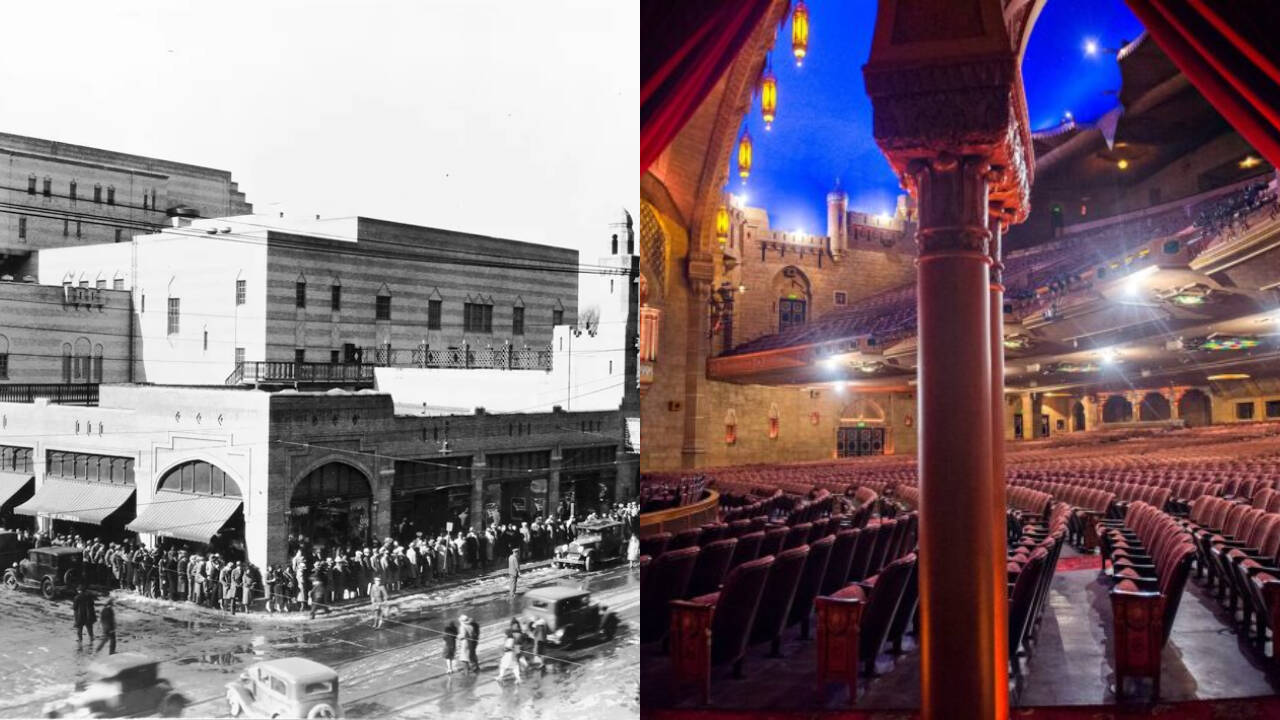
The air inside a true large-format auditorium smells slightly of ozone and warm dust, a sensory anchor for millions who remember what it feels like to surrender to the dark. For decades, the theater experience has faced a slow erosion, squeezed between the convenience of the living room couch and the relentless compression of streaming algorithms. Yet, certain cinematic artifacts refuse to be minimized. They demand scale. They demand architecture.
Christopher Nolan’s The Odyssey stepping back onto IMAX screens is not merely a scheduling announcement. It is a recalibration of how we consume mass mythology. Expanding on this idea, you can find more in: Why Hollywood Keeps Sanitizing French Literature and Why the New Les Mis Misses the Point.
Think back to the last time a film made you physically lean forward in your seat. Not out of cheap jump-scare reflex, but from the sheer vertigo of scale. When 70mm film stock unspools through a projector, it carries a physical weight. The grain is dense. The light feels captured, not emitted. You are not watching a monitor; you are standing in front of a storm.
To understand why this theatrical return matters, you have to look past the box office receipts and examine the human desire for shared, monumental awe. Observers at GQ have shared their thoughts on this matter.
Consider a hypothetical moviegoer named David, working a remote job in a cramped apartment. His world has shrunk to the twelve-inch glow of a laptop screen and the hum of a refrigerator. For David, a movie is background noise, paused mid-sentence to check an email or answer a text. The narrative arc is flattened, stripped of its demanding geometry by the multi-tasking demands of modern life.
When David walks into a theater exhibiting a Nolan production in its intended native format, something physiological shifts. His peripheral vision fills with towering rock faces and storm-swept seas. The rumble of the low-end frequencies vibrates through his ribcage. For nearly three hours, distraction becomes impossible. The cinema acts as a sensory monastic cell, forcing focus in an age of scattered attention.
That is the hidden contract of the IMAX giant screen. It does not just show you a story; it traps you inside it.
Nolan’s cinematic language has always relied heavily on tactile reality. In an era where digital backlots and green screens dominate major studio outputs, his insistence on practical effects, real physical locations, and massive film cameras acts as a stubborn anchor to the physical world. When a ship battles mountainous swells or a character traverses an unforgiving landscape, the grit you see is real dust hitting a real lens.
Bringing such a production back to the largest possible canvas highlights a distinct cultural tension. We live in an era that worships portability. We want our entertainment pocket-sized, instantaneous, and disposable. Yet, the enduring hunger for the IMAX experience proves that humans still crave the cathedral. We want spaces that humble us. We want art that dwarfs our daily anxieties.
The box office history of expanded-format theatrical re-releases tells a quiet story of audience rebellion. People are tired of pixels compressed to fit a smartphone screen. They miss the collective intake of breath from three hundred strangers sitting in the dark. That shared silence is fragile. It cannot be replicated via a home theater setup, no matter how many speakers you mount to your drywall.
There is also a generational transmission happening in these darkened rooms. Younger audiences, raised on vertical video feeds and rapid-fire algorithmic cuts, are discovering the hypnotic power of sustained, sweeping long takes. They are learning what patience looks like in a visual medium. When the camera pans slowly across a vast, desolate horizon, it gives the mind room to wander, to project its own fears and hopes onto the silver screen.
The logistics of these theatrical runs require precision engineering. Modern projectionists and theater technicians work behind the scenes like museum curators handling priceless antiquities. Handling massive film platters, calibrating laser alignment, and synchronizing multi-channel sound systems are fading arts. Each screening is a live performance of light and shadow, vulnerable to human touch and mechanical passion.
As the projector gate rattles and the lights fade down to absolute black, the noise of the outside world recedes. Taxes, deadlines, and digital notifications vanish beneath a tidal wave of sound and vision.
The screen towers above the front rows, a monolith of light waiting to be charged. We buy our tickets not just for escapism, but to remember what it feels like to be small in the presence of something vast.
The lights go down. The projector hums to life. The horizon opens.