The air in the Oval Office usually smells of old paper, polished wood, and the invisible weight of global anxiety. But when the talk turns to the Middle East, the scent changes. It begins to smell like aviation fuel, burning sand, and the sharp, metallic tang of adrenaline. For decades, American foreign policy in this region has been written in a single, predictable language. Steel. Fire. Thunder.
We have grown accustomed to the spectacle of a superpower flexing its muscles, treating one of the most volatile patches of earth on the planet as a chessboard where the pieces are moved by the sheer force of gravity and gunpowder.
Then, the tone shifted.
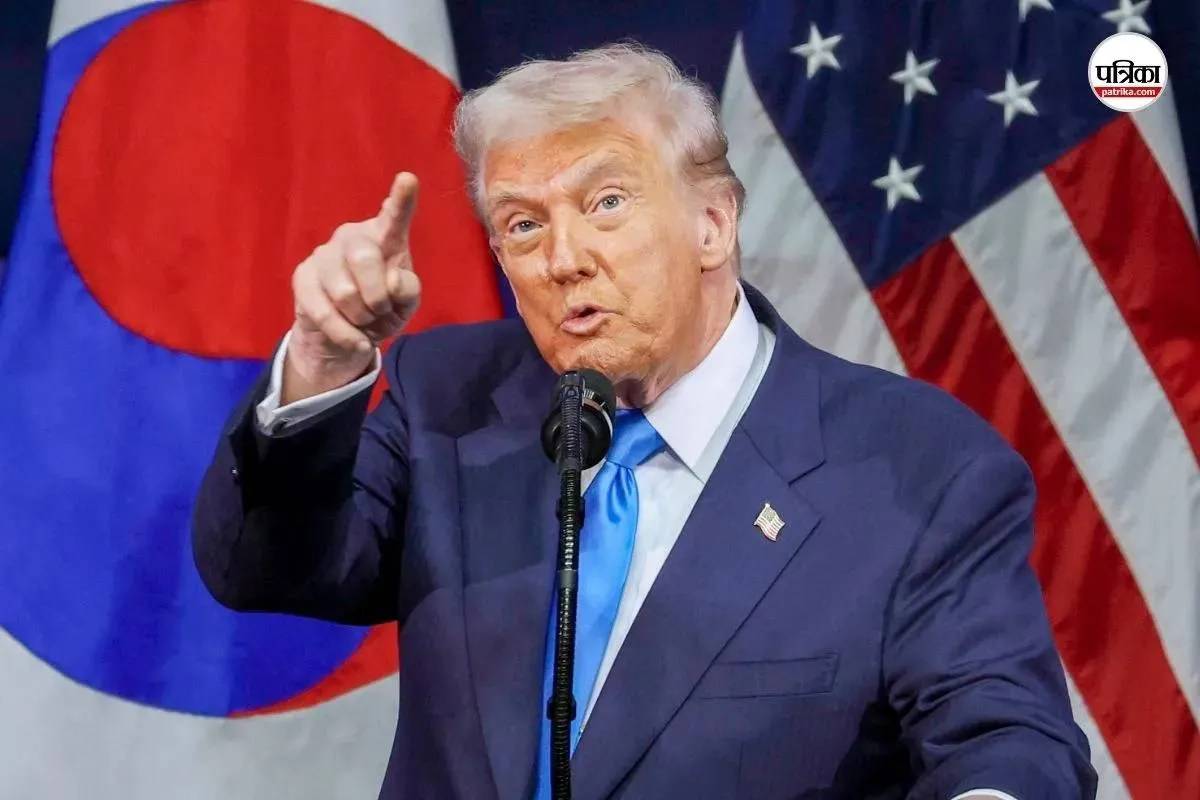
Donald Trump, a man whose political brand was built on the foundation of maximum pressure and fiery rhetoric, stood before the cameras and uttered a phrase that caused a sudden, collective intake of breath across global embassies. He noted that if a solution could be reached without bombing, he would be happy.
Happy. It is an unusual word for a commander-in-chief to use when discussing geopolitical chess. It lacks the clinical detachment of "strategic alignment" or the aggressive certainty of "deterrence." It sounds human. It sounds almost relieved.
To understand why this matters, you have to look past the teleprompters and the official press releases. You have to look at the dust.
The Weight of the Invisible Scale
Imagine a small merchant in a bustling market in Dubai or a family sitting down to dinner in Riyadh. They do not read the daily intelligence briefings. They do not care about the precise throw-weight of a Tomahawk missile. What they care about is the subtle vibration in the ground. For years, that vibration has signaled impending disaster. When Washington speaks of escalation, the markets in the Gulf hold their breath. Insurance rates for oil tankers skyrocket. Investments freeze. Life slows down to a tense, expectant crawl.
The traditional playbook dictates that power must be demonstrated through noise. If a rival misbehaves, you send a carrier strike group. If a proxy network acts up, you draw a red line in the sand with the tip of a bayonet. This approach has a certain brutal simplicity to it, but it ignores a fundamental truth about human nature.
Fear breeds defiance just as often as it breeds compliance.
The competitor networks ran the headlines as a simple flip-flop, a standard political calculation ahead of changing diplomatic tides. They treated it as a dry adjustment of strategy. But this isn't just about a change in strategy. It is about a realization that the cost of the old way has become too high, not just in dollars, but in the currency of global stability.
Consider what happens when a superpower realizes that its most expensive tools are also its most blunt. A bomb can destroy a command center. It cannot build a lasting truce. It cannot guarantee that the oil will flow smoothly through the Strait of Hormuz tomorrow morning. The Gulf states, long viewed by Washington as mere spectators or protectors of the status quo, have begun to write their own script. They are no longer waiting for the heavy lifting to be done by Western military might. They are initiating the conversations themselves.
The Quiet Architecture of Gulf Diplomacy
The shift did not happen in a vacuum. While the world was watching the public posturing, a quiet, parallel effort was unfolding across the capitals of the United Arab Emirates, Saudi Arabia, and Qatar. It is an architecture built on necessity.
For these nations, regional conflict is not a distant news story watched on a screen three thousand miles away. It is happening in their backyard. A single miscalculation can send a drone into a desalination plant or an oil refinery, crippling an economy overnight.
This vulnerability has bred a sophisticated form of pragmatism. The Gulf initiatives are not born out of sudden pacifism; they are driven by cold, hard survival. They have looked into the abyss of a total regional war and decided that the alternative—painstaking, frustrating, slow-moving diplomacy—is infinitely preferable.
Trump’s altered tone is a direct reflection of this local gravity. When the people holding the purse strings and controlling the energy corridors tell you they want a diplomatic off-ramp, even the most hawkish leaders are forced to listen. The language of "no bombing" isn't a sign of weakness. It is an acknowledgment that the local actors have successfully changed the price of admission.
They have made peace look like a better business deal than war.
The Friction of Changing Lanes
It is easy to be cynical about this. Anyone who has followed the history of the region knows that promises are written in water and alliances can dissolve like salt in a rainstorm. The doubt is real, and it is justified. How do you trust a sudden preference for dialogue from a leadership style that previously thrived on unpredictable aggression?
The answer lies in the mechanics of leverage.
In the past, the United States acted as the ultimate guarantor of security, a massive shield that allowed regional players to avoid talking to their enemies. If you had a problem with an adversary, you called Washington. Washington sent the planes. But that shield has become heavy, and the American public has grown weary of holding it up.
Now, the dynamic has reversed. The regional powers are doing the talking, and Washington is being asked to provide the rubber stamp of approval. This creates a different kind of tension. It requires a superpower to learn a skill it has rarely practiced.
Listening.
This transition is messy. It lacks the clean narrative arc of a military victory. There are no flags planted in the dirt, no dramatic announcements of missions accomplished. Instead, there are long, tedious meetings in air-conditioned rooms, late-night phone calls across multiple time zones, and the constant, nagging fear that one rogue actor could ruin months of delicate progress.
The Real Cost of the Alternative
Let us step away from the diplomatic tables and look at the actual stakes. The true measure of this shift isn't found in the fluctuating price of crude oil or the percentage points in political polls. It is found in the absence of violence.
Every time a diplomatic initiative succeeds, even temporarily, a sequence of events is prevented. A siren does not wail in a residential neighborhood. A young pilot does not climb into a cockpit for a mission from which they might not return. A family does not have to pack their lives into suitcases and flee across a border.
The dry reports call this "de-escalation." It is a sterile word that masks the raw relief of human survival.
When a leader says they would be happy to find a solution without bombing, they are accidentally admitting a profound truth. They are acknowledging that the old tools have failed to deliver the one thing everyone actually wants. Security. Not the temporary security that comes from flattening an enemy's infrastructure, but the durable security that comes when your neighbor decides it is no longer worth their time to hate you.
The path forward is incredibly narrow, filled with potholes and lined with critics who prefer the clarity of conflict over the ambiguity of compromise. The skeptics will argue that this is merely a temporary pause, a tactical breath before the next storm. They might be right. The Middle East has broken the hearts of optimists for centuries.
But for a brief moment, the language has changed. The heavy machinery of war has been told to wait in the wings while the negotiators take the stage. It is a fragile, uncertain experiment, conducted in the harshest environment imaginable. Yet, as the desert wind shifts, it carries with it a faint, unfamiliar scent.
The smell of an opportunity that doesn't require a spark to catch fire.