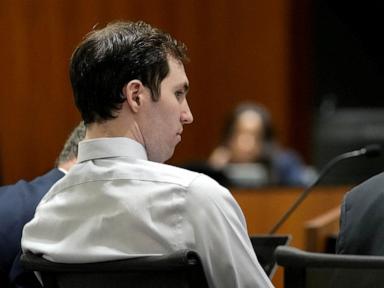
Nearly a year after conservative activist Charlie Kirk was fatally shot at Utah Valley University, the legal proceedings against the accused gunman have crossed a critical threshold. Fourth District Court Judge Tony Graf ruled that 23-year-old Tyler Robinson must stand trial for aggravated murder, a capital offense that leaves the door open for the death penalty. The decision follows months of evidentiary hearings, intense legal posturing, and deep scrutiny over the nature of political violence in contemporary America.
The path to this courtroom milestone has been marked by fierce debate between prosecutors and defense counsel regarding the precise statutory thresholds required for a capital case. Utah County prosecutors built their argument around a mountain of physical evidence, digital communications, and witness testimonies. Central to the state's push for aggravated murder—the prerequisite charge for capital punishment in the state—was the argument that the shooter knowingly endangered dozens of others when he fired into a crowded public campus venue.
Defense attorneys concentrated much of their strategy on dismantling these aggravating factors rather than contesting the underlying physical facts. They contended that because the shooter aimed at a specific individual and fired a single round, the state failed to meet the strict legal definition of creating a widespread, indiscriminate risk of death to third parties. Judge Graf ultimately rejected this narrow interpretation, noting that firing a high-powered rifle toward a platform surrounded by thousands of attendees constitutes a reasonable hazard to neighboring individuals.
Beyond the immediate mechanics of the shooting, the prosecution has signaled its intent to prove a political motive. State attorneys argue that ideological disagreements regarding social policies drove the defendant to target Kirk. This argument serves a dual purpose within the state's legal framework. It establishes a narrative of premeditation and provides a foundation for the aggravating circumstances necessary to sustain a capital murder indictment. Defense representatives have pushed back against these assertions, warning against speculative leaps regarding intent and ideology.
The procedural battles have extended past the core arguments of guilt and innocence. Earlier in the proceedings, legal teams clashed over evidentiary transparency, expert analyses of ballistics, and pre-trial public statements. The presiding judge even found a top prosecutor in contempt earlier this year for overstepping boundaries during media interviews, penalizing the state by expanding the prospective jury questioning pool rather than dismissing capital charges. Such friction highlights the immense pressure surrounding high-profile political homicides, where public scrutiny routinely threatens to compromise judicial equilibrium.
With the not-guilty plea formally entered following the judge's bind-over decision, the case now moves toward pretrial conferences and eventual jury selection. The ultimate determination of whether the state will successfully execute a capital conviction rests on its ability to prove beyond a reasonable doubt not only that Robinson pulled the trigger, but that statutory aggravators like mass endangerment and targeted political animus legally justify the ultimate penalty.
The unfolding courtroom dynamic will test the limits of Utah's capital punishment statutes against the backdrop of a deeply polarized national landscape.
Judge Hears Arguments on Whether Tyler Robinson Should Face Trial
This video provides a look at the courtroom proceedings and legal arguments surrounding the decision to bring the accused gunman to trial.