The Strait of Hormuz is not a place for poetry. It is a choke point of salt, heat, and high-tensile steel. At its narrowest, the passage shrinks to a mere twenty-one miles wide, a geographic throat through which one-fifth of the world’s liquid energy must pass. When a tanker crawls through those waters, the crew isn't thinking about pop culture. They are thinking about the invisible line between international waters and a coastal battery. They are thinking about the silence of a radar screen just before it pulses with a threat.
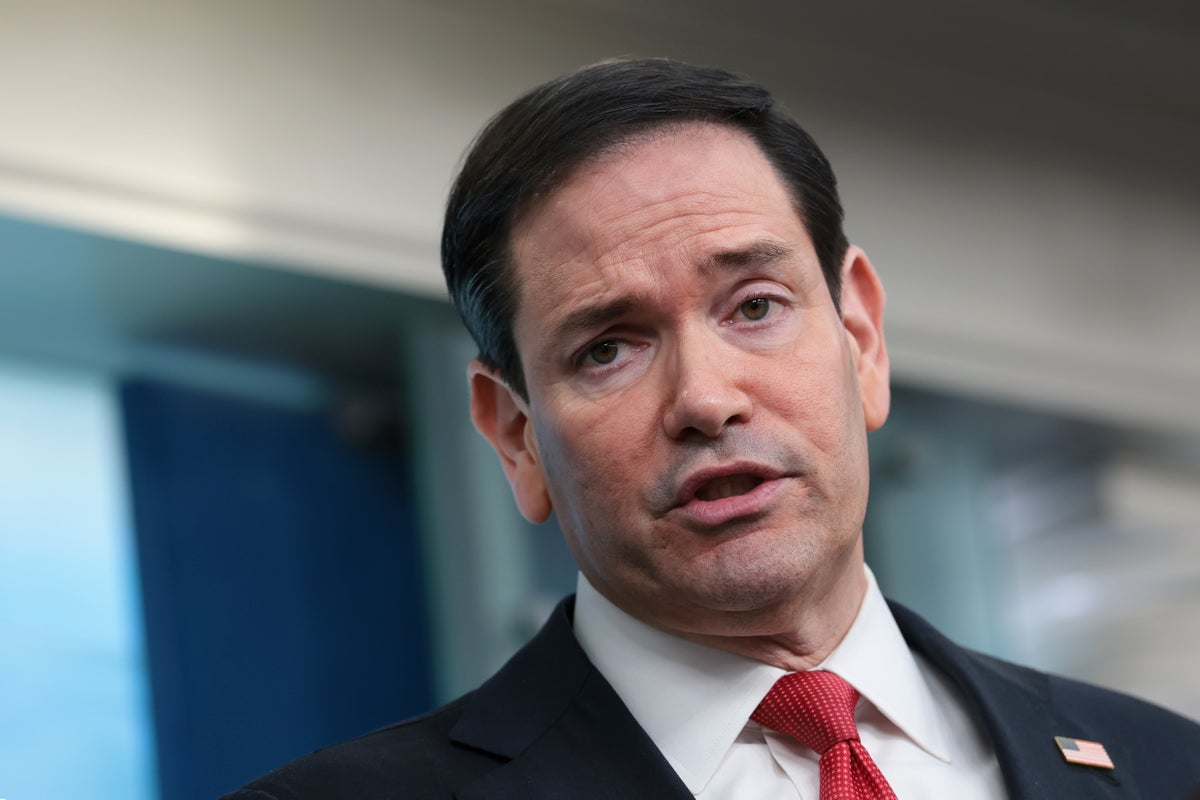
Yet, in the air-conditioned halls of Washington, the tension of the Persian Gulf recently found an unlikely soundtrack. Senator Marco Rubio, a man known for balancing the rigid geometry of foreign policy with a surprisingly deep mental catalog of 1990s hip-hop, decided that the only way to explain the geopolitical stalemate was to channel the late Tupac Shakur. Also making headlines recently: The Rubio Doctrine and the Dangerous Illusion of a Finished Mission in Iran.
"Hit 'Em Up."
That was the reference. To the uninitiated, it’s a diss track—perhaps the most aggressive ever recorded. To Rubio, it was a diagnostic tool for Iranian statecraft. Additional details on this are detailed by Reuters.
The Theater of the Narrow Seas
Imagine a merchant sailor named Elias. He is fictional, but his pulse is real. Elias stands on the bridge of a VLCC (Very Large Crude Carrier) carrying two million barrels of oil. To his left lies the Musandam Peninsula of Oman; to his right, the jagged, arid coast of Iran. He knows that beneath the waves, there are mines. He knows that in the speedboats buzzing like hornets in the distance, there are young men with RPGs and a mandate to harass.
For Elias, the "stalemate" isn't an abstract concept discussed over lattes. It is the tactical reality of "creeping normalcy." Iran tests the boundaries. They seize a ship. They release a ship. They drone a deck. They deny the drone. It is a dance of provocation designed to see exactly how much the West will endure before the cost of oil outweighs the cost of a strike.
When Rubio invokes Tupac, he isn't just trying to look cool. He is pointing to the performative nature of the conflict. The Iranian leadership, in his view, operates on a logic of bravado that mirrors the "Death Row vs. Bad Boy" era of rap history. It is about perceived disrespect, territorial claims, and the constant, vibrating threat of escalation.
The Senator’s use of "Hit 'Em Up" serves as a metaphor for the rhetoric coming out of Tehran. The song is a scorched-earth declaration of war. It doesn't seek a middle ground. It seeks total delegitimization of the opponent. By quoting it, Rubio is arguing that the Iranian regime isn't looking for a "Grand Bargain" or a nuanced diplomatic exit. They are playing a zero-sum game.
The Psychology of the Choke Point
Why does this matter to someone sitting in a suburban driveway in Ohio? Because the Strait of Hormuz is the world's carotid artery. If it is squeezed, the global economy has a stroke.
The stalemate Rubio described is a psychological war of nerves. Iran uses its geography as a weapon of the weak against the strong. They cannot win a conventional blue-water naval battle against the U.S. Fifth Fleet. They know this. So, they turn the Strait into a dark alleyway.
Consider the "Stalemate" as a physical sensation. It is the feeling of a standoff where both parties have their hands on their holsters. The U.S. maintains the "freedom of navigation" operations, asserting that these waters belong to the world. Iran asserts that they are the neighborhood watch, and they don't like the look of the visitors.
The humor in Rubio’s "DJ" persona—a nickname earned through his frequent tweets of lyrics and song titles—acts as a pressure valve. It humanizes a conflict that is otherwise terrifyingly cold. When we talk about "centrifuges" and "enrichment levels" and "kinetic interventions," the human brain tends to glaze over. It feels like a math problem. But when you talk about a "diss track," you understand the stakes. You understand that pride, reputation, and the need to save face are driving the missiles as much as any religious or political ideology.
The Invisible Stakes of a Lyric
The "Hit 'Em Up" philosophy suggests that once the rhetoric reaches a certain volume, there is no going back. In the song, Tupac famously claimed there was "no truce" and "no love."
Rubio’s subtext is clear: the current stalemate is an illusion of peace. Behind the scenes, the Iranian leadership is, in his estimation, doubling down on a posture of permanent hostility. The "classic" he quoted wasn't chosen for its beat, but for its bitterness.
But here is where the metaphor gets heavy. In the rap wars of the 90s, the rhetoric eventually led to real bodies in the street. The words created an environment where violence became the only logical conclusion for those involved. Rubio is warning that the "theatrical" harassment in the Strait—the buzzing of ships, the laser-pointing at helicopters, the defiant speeches—is creating a similar environment.
The danger of a stalemate is that it is inherently unstable. It requires both sides to remain perfectly still while the ground shifts beneath them. One nervous radar operator, one overzealous speedboat commander, or one misinterpreted lyric can turn a standoff into a fireball.
The Man Behind the Mic
We often view politicians as avatars of their parties, devoid of personal texture. But Rubio’s "DJ" moments reveal a man trying to bridge the gap between the ancient grievances of the Middle East and the modern sensibilities of his constituents. He is using the language of the street to describe the maneuvers of the state.
It is a risky move. Critics often dismiss it as "cringe" or out of touch. But look closer. He is taking a complex, multi-generational conflict and stripping away the academic jargon. He is saying: "They are talking tough, they are making threats, and they are trying to bully us out of the lane."
The real human element lies in the uncertainty. We live in a world where a Senator from Florida uses a song from a dead rapper to describe the potential start of a global energy crisis. It is surreal. It is strange. And yet, it makes more sense than a thousand-page white paper from a think tank.
We are all Elias on that tanker, to some extent. We are all moving through a narrow passage, hoping the people in charge don't decide to "hit 'em up" for real. The stalemate persists not because of a balance of power, but because of a balance of fear.
There is a specific kind of silence that follows a loud song. After the bass stops thumping and the aggressive lyrics fade, you are left with the hum of the engine and the sound of the waves. In the Strait of Hormuz, that silence is the most expensive thing on earth. Rubio’s quote was a reminder that the music is still playing, the volume is turned all the way up, and nobody has reached for the dial yet.
The sun sets over the Persian Gulf, turning the water the color of bruised plums. The tankers continue their slow, rhythmic crawl. On the shore, the batteries remain manned. In Washington, the tweets are sent. And somewhere, the ghost of a rapper provides the soundtrack for a war that hasn't happened yet, but feels like it's just one verse away.