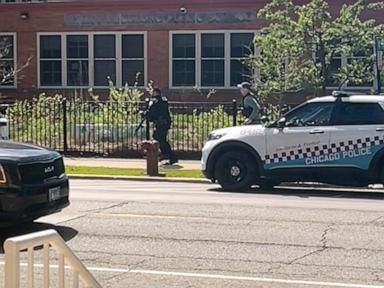
Gunshots inside a place of healing aren't just tragic. They're a systemic failure. When a gunman opened fire at Mercy Hospital in Chicago, killing a police officer, a doctor, and a pharmaceutical assistant, it wasn't just another headline in a city already weary of violence. It was a brutal reminder that the "sanctuary" of a hospital is often an illusion. One officer died. Another fought for his life in critical condition. Lives vanished in a parking lot and a hallway because a personal dispute spilled into a public space where people are at their most vulnerable.
Chicago has seen its share of bloodshed, but this specific incident at Mercy Hospital highlights a terrifying trend. Hospitals are increasingly becoming soft targets for domestic violence and targeted attacks. We need to stop acting surprised and start looking at why our safety protocols didn't save Officer Samuel Jimenez or Dr. Tamara O'Neal.
The Cost of the Mercy Hospital Shooting
This wasn't a random act of mass chaos. It started with a domestic dispute. Juan Lopez confronted Dr. Tamara O'Neal, his former fiancée, in the hospital parking lot. He demanded his engagement ring back. When she said she didn't have it, he shot her. He didn't stop there. He went inside and kept firing.
Officer Samuel Jimenez, a 28-year-old father of three, didn't even have to be there. He was technically off-duty or in a different sector when the "shots fired" call came in. He ran toward the danger anyway. He was killed in the lobby. Dayna Less, a 24-year-old first-year pharmaceutical assistant who was just getting off an elevator, was also killed. She had nothing to do with the argument. She was just there, working, building a life.
The second officer, whose name was initially withheld during the chaos, ended up in critical condition after a bullet struck his holster. That small piece of plastic might have saved his life by slowing the round, but the trauma remains. The physical injuries are one thing. The psychological damage to the staff and patients who hid in closets and under hospital beds is something else entirely.
Why Hospital Security Protocols are Broken
Most hospitals rely on a "run, hide, fight" model that assumes the shooter is a stranger. But in healthcare settings, the threat is frequently someone known to a staff member. Domestic violence is a leading driver of workplace violence in hospitals. We spend millions on metal detectors at the front door, yet the parking lots remain wide open.
Lopez was able to kill Dr. O'Neal outside before he ever encountered a security guard or a locked door. If we aren't securing the perimeter, the lobby security is just theater. Honestly, it's frustrating to see the same mistakes repeated. We focus on the "mass shooter" profile—the lone wolf with a manifesto—while ignoring the much more common threat of the angry ex-partner.
Security experts often point out that hospitals are difficult to secure because they must remain accessible. You can't turn a Level 1 Trauma Center into a fortress without slowing down life-saving care. However, the Mercy Hospital shooting shows that "open access" comes with a lethal price tag. We have to find a middle ground. That means better surveillance in parking areas and perhaps even more armed presence in high-traffic zones during shift changes.
The Reality of Being a First Responder in Chicago
Officer Jimenez represents the best of the Chicago Police Department, but his death also shines a light on the impossible task we ask of these men and women. They're expected to transition from traffic stops to active shooter response in seconds. Jimenez had only been on the force for about 18 months. He was a "probationary" officer in the eyes of the department, yet he showed the courage of a twenty-year veteran.
Chicago’s violence problem is often discussed in terms of statistics and gang territory. This was different. This was a targeted hit that turned into a rampage. When a police officer is killed in a hospital, it sends a message that nowhere is safe. That's a terrifying thought for a city that's already struggling to keep its residents from moving away.
Domestic Violence is a Public Safety Crisis
If you look at the history of these types of shootings, the signs are almost always there. Lopez had a history of issues. He had been kicked out of a fire academy for conduct issues related to his behavior toward women. There were red flags that went ignored or weren't shared across different agencies.
We treat domestic violence as a private matter until it ends up in a hospital lobby. That's a mistake. We need better integration between HR departments and local law enforcement. If a doctor or a nurse tells their employer they're being harassed or threatened at home, that hospital needs to have a specific, high-alert security plan for that individual. It's not enough to tell them to "be careful."
Lessons from the Chaos
The response from the CPD was fast. Within minutes, hundreds of officers descended on the South Side hospital. They did their job. They neutralized the threat. Lopez was shot, though it was later determined he also suffered a self-inflicted wound to the head. The point is, the police response worked as intended. The failure happened long before the first shot was fired.
It happened when a man with a known history of volatility was able to walk up to a physician in a parking lot. It happened when the hospital's internal communication didn't immediately lock down the elevators where Dayna Less was standing. We have the technology to do better. Mass notification systems exist that can push alerts to every screen and phone in a building in three seconds. If that didn't happen at Mercy, we need to know why.
Moving Beyond Thoughts and Prayers
Every time this happens, the cycle is the same. There's a press conference. There's a vigil. Politicians talk about "senseless violence." But the violence isn't senseless to the person committing it; it's a calculated act of control. We need to stop using empty language and start talking about physical barriers and legal interventions.
- Secure the Perimeters: Parking lots are the most dangerous part of a hospital campus. Increased patrols and better lighting aren't enough. We need restricted access and rapid-response panic buttons in these zones.
- Red Flag Laws with Teeth: If someone is discharged from a training program or a job due to threats of violence, that information should be accessible to local law enforcement for weapon permit reviews.
- Internal Crisis Teams: Hospitals need more than just "security guards." They need crisis intervention teams specifically trained to handle domestic disputes on-site.
The loss of Dr. O'Neal, Officer Jimenez, and Dayna Less should have changed everything about how we view hospital safety. Instead, many facilities still operate with the same "it won't happen here" mentality. That's a dangerous way to run a healthcare business.
We don't need more studies on urban violence. We need immediate, tactical changes to how public-facing institutions protect their people. The Chicago Police Department lost a hero. The medical community lost a rising star. Families were destroyed. If that doesn't trigger a radical shift in security policy, nothing will.
Stop waiting for the next "shots fired" call. Evaluate your workplace security today. Demand better from the administrators who prioritize aesthetics over armor. If you see a colleague being harassed, report it. If you feel unsafe walking to your car, demand an escort. The only way to prevent another Mercy Hospital is to stop pretending it's an isolated incident. It's a pattern. Break it.