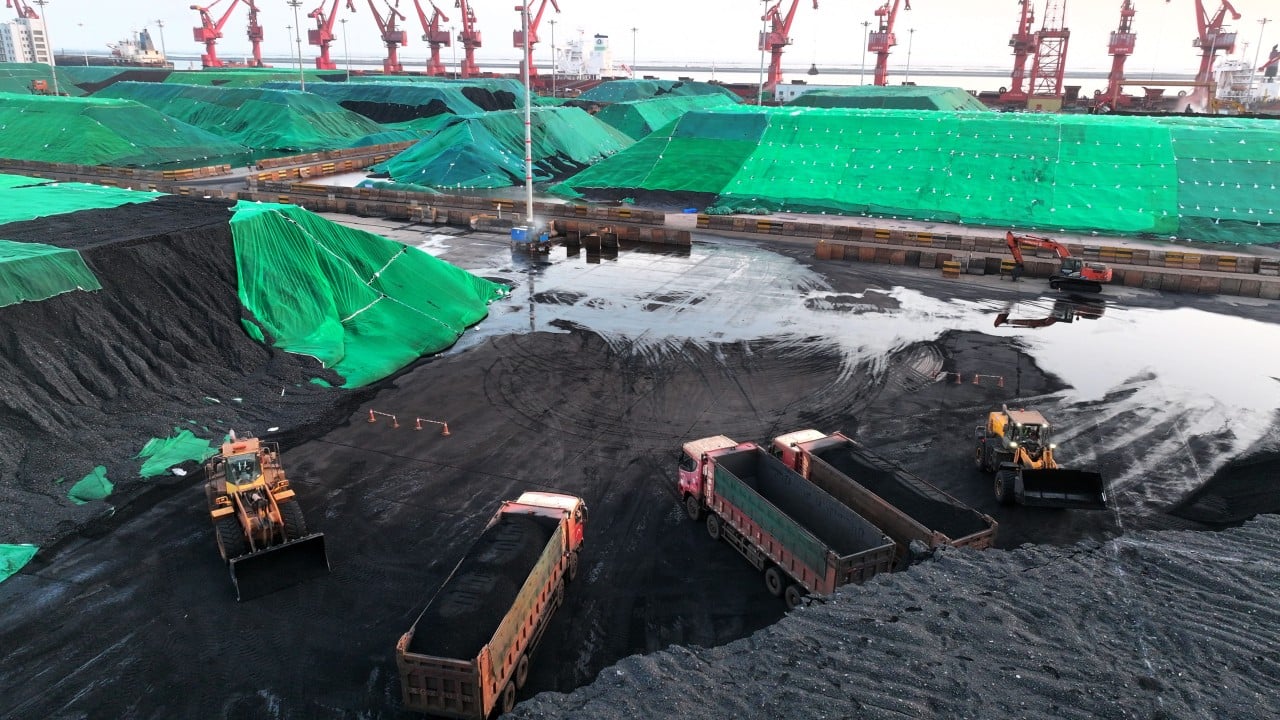
When superpowers negotiate trade packages behind closed doors, headlines always try to turn procedural compromises into massive global turning points. Following the high-profile Washington summit between Presidents Donald Trump and Xi Jinping, the official readout included a striking bullet point: China agreed to resume buying at least 10 million metric tons of American coal annually across 2027 and 2028.
At first glance, seeing the world's largest energy consumer carve out a specific import quota for American fossil fuels sounds like a seismic shift. If you look past the political posturing, however, the reality is far more modest. This specific coal commitment is basically a drop in the ocean of global commodity flows, masking what was otherwise a remarkably thin set of actual deliverables from the diplomatic table.
The Math Behind the Coal Deal
To understand why this agreement doesn't reshape the global energy map, you have to look at the numbers. China consumes billions of tons of coal every year to power its massive industrial base, importing hundreds of millions of tons annually from suppliers like Australia, Indonesia, and Russia. A commitment of 10 million metric tons a year accounts for roughly two percent of China's total import requirements.
It's a tangible gesture, but it's fundamentally a symbolic one. Analysts accurately described it as an easy promise for Beijing to keep because it fits neatly inside normal baseline commercial operations without forcing domestic power generators to radically alter their supply chains.
Furthermore, the logistical and qualitative realities of the coal market limit how far these shipments can go. The American product heading across the Pacific under this framework is expected to concentrate heavily in metallurgical or coking coal rather than thermal coal. Coking coal is the high-value grade used in steelmaking, which can actually absorb the punishing cost of long-haul ocean freight from U.S. ports to Chinese steel mills. Thermal coal burned for electricity generation faces steep hurdles, primarily due to quality specifications, sulfur content, and heavy competition from cheaper regional suppliers in Indonesia.
Navigating Established Global Competition
If American exporters want to capture that 10-million-ton target, they aren't walking into an empty room. They have to wrestle market share away from heavily entrenched competitors.
During recent shipping periods, Russia and Australia dominated the Chinese coking coal market, capturing the vast majority of import share between them. Long-haul shipments from the U.S. Gulf Coast will face stiff logistical hurdles, including specific port restrictions and high transportation overhead. While those longer shipping distances might give a minor boost to certain segments of the dry bulk shipping market—specifically by increasing tonne-mile demand for large vessels—it doesn't mean American mining companies suddenly hold structural dominance in Asia.
Why the Summit Outcomes Felt So Thin
Coal wasn't the only commodity looped into the broader trade discussions. The post-summit framework included reciprocal tariff reductions on roughly $30 billion worth of non-sensitive goods from each country, alongside parallel targets for agricultural goods like wheat, corn, meat, and dairy.
Yet, veteran watchers of international trade policy walked away feeling underwhelmed because major structural sticking points remained entirely unaddressed. Critical friction points involving rare earth minerals, advanced technology restrictions, and long-term enforcement mechanisms were largely glossed over in favor of easily digestible purchasing targets.
When leaders need a win for domestic audiences, they reach for commodity quotas. It is much easier to announce that a foreign government has agreed to buy millions of tons of domestic agricultural or energy goods than it is to untangle complex geopolitical technology disputes. That is why the coal agreement stands out so sharply: it provides a clean, quantifiable talking point for political press releases while leaving the heavier structural trade walls completely intact.
Expect modest adjustments in export terminals along the U.S. Gulf Coast as the target years approach, but don't mistake a diplomatic token for an energy revolution. Real market power belongs to the lowest cost and most reliable supplier, and no summit communique can completely rewrite geography or freight economics.