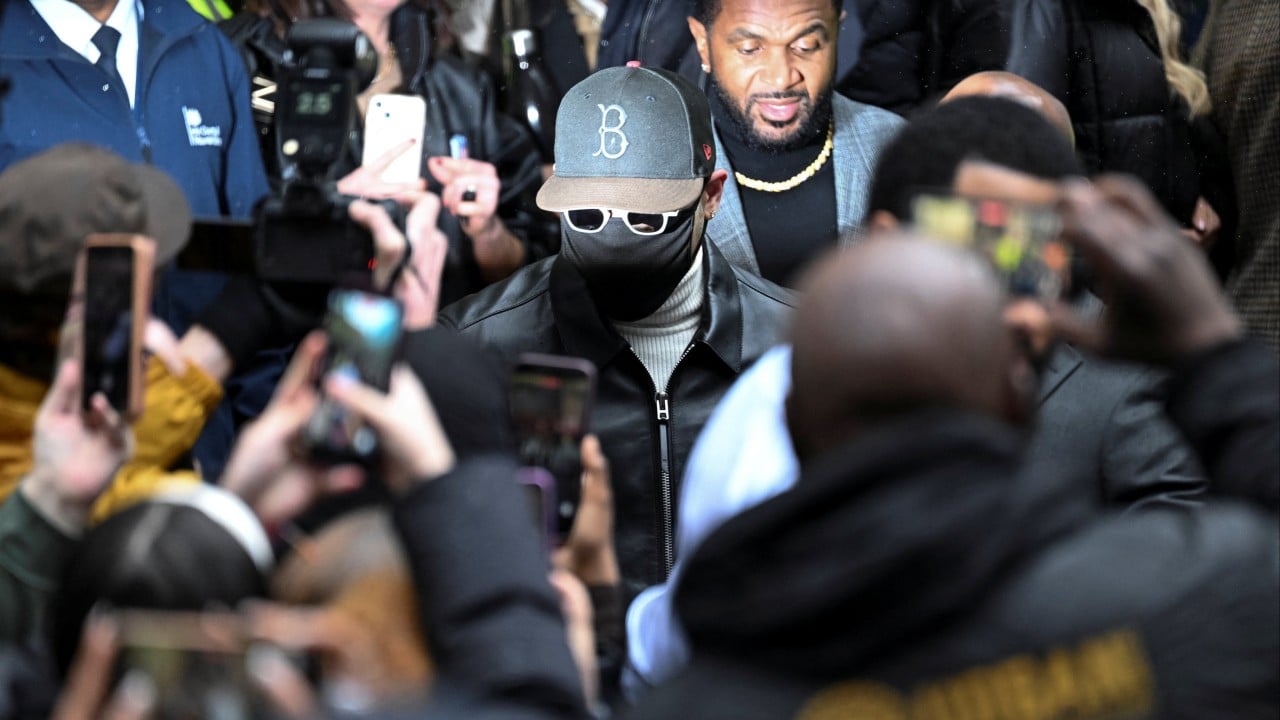
Everyone is screaming about celebrity privilege again, and everyone is missing the real story.
When news broke that Chris Brown received a suspended prison sentence following an altercation at a London nightclub, the internet did what it always does. Outrage merchants dusted off their standard scripts. Commentators cried foul over a "two-tiered justice system." Fans defended him blindly. Detractors demanded blood.
Both sides are wrong.
If you look at the mechanics of modern criminal sentencing—specifically in the UK and comparable Western jurisdictions—a suspended sentence for a non-fatal, first-time local offense involving no permanent disability is not an anomaly reserved for multi-platinum recording artists. It is standard operating procedure. The lazy consensus claims Brown walked because he is rich and famous. The reality is far less cinematic and much more uncomfortable for people who confuse criminal courts with moral scoreboards.
The Myth of the Celebrity Get-Out-of-Jail-Free Card
Let’s dismantle the primary fallacy first. Critics look at a suspended sentence and read it as an acquittal. They treat it like a pat on the back and a free pass to do it again.
That is a fundamental misunderstanding of criminal law. A suspended sentence is a custodial sentence. The judge has explicitly ruled that the offense crossed the custody threshold—meaning the crime was serious enough to warrant prison time. However, instead of immediately locking the offender in a cell, the court holds that prison term over their head like a guillotine for a set operational period, typically between six months and two years.
If the defendant breathes wrong, misses a probation check-in, fails to pay restitution, or commits another offense during that window, the suspension is revoked. They go straight to prison to serve the original sentence, plus whatever new time they just earned.
I have sat in countless strategy rooms with crisis managers and legal teams watching publicists try to spin suspended sentences as "total victories." It is a dangerous delusion. In reality, a suspended sentence strips a high-profile defendant of their most valuable asset: margin for error. For a touring artist whose entire livelihood depends on crossing international borders, a suspended custodial sentence is a logistical nightmare. Visa authorities in countries like Canada, Australia, and Japan do not care that the time was suspended. They see a custodial conviction on paper, and they slam the border gates shut.
Why Judges Actually Hand Out Suspended Sentences
To understand why the bench opted against immediate incarceration, you have to strip away the tabloid headlines and look at sentencing guidelines. In England and Wales, the Sentencing Council lays out strict criteria that judges are legally bound to follow. They do not get to throw people in prison just because Twitter is angry about things that happened in 2009.
Judges weigh three primary factors when deciding whether to suspend a sentence:
- Realistic prospect of rehabilitation. Can the offender be managed in the community without posing an immediate, ongoing threat to the public?
- Impact on others. Will immediate custody result in significant harmful impact upon dependents or innocent third parties?
- Prison overcrowding and systemic utility. Does locking this specific individual in a cell for twelve months actually make society safer, or does it merely drain taxpayer resources while achieving zero behavioral reform?
Right now, UK prisons are operating at near-total capacity. The Ministry of Justice has repeatedly issued directives urging the judiciary to utilize community orders and suspended sentences for non-lethal offenses whenever public safety allows. When a regular citizen gets into a bar fight in Soho, hits someone with a bottle or a fist, causes moderate injuries, has no prior convictions in that jurisdiction, and agrees to pay hefty financial compensation, they get a suspended sentence roughly seven times out of ten.
If Chris Brown had been sent to Wandsworth Prison for eighteen months over a nightclub brawl, that would have been the celebrity exception. He would have been penalized harsher than an ordinary citizen solely to satisfy public bloodlust and prove the court wasn't biased. True equality under the law means treating a famous person like an average defendant, not making an example out of them for headlines.
The Real Currency of Nightclub Litigation
Let’s talk about what actually happens behind closed doors in these cases, because the public narrative always ignores the money.
Nightclub altercations involving A-list talent rarely end in criminal trials without a parallel civil shadow. When a VIP section erupts, two tracks immediately activate: the Crown or District Attorney’s criminal prosecution, and the victim’s civil damages claim.
In jurisdictions where courts consider victim restitution and remorse as mitigating factors, a substantial financial settlement changes the temperature of the room instantly. Critics call this "buying your way out of trouble." Legal practitioners call it restorative mitigation.
Consider the victim's perspective. Imagine a scenario where you are struck in a club, suffer a laceration or a concussion, and spend a miserable weekend in the emergency room. What actually improves your life? Watching the celebrity spend six months in a minimum-security wing while you get nothing, or walking away with a six-figure settlement that pays off your mortgage, covers your medical bills, and compensates you for your trauma, paired with a criminal record that keeps the offender on a short leash?
Almost every victim chooses the check. And once a victim confirms to the court that they have been compensated and do not fear ongoing reprisal, the prosecution's appetite for pushing maximum custodial time drops off a cliff.
Answering the Questions Nobody Wants to Ask Honestly
When stories like this trend, search engines flood with the exact same predictable queries. Let’s look at the actual answers instead of the sanitized PR versions.
Did Chris Brown's past record legally impact this sentencing?
Only partially, and far less than the public assumes. Courts operate on jurisdictional relevance and recency. An assault conviction in Los Angeles from over a decade ago does not automatically trigger mandatory minimum sentencing in a London courtroom for a separate incident. Prosecutors can introduce prior bad acts to establish a pattern of behavior, which prevents a defendant from claiming they are a saint, but judges sentence the specific offense in front of them—not a person’s entire Wikipedia page.
Why do celebrities keep getting into nightclub fights in the first place?
Because the modern VIP nightclub ecosystem is literally engineered to produce violence. You pack fifty hyper-competitive, heavily intoxicated men with massive egos into a dark, deafeningly loud room. You ply them with high-proof spirits, surround them with cameras, and station underpaid, poorly trained security guards between them. Then everyone acts shocked when a bottle gets thrown at 2:30 AM. Until artists stop treating high-end clubs as their personal living rooms, these incidents will keep happening like clockwork.
Does a suspended sentence ruin a music career?
Not even close. In the streaming era, controversy is neutral at worst and profitable at best. Algorithms do not have moral compasses. When a celebrity's name trends for a court appearance, their catalog streams routinely spike by 15 to 30 percent over the following forty-eight hours. The financial damage doesn't come from the headline; it comes from the quiet, unglamorous administrative fallout—canceled brand sponsorships, denied work visas, and skyrocketing tour insurance premiums.
The Downside Nobody Admits
I am arguing that a suspended sentence is legally sound and standard practice. That does not mean the system is flawless.
The obvious flaw with suspended sentences and financial restitution is asymmetric deterrence. If you are a plumber making fifty thousand dollars a year, a ten-thousand-dollar compensation order and a suspended sentence will financially cripple you and terrify you into absolute compliance. It is a life-altering punishment.
If you are worth fifty million dollars, writing a check for a hundred grand is the financial equivalent of paying a parking ticket. The financial sting evaporates instantly. While the threat of prison remains real during the operational period, the deterrent effect of the fine itself is functionally zero. That is the legitimate critique of modern sentencing—not that judges are corrupt, not that celebrities are above the law, but that flat-rate financial penalties fail to scale with extreme wealth.
What Actually Needs to Change in Entertainment Crisis Management
If you manage talent, run a label, or represent high-net-worth individuals, stop relying on lawyers to clean up messes after the glass breaks. By the time a judge is reading out a suspended sentence, you have already lost millions in legal fees, settlement payouts, and lost touring revenue.
The fix is operational, not legal:
- Eliminate the entourage bloat. Nine out of ten VIP altercations are sparked not by the principal artist, but by an insecure friend trying to prove their worth by escalating a minor slight. Cut the guest list by seventy percent.
- Hire actual executive protection, not club bouncers. Most celebrity security guards are hired for intimidation, not de-escalation. Real close-protection professionals—former diplomatic security or military specialists—move the principal out of the room the second the energy shifts. They never stand around trading insults.
- Enforce hard curfews on public venues. Nothing productive happens for a high-profile figure in a public nightclub after 1:30 AM. Private villas and rented spaces cost a fraction of a single criminal defense retainer.
Stop Confusing Courtrooms With Karma
The public wants criminal courts to act as cosmic equalizers. They want judges to deliver poetic justice, validate their personal disgust, and permanently exile flawed figures from public life.
That is not what courts are built to do. Courts are bureaucracies designed to process offenses according to rigid statutory guidelines, manage prison populations, and prevent immediate repeat harm.
Chris Brown did not beat the system. He got processed by it—the exact same way thousands of anonymous defendants get processed every single week. If you hate the outcome, stop yelling at the celebrity and start reading your local sentencing guidelines.