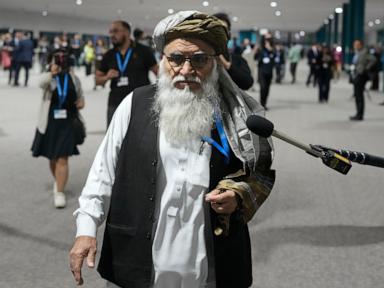
International climate architecture is constructed on the premise of sovereign state representation, creating structural friction when a de facto government lacks formal diplomatic recognition. The recurring participation of Afghan delegations appointed by the Taliban administration at United Nations climate summits, such as the Conference of the Parties, highlights an operational paradox. While multilateral institutions operate under strict legal frameworks requiring General Assembly credentialing, physical environmental degradation respects neither diplomatic isolation nor institutional non-recognition. Analyzing this phenomenon requires examining the intersection of climate vulnerability, international administrative law, and the transactional nature of sub-diplomatic engagement.
The Structural Mechanics of Observer Status
The United Nations framework relies on a tiered system of participation where full voting rights and state-level funding access are tethered to formal recognition by the General Assembly. Because the current administration in Kabul lacks this credential, its delegations enter global environmental forums exclusively through secondary access channels, typically managed through host-country guest allocations or low-tier observer credentials.
This status creates distinct operational boundaries:
- Exclusion from Financial Architecture: Observers cannot formally petition for or directly administer multilateral adaptation funds, such as the Green Climate Fund, through standard state channels.
- Limited Negotiating Agency: Delegations are restricted from participating in closed-door treaty text negotiations, limiting their role to advocacy and side-event positioning.
- Host-State Mediation: Access frequently depends on the diplomatic calculus of the host nation, turning multilateral summits into bilateral leverage points between the de facto authority and regional powers.
The Cost Function of Environmental Isolation
Afghanistan occupies a precarious position within global climate vulnerability metrics, characterized by severe water scarcity, rapid desertification, and high exposure to glacial lake outburst floods. Excluding administrative actors who control territorial access creates a governance vacuum in project implementation.
When international bodies bypass de facto authorities, the friction manifests as project delays, administrative blockades, and a reliance on fragmented non-governmental channels that lack scale. Conversely, granting sub-diplomatic access allows authorities in Kabul to press for technical assistance and climate financing, attempting to decouple humanitarian and environmental aid from political recognition. This strategy forces international organizations into a persistent trade-off: maintaining a rigid human rights cordon risks abandoning rural populations to environmental collapse, while operational engagement risks conferring implicit normalization.
Institutional Workarounds and Practical Realities
Multilateral agencies manage this tension through compartmentalized functionalism. Environmental and humanitarian operations are cordoned off from political affairs, allowing technical agencies to coordinate with local line ministries on water management, disaster risk reduction, and agricultural adaptation.
This functional separation relies on a tacit understanding. The de facto administration utilizes international forums to project domestic legitimacy and argue that local populations should not bear the economic penalties of non-recognition. Meanwhile, multilateral entities treat these delegations as administrative interlocutors of necessity rather than legitimate sovereign representatives.
The recurrence of these delegations at successive summits indicates that isolation is an imperfect containment strategy for transnational challenges. Physical systems operate independently of diplomatic protocols, forcing multilateral institutions to continuously calibrate the threshold between political non-recognition and operational necessity.