Winning a Grand Slam title changes everything, but defending one is a completely different beast. You aren't chasing the trophy anymore. You're trying to prevent someone from ripping it out of your hands.
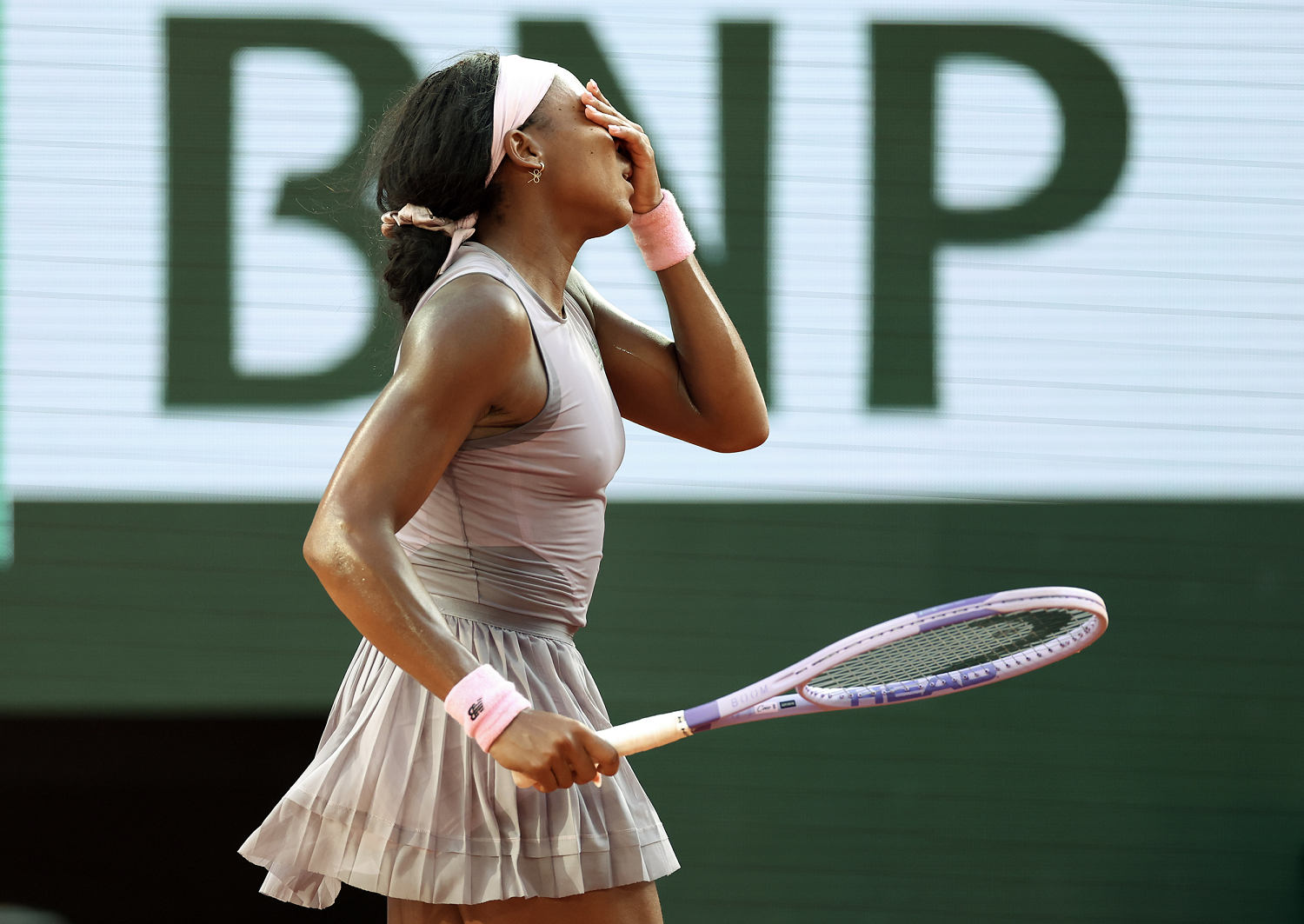
Coco Gauff learned that brutal lesson on the red clay of Court Philippe-Chatrier.
Her French Open title defense didn't just stumble. It crashed in the third round against 28th seed Anastasia Potapova. The 4-6, 7-6 (1), 6-4 scorecard tells part of the story, but it misses the psychological collapse. Gauff was literally two points away from closing this match out in straight sets. Instead, she watched a commanding position evaporate into a haze of unforced errors, tentativeness, and a recurring tactical flaw that elite opponents have officially figured out.
This wasn't a fluke result. Potapova played high-risk, high-reward tennis and earned every bit of her victory. But for Gauff, this loss triggers a massive warning light.
The Fatal Flaw in Crucial Moments
If you watched Gauff’s lead-up to Paris, you saw this coming. She made the final in Rome, sure, but she lost to Elina Svitolina by falling apart in the exact same fashion. Before that, Linda Nosková bounced her in Madrid using an identical blueprint.
Gauff admitted it herself after the match. "I feel like I lost the same way in Rome as I did here, which is not good," she told reporters. "You never want to lose the same way back-to-back times."
So, what exactly is that "same way"? It’s a breakdown in execution when the pressure valve tightens.
Look at the third set against Potapova. At 3-all, Gauff had multiple break points. These are the moments where champions slam the door. Instead, Gauff sprayed consecutive backhands into the net. Her backhand is normally her safest weapon, her absolute shield. When that wing breaks down under duress, the foundation cracks.
Gauff finished the match with a decent first-serve percentage of 67%, but she only won 39% of her second-serve points. That's a glaring liability. It allows aggressive returners like Potapova to step up inside the baseline and dictate play. In the final game of the match, Gauff threw in a catastrophic double fault. It felt like an inevitability rather than a surprise.
Give Anastasia Potapova Her Credit
It is easy to focus entirely on the American superstar, but Potapova played like a woman possessed. The 25-year-old, who recently shifted her nationality to represent Austria, has been one of the quietest dangers on clay this spring. She reached the semifinals in Madrid and brought a 14-match clay-court win streak into this encounter.
Potapova has now beaten Gauff three consecutive times, including back-to-back matches on clay. She simply doesn't fear Gauff's athletic defense.
When Potapova was staring down the barrel of a straight-sets defeat in the second set, she stopped overthinking. She began painting the lines with her forehand. By the time the second-set tiebreak arrived, Potapova completely blitzed Gauff, giving up only a single point.
"I kept on saying to myself that I don't need to focus on the scoreboard, just focus on every point," Potapova said in her post-match interview. "If you manage to do that, then maybe I will get my chances to win."
She stayed alive long enough to watch Gauff beat herself. That takes serious mental fortitude on a stage as intimidating as Philippe-Chatrier.
The Massive Rankings Fallout
This loss is going to sting for months because the mathematical consequences are severe.
Gauff arrived in Paris with 2,000 ranking points to defend from her magnificent 2025 title run, where she defeated Aryna Sabalenka in a three-set thriller. By crashing out in the third round, she forfeits the vast majority of those points.
The immediate result? Gauff will officially drop out of the WTA top five for the first time since September 2024.
For a player of her caliber, seeding matters. Dropping down the rankings means harder draws earlier in tournaments. It means potentially facing someone like Iga Swiatek or Sabalenka in a quarterfinal rather than a final.
Speaking of Sabalenka, Gauff's exit opens up a massive highway for the World No. 1. With top-10 Americans like Jessica Pegula and Amanda Anisimova also bowing out on a disastrous Saturday for US tennis, the top half of the draw is completely fractured. Sabalenka is playing ruthless, straight-sets tennis right now, and her path to the Coupe Suzanne-Lenglen just got significantly easier.
Fix the Second Serve or Keep Falling Short
Gauff is only 22 years old. It's easy to forget that because she’s been in our collective tennis consciousness since she was a 15-year-old prodigy beating Venus Williams at Wimbledon. She has plenty of time to adapt, but the adaptation needs to happen now.
Her current tennis philosophy relies heavily on world-class athleticism, incredible court coverage, and a lethal backhand. But when an opponent refuses to be missed out of the rally, Gauff lacks a reliable Plan B. Her forehand remains prone to technical hitches under pressure, and her second serve is a constant invitation for opponents to attack.
Working on a mechanics change in the middle of a grinding tour schedule is incredibly difficult. But if Gauff wants to add to her US Open and French Open trophies, her coaching team needs to address the technical regression that crept into her clay campaign.
The tour now shifts immediately to grass. This is historically a surface where raw athleticism can mask baseline deficiencies, but Gauff has surprisingly never won a professional singles title on grass.
The immediate priority for Gauff is to wipe this clay season from her memory, get onto the lawns of Eastbourne or Berlin, and rebuild her confidence from the service line. If she doesn’t fix the passivity that doomed her in Rome and Paris, the grass-court season will provide an equally rude awakening.