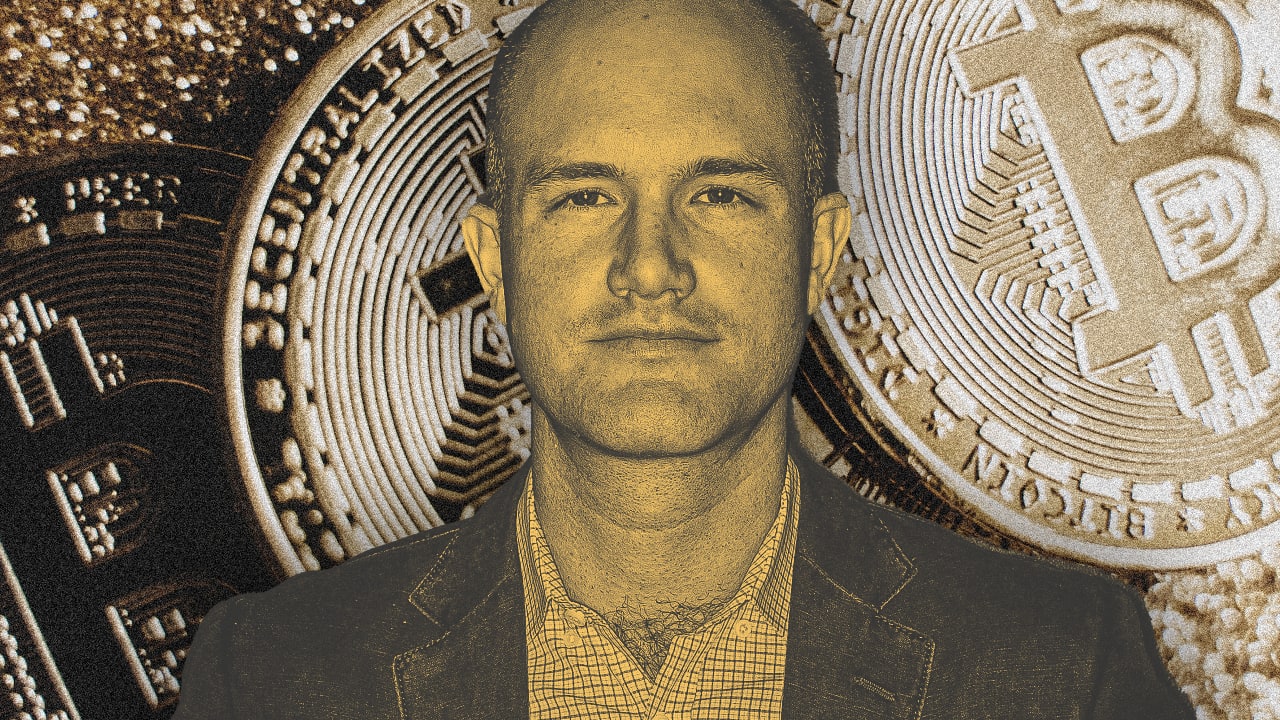
Coinbase is firing 14% of its workforce and they want you to blame the robots. They want you to look at a spreadsheet, see "AI efficiency" and "volatile markets," and nod your head like a well-trained analyst.
It is a lie.
This isn't a strategic pivot. It is a confession of management failure. When a company the size of Coinbase sheds over a tenth of its staff under the guise of "AI integration," they aren't optimizing; they are amputating limbs to compensate for years of bloated, directionless hiring.
The industry consensus is that we are entering a new era of lean, AI-driven operations. The reality is that AI is being used as a PR shield to mask the consequences of the "Cheap Money Era" hangover. If your business model was so fragile that a few quarters of volatility and a new Large Language Model (LLM) forced you to fire nearly a thousand people, you didn't have a business. You had a social club funded by venture capital and retail speculation.
The Myth of the AI Displacement
The narrative being pushed is simple: AI is now so good that humans are redundant.
Let’s look at the mechanics. In a fintech environment like Coinbase, "staff" usually falls into three buckets: engineering, compliance, and customer support.
If they are cutting engineers because of AI, they are admitting their codebase is a legacy mess. High-performing engineering teams use AI to ship more code, not to employ fewer people. In a competitive market, you don't take the 30% productivity gain from GitHub Copilot and fire 30% of your devs. You use that gain to outpace Binance and Kraken by shipping features three times faster.
If they are cutting compliance and support, they are playing a dangerous game with regulators. AI in its current state—prone to hallucinations and "jailbreaking"—cannot be the primary line of defense for Anti-Money Laundering (AML) or Know Your Customer (KYC) protocols without massive human oversight.
The truth? They hired too many people during the 2021 bull run because they didn't know how to scale horizontally. Now, they are using AI as a convenient scapegoat for a standard-issue "reduction in force" (RIF).
Volatility is the Product, Not the Problem
The second excuse is "volatile markets."
For a crypto exchange to complain about volatility is like a fisherman complaining about the ocean being wet. Volatility is the entire reason Coinbase exists. It drives trading volume. It generates fees. It creates the very "crypto winter" narratives that allow them to consolidate power.
When Brian Armstrong cites "volatile markets" as a reason for layoffs, he is admitting that the company has failed to diversify its revenue streams beyond the dopamine hits of retail trading. If you can only survive when the line goes up, you aren't a tech company. You’re a casino that forgot to hedge its bets.
I have seen companies blow hundreds of millions on "innovation hubs" and "long-term bets" during the green years, only to scrap every single one of them the moment the Bitcoin price dips below a certain Moving Average. This isn't "hard-headed leadership." It's a lack of conviction.
The Hidden Cost of the "Efficiency" Trap
There is a technical term for what happens to a company after a 14% cut: Institutional Amnesia.
When you fire 14% of your staff, you don't just lose 14% of your output. You lose the "dark matter" of the organization. You lose the person who knows why the 2019 API architecture was built that way. You lose the person who understands the specific nuance of a recurring bug in the Ethereum staking layer.
You are left with a workforce that is terrified, paranoid, and spending 40% of their day updating their resumes on LinkedIn.
The Calculus of Fear
- Survivors' Guilt: Remaining employees wonder when the next "AI optimization" is coming for them.
- Quality Decay: AI-generated code, when reviewed by a demoralized and skeleton crew, leads to technical debt that will take years to pay back.
- Brain Drain: The top 5% of your talent—the ones who can get a job anywhere—will leave first. They don't want to work at a company that treats humans like overhead to be trimmed by an algorithm.
The Contrarian Reality: You Should Be Hiring
If you actually believe in the future of the "on-chain economy," this is the time to be aggressive.
The smartest move in a downturn is to vacuum up the talent that your competitors are too cowardly to keep. While Coinbase is trimming the fat, the next generation of decentralized finance (DeFi) protocols is being built by the very people they just let go.
The "lazy consensus" says: Cut costs, wait for the bull market.
The insider reality says: If you aren't building the infrastructure for the next cycle now, you will be forced to overpay for mediocre talent when the FOMO returns.
Stop Asking if AI Will Replace Your Job
The question Coinbase employees (and everyone else in tech) should be asking isn't "Will AI take my job?" It’s "Is my leadership using AI as an excuse to cover for their own lack of foresight?"
If your CEO is talking about "AI efficiencies" while firing people, they are telling you they don't know how to grow the business. They are managing for the quarterly earnings report, not for the next decade.
Real leadership involves building a culture where AI augments the human element to create things that were previously impossible. It doesn't involve using a LLM as a hatchet to balance the books because you over-hired during a hype cycle.
The Actionable Truth for the Displaced
If you were part of that 14%, do not look for another job at a "Mega-Exchange." They are all suffering from the same rot.
The opportunity right now isn't in the companies trying to "integrate AI" to save 10% on their bottom line. It's in the companies that are "AI-native"—where the entire architecture is built from the ground up to do what a thousand Coinbase employees couldn't.
Go where the overhead is zero and the ambition is infinite.
Coinbase just gave a thousand people the greatest gift possible: an exit from a stagnant giant that has lost its way, right at the moment when the tools to build something better have never been more accessible.
Stop mourning the "job security" that never existed. The market didn't fail you; a boardroom did.
Build something that makes their "efficiency" look like the obsolescence it truly is.