The train station in Dandong smells of coal smoke and wet concrete. For decades, this city on the edge of the Yalu River has been the narrow straw through which the outside world breathes life into North Korea. Stand on the broken promenade on the Chinese side, and you can look across the murky water into Sinuiju. On the Chinese bank, neon signs flash from soaring glass towers. On the other side, the skyline dissolves into a dim, quiet haze as dusk settles.
Power is rarely about what is visible. It is about the friction between what is seen and what is whispered.
For a long time, Beijing viewed Pyongyang as an unruly younger sibling. A buffer zone. A diplomatic headache that required just enough food and fuel to keep from collapsing, but never enough freedom to cause real trouble. It was a transactional relationship, managed with the weary patience of a superpower that prefers stability above all else.
Then, the world shifted.
The tremors started far from the Korean Peninsula, in the muddy trenches of Eastern Europe. As artillery shells began flying in staggering numbers, the Kremlin found itself isolated, starved of supply lines, and desperately hunting for ammunition. It turned its gaze toward the east. Pyongyang, sitting on decades of Soviet-style stockpiles and functioning as a militarized factory, answered the call.
Suddenly, the dynamic in Northeast Asia changed. The quiet neighbor on China's doorstep found a new, generous patron in Vladimir Putin. And that leaves Xi Jinping with a profound, uncomfortable calculation to make.
The Friction of New Friends
Imagine a high-stakes poker table where the players have known each other’s tells for seventy years. China has always been the house. It held the chips. It dictated the buy-in.
But over the past year, Kim Jong Un has found a way to play a different game. Trains packed with North Korean munitions have rolled steadily toward Russian lines. In return, Russian technology, satellite expertise, and oil have flowed back across the Tumen River. For Pyongyang, this is a reinvention. No longer just a isolated state begging for aid, it has become an active participant in a global conflict. It has gained leverage.
This newfound independence is precisely what troubles the leadership inside Zhongnanhai.
Beijing has spent decades trying to project the image of a responsible, dominant superpower that anchors global trade. It wants to challenge Western hegemony, yes, but it wants to do so on its own terms, through economic gravity and sweeping infrastructure projects. What it does not want is a volatile, nuclear-armed neighbor feeling so emboldened by Russian backing that it triggers a massive, unpredictable crisis on China’s southern flank.
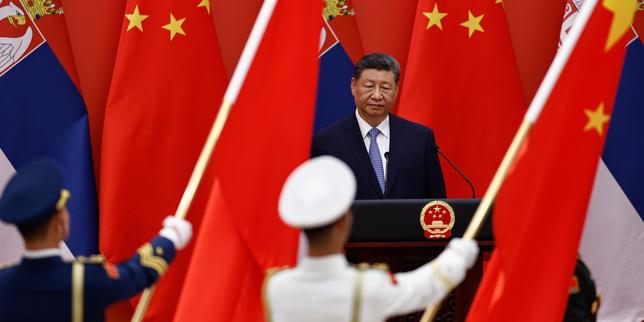
When the news broke that Xi Jinping would make a rare, high-profile journey to Pyongyang, the diplomatic corps did not see a celebration of communist brotherhood. They saw a rescue mission for Chinese influence.
The trip is an exercise in gravity. Xi is pulling a straying satellite back into his orbit.
The View From the Broken Bridge
To understand how deep these anxieties run, you have to look at the history written into the landscape. In Dandong, the Yalu River Broken Bridge stands as a monument to the Korean War. Halfway across the river, the steel spans stop abruptly, twisted and torn by American bombs in 1950. The remaining stubs serve as a tourist attraction.
For the older generation of Chinese officials, that war was defined by a phrase: "as close as lips and teeth." If the lips are gone, the teeth get cold.
Yet the modern reality feels far less poetic. Consider a mid-level logistics manager working at a state-owned shipping firm along the border. Let us call him Zhang. For fifteen years, Zhang’s livelihood has depended on the strict, meticulous enforcement—and occasional, quiet relaxation—of border trade. He knows exactly how many trucks cross the bridge daily. He knows when Beijing wants to tighten the screws on Pyongyang because the inspections suddenly take three days instead of three hours.
Lately, Zhang’s job has become an geopolitical guessing game.
When Russia began flying raw materials and technical experts directly into North Korea, bypassing traditional Chinese transit routes, it did more than just violate international sanctions. It cut China out of the loop. For someone like Zhang, and by extension the authorities in Beijing, that loss of oversight is terrifying. If China does not control the flow of goods into North Korea, China loses its ultimate veto power over North Korean behavior.
The partnership between Moscow and Pyongyang introduces a wild card into a region where Beijing demands absolute predictability.
Every artillery shell North Korea sends to Russia binds Kim Jong Un closer to Putin’s grand strategy. If Russia promises to shield North Korea at the United Nations Security Council, Kim no longer needs to worry about pleasing his Chinese neighbors to avoid crippling economic punishment. He can test missiles with impunity. He can raise the rhetorical heat with Seoul and Washington. He can act without asking for permission.
The Superpower's Dilemma
This leaves Xi Jinping walking a razor-thin wire.
On one hand, China cannot afford to let North Korea fall entirely into Russia's pocket. If Moscow becomes the primary architect of North Korean defense strategy, the risk of a miscalculation on the peninsula skyrockets. Beijing faces the nightmare scenario of an unchecked arms race right on its border, one that would inevitably bring more American aircraft carriers, more stealth bombers, and more missile defense systems into Japan and South Korea.
On the other hand, Xi cannot publicly break with Kim or Putin. To do so would play directly into the hands of the West, showcasing a fractured autocratic alliance.
So, the Chinese leader travels to Pyongyang. He brings the immense weight of the Chinese economy with him. He brings promises of long-term investments, food security, and modern infrastructure that Russia, currently consumed by a war of attrition, simply cannot match over the long haul.
The message Xi delivers behind closed doors will not be written in the state media communiqués. Those will speak of eternal friendship and shared socialist ideals. The real message will be delivered through the quiet mathematics of economic dependence. China remains North Korea’s largest trading partner. It controls the banking channels that keep the regime's elite comfortable. Xi is reminding Kim that while wartime alliances are lucrative, geography is permanent. Russia is a distant power with immediate needs; China is the giant next door that will be there forever.
The Quiet on the River
As night falls completely over Dandong, the contrast between the two worlds returns to its stark, familiar pattern. The bright lights of the Chinese restaurants reflect off the dark water, while the opposite shore remains a wall of deep, impenetrable shadow.
The train carrying the Chinese delegation will cross the river in the dark.
This visit is not an act of aggression. It is an act of containment. It is a reminder that in the grand theater of global politics, the most intense rivalries are not always between declared enemies. Sometimes, the most delicate, dangerous diplomacy happens between allies who no longer trust each other to keep the peace.
The world watches the rockets and the grand military parades in Pyongyang. But the real story is written in the silence between the speeches, in the uneasy glances across a dinner table, and in the quiet recalculation of how much freedom a superpower is willing to give a neighbor before the leash is pulled tight once again.