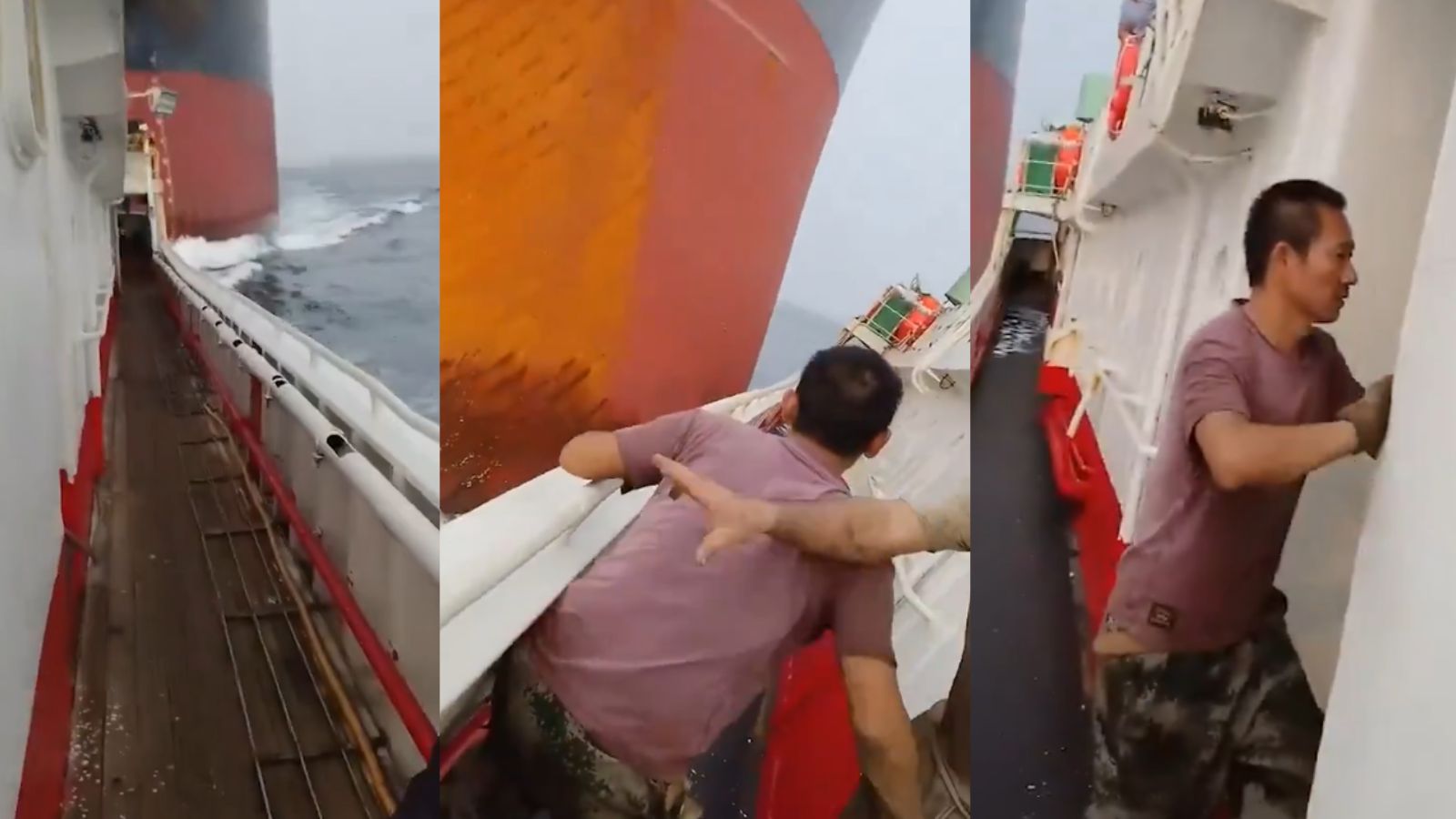
A massive cargo ship collided with a Chinese fishing boat in the heavily congested Singapore Strait, sparking immediate concern over maritime safety in one of the world’s most vital commercial corridors. This incident is far from an isolated accident of fate. It serves as a glaring symptom of chronic systemic stress in global shipping lanes where sheer volume routinely overwhelms traditional navigational protocols.
Every single day, thousands of vessels thread the needle of the Singapore Strait. Tankers, container ships, bulk carriers, and local fishing vessels share a channel that is narrow, deep, and relentlessly crowded. The mathematics of modern logistics demand speed and continuous transit. When those demands collide with human fatigue, radar clutter, and the unpredictable movements of artisanal fishing fleets, disasters become a matter of when, not if.
The Pressure Cooker of the Strait
To understand why a giant cargo ship and a fishing boat ended up in the same patch of water at the exact wrong moment, you have to look past the immediate shock of the crash and examine the geography and economics of the area. The Singapore Strait connects the Indian Ocean to the South China Sea, acting as the primary maritime highway between Europe, the Middle East, and East Asia.
Approximately one-third of global shipping trade passes through these waters. The traffic density is staggering. On any given afternoon, electronic tracking screens resemble a swarm of angry hornets.
Commercial cargo vessels operate under brutal economic pressures. Schedule reliability dictates charter rates and port access slots. A delay of even a few hours can cascade into thousands of dollars in financial penalties. Captains and bridge teams are pushed to maintain high transit speeds through restricted waters, relying heavily on automated identification systems and bridge resource management to navigate the chaos.
Yet, technology creates its own vulnerabilities. Watchkeepers can easily fall victim to screen fatigue, staring at glowing displays while missing visual cues in the dark or heavy tropical squalls. When a multi-thousand-tonne container ship bears down on a smaller wooden or fiberglass fishing vessel, the margin for error shrinks to zero.
The Invisible Clash of Commercial and Traditional Seafaring
A profound cultural and operational divide exists between massive multinational shipping lines and regional fishing communities. Fishing boats operating out of regional ports are often looking for livelihood rather than adhering to rigid international shipping lane discipline. Many traditional fishers lack advanced communication arrays or reliable transponders, making them difficult for giant merchant vessels to track reliably, especially in congested waters or adverse weather.
Conversely, mega-vessels operate with massive blind spots. From the bridge of a modern container ship carrying twenty thousand TEUs, the master might not be able to see the water directly ahead for hundreds of meters. Radar shadows hide smaller craft until they are practically under the bow.
When a collision occurs, the blame game is swift. Regulators point fingers at look-out negligence, while shipping associations complain about unregulated fishing vessels encroaching on established traffic separation schemes. The underlying reality is more uncomfortable. The infrastructure of global trade has outgrown the physical capacity and regulatory frameworks designed to police it.
The Illusion of Modern Safety Systems
International maritime bodies point to advanced radar, mandatory automatic identification systems, and vessel traffic service monitoring as proof that the seas are safer than ever. These tools are invaluable, but they are not infallible.
Transponders can be turned off, misconfigured, or overwhelmed by signal interference in busy anchorages. Vessel traffic service operators monitor hundreds of targets simultaneously, functioning more like air traffic controllers dealing with an impossible volume of low-altitude flight paths. They can issue warnings, but they cannot physically steer a ship out of harm's way.
Human judgment remains the final line of defense. When that judgment is compromised by exhaustion, pressure from corporate management to cut transit times, or inadequate manning levels on the bridge, accidents happen with terrifying regularity.
Maritime authorities will likely conduct formal inquiries into this specific collision. Recommendations will be issued, safety bulletins will circulate through corporate offices, and port state controls might temporarily increase inspections. None of these administrative measures will fix the fundamental bottleneck. As long as global consumer demand requires endless fleets of giant cargo ships to move faster through increasingly crowded maritime chokepoints, the risk of catastrophic collisions in places like the Singapore Strait will only continue to rise.


