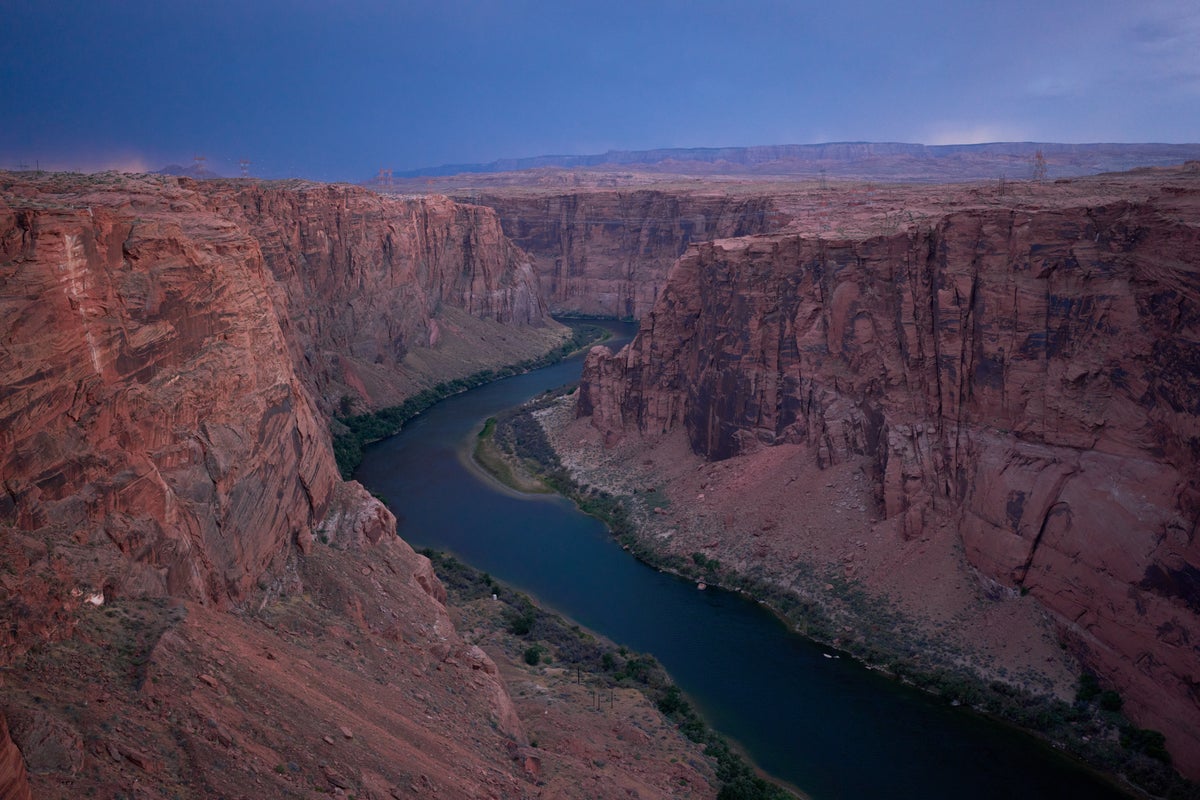
Every summer, the headlines roll in like clockwork. The Colorado River is dying. Communities near the basin face an apocalyptic reckoning. The ditches will run dry, the lawns will turn to dust, and the American Southwest will revert back to a scorching wasteland.
It is a great story. It makes for terrifying television and drives plenty of clicks.
It is also fundamentally lazy.
The narrative relies on a comfortable, panicky consensus: that climate change and stubborn municipalities are draining a shrinking vein until it snaps. This framing treats water management as a static bucket game where every drop taken today is stolen from tomorrow. That view ignores how modern economics, structural hydrology, and basic incentives actually operate.
The crisis along the Colorado River is not an absolute shortage of water. It is a catastrophic failure of pricing, legal calcification, and political cowardice. Until we stop treating water like a sacred, free-flowing birthright from 1922 and start treating it like the scarce commodity it is, the panic will continue. Not because the river is disappearing, but because our management model is trapped in the Stone Age.
The Original Sin of 1922
To understand why the current panic misses the mark, you have to look at the foundational lie of the river basin. The Colorado River Compact of 1922 divided up the water based on some of the wettest decades in the region's historical record. Negotiators allocated roughly 16.5 million acre-feet of water among seven states and Mexico, using tree-ring data that completely missed centuries of recurring mega-droughts.
Ever since, politicians have acted shocked that math does not negotiate. We built a legal framework based on a statistical outlier.
When people warn that the river's flow is dropping, they are entirely right about the climate pressure. Temperatures are rising, evaporation rates are up, and snowpack is less reliable. But pointing only at the weather is a convenient excuse for lawmakers who refuse to touch the real third rail: the Law of the River.
Senior water rights holders operate under a "use it or lose it" doctrine. If a farmer holds a priority right dating back to the late nineteenth century and decides to conserve water by installing drip irrigation or lining canals, they legally risk losing their allocation in the next cycle.
Read that again. The system financially penalizes conservation.
Imagine a business model where you are legally required to burn through your entire inventory every single year, regardless of demand, simply because your contract says if you have leftovers, you forfeit them. You would call that system insane. Yet that is how the Imperial Irrigation District and millions of acres of low-value agriculture operate across the basin every single day.
Alfalfa in the Desert
Let us address the elephant in the room that mainstream environmental journalism dances around with polite hesitation.
About seventy to eighty percent of the water drawn from the Colorado River goes to agriculture. Not urban drinking fountains. Not backyard swimming pools in Phoenix or Las Vegas. Agriculture.
More specifically, a massive chunk of that water goes toward growing alfalfa and other feed crops in the middle of the scorching Mojave and Sonoran deserts. Much of that alfalfa is then loaded onto cargo ships and exported to feed dairy cows in China, Japan, and the United Arab Emirates.
Let me translate that into plain economic reality. We are pumping water out of Lake Mead, heavily subsidised by federal taxpayers, to grow a thirsty grass in the desert so we can ship it across the Pacific Ocean.
When the media runs segments about urban residents letting their lawns go brown or cutting down on shower times, they are treating a gunshot wound with a band-aid. Saving ten percent on residential indoor use in Las Vegas does not move the needle when massive corporate farms are legally entitled to flood-irrigate low-value forage crops in 100-degree heat.
The public gets hysterical about golf courses while ignoring the structural misallocation of the century. The market signals are entirely inverted. Farmers pay pennies per acre-foot while tech campuses, semiconductor plants, and housing developments in Phoenix pay market-reflective rates and face endless public scrutiny.
The Myth of the Unfixable Doom
The prevailing doom-mongering assumes that once Lake Mead hits dead pool, civilization in the Southwest grinds to a halt. This ignores human adaptation entirely.
Markets work. When a resource becomes scarce, prices rise, and capital flows toward efficiency. We have seen this play out repeatedly in industrial sectors. Yet water remains frozen in amber because of antiquated legal protections.
If you want to fix the Colorado River, you do not need a rain dance. You do not need federal rationing edicts that punish cities while protecting legacy agricultural lobbies. You need a functioning market.
Allow water rights to be freely and easily tradable across state lines and sector boundaries. If a Phoenix suburb or a silicon manufacturer wants water, let them buy it directly from an agricultural district at fair market value. Watch how fast a farmer decides to pivot away from flood-irrigated alfalfa when selling their water rights to an industrial user yields a multi-million-dollar windfall.
When water has an honest price tag, waste disappears overnight. Cities already recycle wastewater with astonishing efficiency. Desalination plants on the coast of the Sea of Cortez could handle municipal needs for Southern California, freeing up upstream flows, provided we have the political stomach to build them. But right now, why would anyone invest in high-tech conservation or desalination when they can ride the coattails of 1922 legal handouts?
Dismantling the Panic
People look at bathtub rings on canyon walls and assume collapse is inevitable. That is a child's understanding of complex resource management.
Collapse is only inevitable if we refuse to change the rules. The water is there. The technology to clean, move, and conserve it exists. What is missing is the political courage to tell legacy agricultural interests that their free ride is over.
Stop panicking over the weather. Start dismantling the legal monopolies that treat the most precious liquid in the American West like an infinite, free-flowing buffet.
The Colorado River is not dying. It is simply shouting at us to finally price it correctly.