The marble dust settles slowly in Bishkek.
For months, the sound has been unrelenting. The sharp whine of masonry saws cutting through granite, the deep, rhythmic thud of pile drivers shaking the damp earth, the shouted instructions in the crisp morning air—all of it converging on a single, massive objective. The Yrys Ordo Congress Hall stands now at the edge of the Kyrgyz capital like a newly struck coin, gleaming under the heavy Central Asian sun. It is a building designed to impress, engineered to hold history, and built with an almost desperate urgency.
Soon, the motorcades will arrive.
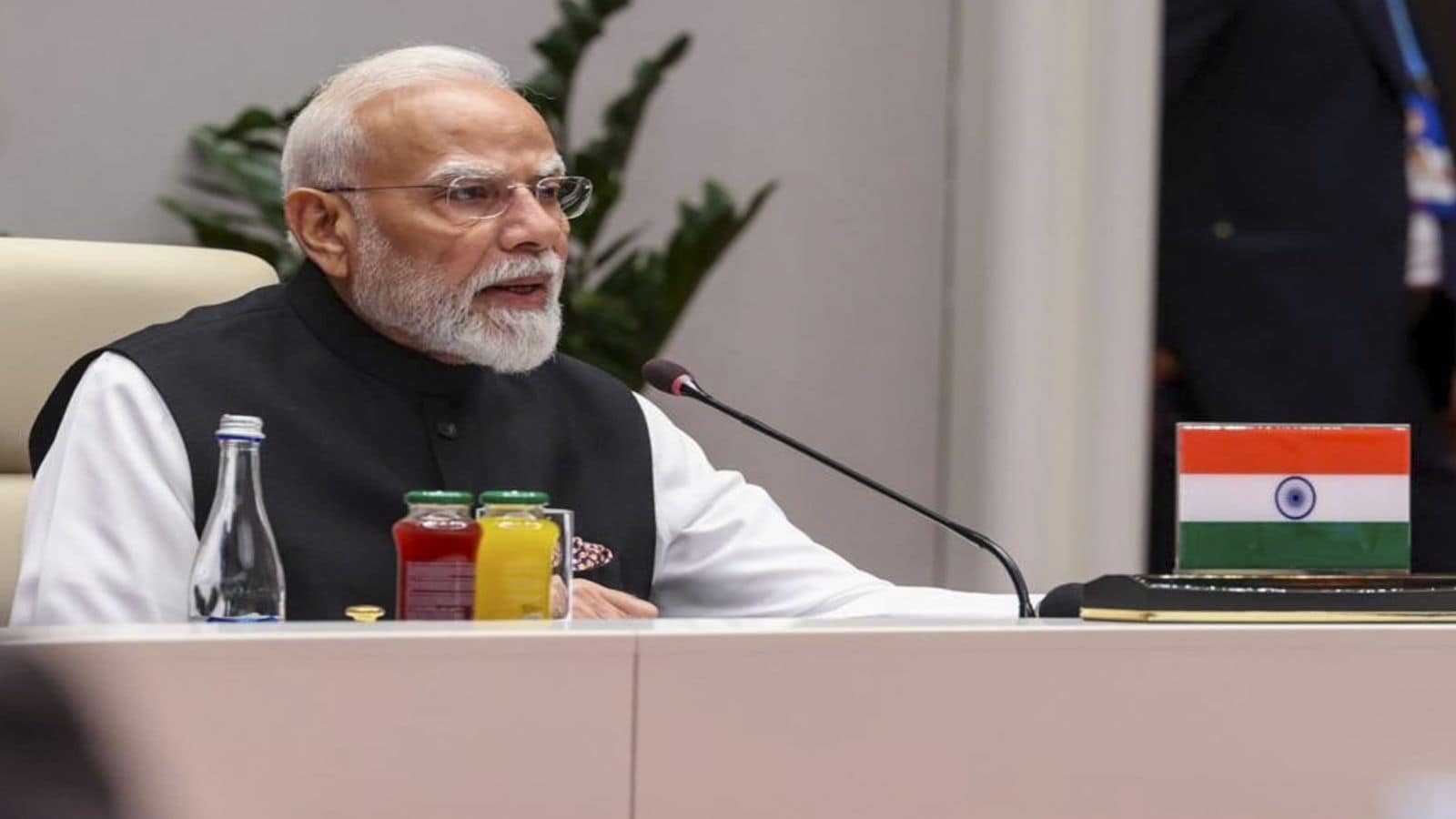
Among them will be Indian Prime Minister Narendra Modi, traveling across mountains and borders to take his seat at the 26th Shanghai Cooperation Organisation Summit. To the casual observer tracking foreign policy from a smartphone screen, this is just another diplomatic summit. Another gathering of men in dark suits shaking hands beneath chandeliers. Another communique drafted in sterile conference rooms and forgotten by week's end.
That view is dangerously wrong.
To understand why Bishkek matters right now, you have to look past the security perimeters and the red carpets. You have to look at the map, and then you have to look at the people whose lives are shaped by the invisible lines drawn across it.
Imagine Aigul, a forty-year-old textile exporter whose small workshop sits on the outskirts of Bishkek. She employs twelve women, stitching heavy wool coats that find their way to markets in Almaty, Tashkent, and occasionally across the border into western China. To Aigul, international trade agreements are not academic abstractions. They are customs forms that take three days instead of three weeks. They are border checkpoints where trucks either idle for days burning expensive diesel or roll through with a digital stamp. When prime ministers and presidents gather under the vaulted ceilings of the Yrys Ordo Congress Hall, Aigul’s ability to pay her workers next month hangs in the balance.
Geopolitics is often taught as a chess match between empires. Big pieces move across wide boards. Capitals fall or rise. But ordinary commerce and human movement are the friction that makes the board work at all.
When the SCO was founded decades ago, it was largely framed as a regional security arrangement, a way for neighbors to manage border disputes and counter insurgencies in the sprawling heartland of Eurasia. But the world has tilted on its axis since then. Security is no longer just about soldiers on ridges. It is about supply chains that do not snap when a conflict flares thousands of miles away. It is about digital infrastructure, energy grids, and the quiet, stubborn persistence of trade in a fractured global economy.
This is where India enters the hall.
Prime Minister Modi arrives in Bishkek carrying a very specific set of priorities. India is currently balancing a delicate, high-stakes diplomatic tightrope. It maintains strategic autonomy while navigating deepening tensions with China, managing traditional ties with Russia, and positioning itself as the undisputed voice of the Global South. For New Delhi, the SCO is not merely a diplomatic club. It is a crucial arena to project economic ambition, secure energy corridors, and advocate for a multipolar world order that does not default to Western or Eastern binaries.
Consider what India actually wants out of Central Asia.
It wants connectivity. The International North-South Transport Corridor and the stalled ambitions of the Ashgabat Agreement are not sexy talking points for evening news broadcasts, but they are the literal lifelines of future commerce. If goods can move swiftly from Mumbai through Iranian ports like Chabahar, up through Central Asia, and into markets further north, the economic geography of the entire continent shifts. Bishkek becomes a hub rather than a detour.
Yet, ambition often collides with messy reality.
I remember standing at a border crossing between two Central Asian nations a few years ago, watching crates of fresh produce sit under a merciless sun while border guards argued over a missing stamp on a triplicate manifest. The technology had changed—everyone had smartphones, electronic ledgers flickered on desks—but the human bureaucracy remained as stubborn as the mountains.
That is the hidden test of the Yrys Ordo Congress Hall.
Can modern architecture and high-level rhetoric outrun entrenched inefficiency? Can leaders who speak of regional integration actually untangle the visa restrictions, tariff walls, and logistical bottlenecks that frustrate every merchant between the Caspian Sea and the Himalayas?
Modi’s agenda in Bishkek will undoubtedly feature digital public infrastructure as a primary export. India has quietly revolutionized its domestic economy through Aadhaar, UPI, and scalable digital identity systems. It is an export model that does not require massive physical infrastructure loans like those associated with other regional powers. It requires software, trust, and political will. Exporting the DNA of India's digital revolution to Central Asia offers a compelling alternative vision of modernization. One based on interoperability rather than indebtedness.
The optics of the summit will be carefully managed. Every handshake will be analyzed by intelligence agencies from Washington to Brussels. Every phrase in the final joint statement will be weighed for hidden meanings. Did someone lean toward Moscow? Did someone subtly distance themselves from Beijing? Was New Delhi firm on cross-border terrorism?
These questions matter, but they miss the deeper undercurrent.
The real story of Bishkek 2026 is the ongoing redrawing of economic gravity. For centuries, the Silk Road was not a single highway, but a living, breathing network of detours, oasis towns, and negotiated safe passages. Empires rose and fell, but the traders kept walking. They adapted to new rulers, new currencies, and new walls.
Today’s leaders are trying to pave a digital and physical superhighway over those ancient camel tracks.
When the delegates take their seats inside the immaculate halls of the newly minted congress center, they are not just participating in a diplomatic ritual. They are writing the operating system for a region that bridges South Asia, East Asia, and Europe.
The marble will eventually weather. The red carpets will fade. The leaders will fly home to their respective capitals, where domestic pressures will immediately reclaim their attention. But the agreements signed, the digital frameworks discussed, and the personal alignments forged in Bishkek will ripple outward into the lives of people who have never heard of the SCO.
Aigul will load her wool coats into a truck next autumn. Whether that truck crosses the border in hours or days depends entirely on the conversations happening behind closed doors right now.
The summit is ready. The hall is waiting. And the map is shifting once again.