The rain over Seine-Saint-Denis does not fall softly. It hits the asphalt of the housing blocks with a blunt, tired rhythm, pooling in cracks that have outlived three mayors and two republics.
Listen closely. Underneath the hum of the peripheral ring road, beneath the distant siren wailing toward the hospital, there is a different sound. It is the scraping of plastic chairs dragged across cold linoleum. It is the low, stubborn murmur of parents who have decided that standing in the cold is the only way to make the invisible visible. Expanding on this topic, you can find more in: Why Declaring Victory Over Fuel Depot Contamination Is Corporate Gaslighting.
They are not asking for marble lobbies. They are not demanding gold leaf or designer uniforms. They are asking for a roof that doesn't leak into the poetry books. They are asking for a heating system that doesn't give up when the temperature dips below zero. They are asking for classrooms where thirty-five children do not have to share twenty outdated textbooks, and where the air doesn't taste of damp plaster and history.
To understand why parents and teachers lock the school gates in a Paris suburb, you have to step inside the reality of the French periphery. Analysts at TIME have provided expertise on this trend.
Centuries ago, the architecture of the French state was designed to project absolute power. Think of the limestone symmetry of Haussmann’s Paris, the grand avenues radiating from monuments like polished spokes on a wheel. But power, like water, flows downhill and pools where it is convenient. When the city expanded, it pushed its working class outward, sweeping the friction of daily survival past the city limits, out of sight and out of mind.
Today, that physical distance has hardened into something far more dangerous: a psychological chasm.
Consider a typical Tuesday morning in a public college on the outskirts of the capital. The morning bell rings, sharp and electric. Inside Room 204, the radiator clanks violently—a metallic cough that promises warmth it cannot deliver. The teacher, let's call her Hélène, writes La République on the chalkboard. Her breath fogs the air. In the back row, a fourteen-year-old boy pulls his coat tighter around his shoulders. He isn't looking at the board. He is watching the water stain on the ceiling, tracing the slow, brown map of a leak that grows every time it rains.
Hélène has taught here for twelve years. She knows the smell of old paper and institutional neglect. She also knows the statistics, though she doesn't need a spreadsheet to tell her what her eyes already see. The state budget allocates funds by formula, by projection, by abstract columns on a spreadsheet compiled miles away in gilded ministries. But formulas do not feel the chill. Formulas do not shiver through a three-hour math exam.
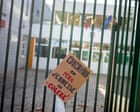
"We are tired of being treated like a footnote," one parent says, holding a placard made of cardboard and wet marker ink. Her name is Fatima. Her son is in the sixth grade, struggling to read in a room with flickering fluorescent lights that hum a constant, migraine-inducing tune. "When people think of Paris, they think of the Eiffel Tower, the cafés, the museums. They don't think of buckets in the hallway. They don't think of children wearing their winter coats indoors because the state forgot how to maintain a boiler."
This is the central paradox of modern urban administration. The institutions built to elevate every child into an equal citizen of the republic are instead quietly crumbling at the edges, reflecting the exact inequalities they were supposedly created to erase.
The social contract in France rests on a grand promise: universalism. Every child, regardless of postal code, is supposed to receive the same foundational tools to navigate the world. The chalkboard is the great equalizer. The diploma is the passport out of inherited disadvantage.
But when the roof leaks year after year, when the teachers strike not for higher pay but for basic supplies, and when local authorities respond with bureaucratic delays instead of repair crews, that promise begins to fray. It tears at the seams. And when it tears, something worse than anger takes root: exhaustion.
Despair is quiet. It looks like a mother walking away from a school meeting with her shoulders hunched. It looks like a teacher updating her CV on a Sunday night, wondering why she spends half her salary buying printer paper out of pocket.
Yet, on this damp morning, there is no despair at the gates. There is defiance.
The protesters have blocked the entrance with a row of trash bins and makeshift banners. Local police cruisers sit a block away, engines idling, officers watching with the weary detachment of men who know this script by heart. There is no violence, no dramatic confrontation. Just a stubborn, unyielding human blockade. They are forcing the city to look at them.
History teaches us that societies change in two ways: through slow, administrative evolution or through sudden, undeniable friction. The parents outside the school gates in Seine-Saint-Denis have chosen friction. They understand that polite letters sent to municipal offices disappear into filing cabinets. But a locked gate? A locked gate stops the routine. It forces the superintendent to make a phone call. It forces the journalist to take out a notebook. It drags the invisible reality of the suburbs into the harsh, undeniable light of day.
Think about what is truly at stake here. It is not just about drywall or heating oil. It is about dignity.
When a child walks into a school that smells of mold and looks abandoned, the silent message printed on the walls is clear: You are secondary. You are the periphery. No amount of civic education class can undo the daily psychological lesson taught by a broken infrastructure. Conversely, when a community stands in the freezing rain to demand a safe place for their children to learn, they are teaching a different lesson entirely. They are teaching that civic duty works in both directions.
The rain continues to fall, flattening the cardboard signs and turning the pavement dark. Inside the school, the lights flicker once, twice, and then stabilize. The children are still sitting in their coats, waiting. Outside, the parents are still standing.
They will be there tomorrow, too. And the day after that, until the warmth returns to the rooms where the future is supposed to be built.