The heavy iron door does not merely close; it swallows the daylight.
Behind the thick, sun-baked perimeter walls of Sinaloa’s state penitentiary, time does not move in minutes or hours. It crawls, measured only by the shifting shadows of guard towers and the low, constant hum of human anxiety trapped in a concrete box. To the outside world, the sprawling state facility in Culiacán is a dry statistic on a morning police blotter. It is an address where lawlessness meets containment. But for the men living inside its crowded wards, the perimeter is not a boundary of safety. It is a pressure cooker.
And yesterday, the lid blew off.
Ten bodies. Sixteen wounded. Sirens tearing through the dusty afternoon air of Culiacán, cutting through the heavy scent of exhaust and frying street food just beyond the razor wire. Families dropping their groceries on cracked sidewalks, running toward the gates with their hearts in their throats, desperate for the name of a son, a brother, a father.
We read the numbers and we normalize them. We file them away under foreign news, distant tragedies, the perpetual cost of doing business in a narco-state. We forget what ten lives actually look like. We forget that behind every stark headline from Sinaloa’s violence-plagued correctional system lies a quiet, devastating collapse of human order.
Consider what happens inside a modern prison when the state loses its monopoly on power.
Prisons are not vacuum-sealed containers of criminals. They are living, breathing ecosystems magnified under a microscope of absolute despair. When overcrowding reaches critical mass—when four men sleep in a cell built for one, when clean water is a luxury trade commodity, and when the guards are outnumbered ten to one—the institutional hierarchy shatters. In that vacuum, other forces rush in.
Sinaloa is not just a geographic designation on a map. It is a territory defined by a long, bloody shadow. The cartels that dictate the rhythm of the streets do not stop at the prison gate. They simply extend their tentacles inward. The yard is divided long before the first punch is thrown. Factions clash not merely over personal grudges, but because the proxy wars of the outside world demand blood on the inside.
When the riot erupted, it did not begin with a grand political manifesto. It started small. A shouted insult in the cell block. A contested debt over a smuggled phone. A sudden flash of steel fashioned from bedframes and scrap metal.
Violence in these spaces is fast. It is blindingly immediate. One moment, the yard is baking in the heavy, oppressive heat of northern Mexico; the next, it is a chaotic theater of survival. Guards, outgunned and vastly outnumbered, are forced to make an impossible choice: hold the line against an advancing tide of desperate men, or retreat and wait for the tactical units to arrive.
By the time the state police and the military surrounded the facility, the damage was done. Ten families were broken forever. Sixteen men were rushed to local hospitals under heavily armed guard, their bodies bearing the brutal punctuation marks of homemade shrapnel and heavy blunt force.
How did we get here? How does a government institution designed to rehabilitate or at least safely detain offenders become a slaughterhouse?
The answer is found in the slow erosion of institutional capacity. For decades, correctional facilities across Latin America have suffered from chronic underfunding, rampant corruption, and a total lack of meaningful oversight. When correctional officers are paid wages that barely cover the cost of tortillas, corruption ceases to be a moral failing and becomes an economic survival strategy. Contraband flows because the gatekeeper needs to feed his children. Weapons enter because the guards know that trying to stop a cartel lieutenant means signing their own death warrant.
The state maintains control on paper. On the ground, the inmates hold the keys.
This is the hidden cost of the broader drug war. We focus intensely on the high-profile captures, the jungle laboratories, the highway shootouts, and the political speeches promising law and order. We treat the prison system as a trash can—out of sight, out of mind. We sweep the societal failures under the concrete rug and hope the locks hold.
The locks do not hold forever.
When ten men die in a state prison riot, it is not an isolated malfunction. It is a symptom of a systemic fever. It tells us that the civil contract has frayed completely, even inside the very buildings erected to enforce it. It tells us that the violence bleeding through the streets of Culiacán is not contained by stone walls; it is merely amplified by them.
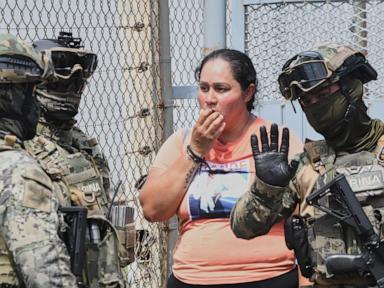
Standing outside the facility hours after the tear gas had cleared, the air still tasted of sulfur and dust. A lone woman clutched a crumpled photograph of a young man with a crooked smile. She did not know if he was among the ten dead, the sixteen injured, or the silent majority waiting out the lockdown in the dark. She only knew that the phone lines were dead, the officials were tight-lipped, and the concrete walls remained as indifferent as ever.
The sun began to dip below the horizon, painting the Sinaloa sky in violent shades of orange and bruised purple. Inside, the lights flickered on, casting long, fractured shadows across blood-stained floors. Somewhere down a long, dark corridor, a metal door slammed shut, echoing against the night.