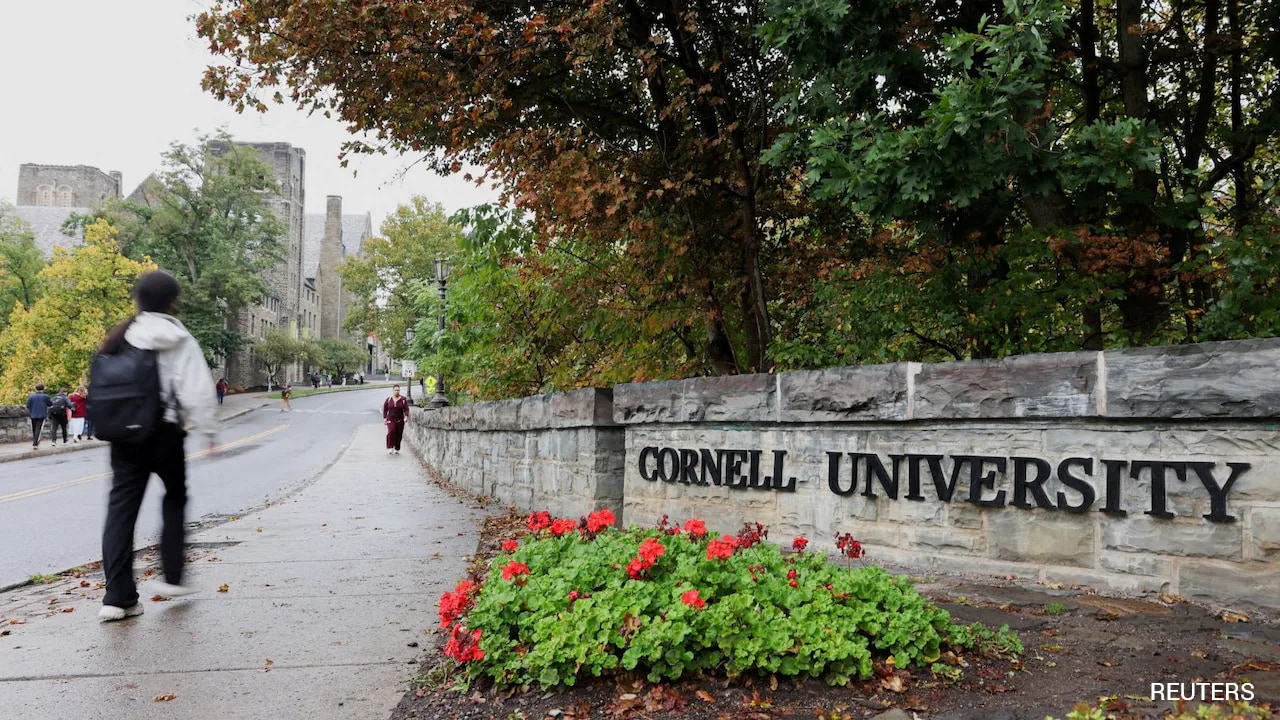
Elite universities love talking about their values until a crisis tests whether those values cost them anything. Look at what unfolded around the Cornell sexual assault case involving a former student and members of the Chi Phi fraternity following an October 2024 incident. Months of campus hearings, a quiet decision not to bring criminal charges, a September 2026 civil lawsuit, student protests, and a faculty no-confidence vote turned a campus scandal into a national reckoning over how elite schools handle sexual violence.
If you're trying to figure out why cases like this keep blowing up at wealthy, prestigious universities, the short answer is simple. Universities aren't courts, yet they try to act like one while protecting their own reputation at the exact same time. And when local prosecutors, campus police, and university administrators operate in overlapping or murky lanes, survivors and accused students alike end up confused about who actually has the power to do what.
What the Cornell sexual assault case actually put on trial
On paper, Cornell followed a formal process. The university investigated under Title IX and its conduct policies, held multi-day hearings before trained faculty and staff panels, and issued sanctions that included suspensions and expulsions. Meanwhile, Tompkins County District Attorney Matthew Van Houten declined to present the 2024 police report to a grand jury, arguing that the sworn statement given to campus police at the time didn't establish a lack of consent or involuntary drugging under New York criminal law.
That neat little explanation fell apart in public view once Jane Doe filed her civil lawsuit in September 2026 and media outlets scrutinized the gap between her full accounts, the condensed police summary, and what the university did behind closed doors. Protests erupted on campus. Faculty passed a no-confidence measure in top leadership. New York Governor Kathy Hochul removed the local district attorney from the matter and appointed New York Attorney General Letitia James as special prosecutor. Soon after, Cornell brought in former Deputy Attorney General Sally Yates to lead an independent review, suspended fraternity parties for the academic year, and announced a broad look at Greek life.
Here's what bugs me about the rush to spin this as a simple case of "bad actors" or "miscommunication." A civil suit shouldn't be the thing that wakes up an entire state government and university leadership two years later. When public outrage is what forces real accountability, the system failed long before the headlines hit.
Why elite universities stumble on sexual assault allegations
Wealthy institutions have plenty of lawyers, PR teams, and policy manuals. They still trip over the same structural traps over and over again.
Reputation management collides with student safety
Elite colleges sell a brand built on prestige, tradition, and alumni loyalty. Fraternities, donors, and athletic or social ecosystems often sit right inside that brand. When a serious allegation surfaces, leadership faces an immediate conflict between protecting vulnerable students and avoiding a public black eye.
Even when a school sanctions students internally, those proceedings happen behind closed doors. From the outside, silence looks like cover-up. Worse, when top leaders admit they didn't follow up closely enough before a crisis explodes—as Cornell President Michael Kotlikoff acknowledged amid the fallout—students understandably wonder who's actually watching the store. And it's not a one-off worry; separate 2023 litigation under New York's Adult Survivors Act also raised questions about whether Cornell's Title IX office took repeated complaints against a male student seriously enough before it was too late.
The two-track maze confuses everyone
Most people assume reporting a sexual assault means one investigation. In reality, campus cases often split into two completely separate tracks: criminal law and university disciplinary proceedings.
Criminal court asks whether the state can prove a crime beyond a reasonable doubt, which can lead to prison or probation. A university Title IX process enforces school policy—often using a preponderance-of-the-evidence standard—and can lead to expulsion, suspension, transcript notations, or no-contact orders. As community psychology researcher Megan Greeson noted in reporting on campus sexual assault data, serious criminal outcomes are rare overall—a review of studies covering 288,066 cases found roughly 20% of cases reported to police were prosecuted and about 8% resulted in convictions.
Because the two tracks run on different rules and timelines, survivors sometimes don't realize a prosecutor has closed or declined a criminal file while campus steps are still pending. Accused students, meanwhile, can face life-altering educational penalties even without criminal charges, while some argue shifting federal Title IX rules create whiplash over fairness and due process. Honestly, a system that leaves both sides feeling blindsided isn't serving anyone well.
Intoxication and consent create gray zones in law and policy
Alcohol and drugs show up constantly in college assault cases, and that's where legal definitions and campus standards often clash. Prosecutors have to look at strict statutory elements—what evidence proves someone was legally incapable of consenting or that force or coercion occurred under state law. Campus policies may define incapacitation more broadly for student conduct purposes, yet investigators still face tough evidentiary hurdles when witnesses are intoxicated or accounts conflict.
That friction is part of why the Cornell case sparked legislative pushback in New York, including calls by lawmakers such as State Senator Lea Webb to clarify legal standards around incapacitation and consent. Still, changing statutes won't fix sloppy early interviews, incomplete summaries, or cultural blind spots inside fraternity houses and campus social life.
Dual systems side by side in plain terms
Criminal courts focus on penal statutes, proof beyond a reasonable doubt, and liberty or criminal records, while university Title IX processes focus on campus conduct rules, preponderance of the evidence in many settings, and educational standing like suspension or expulsion. Neither replaces the other. A student can walk away without criminal charges and still get kicked out of school, or face criminal scrutiny while campus sanctions play out separately.
That overlap sounds tidy in a policy handbook. In real life, when campus police, local prosecutors, and university administrators don't communicate clearly, evidence gaps and misunderstandings pile up fast.
What this means for students, parents, and universities
If you're a student, a parent, or someone following higher ed accountability, waiting for universities to reform themselves out of pure goodwill is a losing bet. Real change usually comes from pressure, transparency, and knowing your rights before a crisis hits.
- Document everything early and keep copies. If something happens or you're supporting someone who experienced harm, save texts, call logs, medical records, and written notes right away. Memory fades, and details get messy fast.
- Ask straight questions about criminal vs. campus tracks. Don't assume reporting to campus safety equals a criminal prosecution—or vice versa. Ask plainly who is investigating, what standard applies, and whether a criminal case has been declined or referred out.
- Get independent legal advice early. Campus Title IX advisors and university offices aren't your personal defense or litigation counsel. Whether you're a complainant or a respondent, talk to an independent attorney who understands both state criminal law and campus proceedings.
- Push universities for concrete metrics, not press releases. Suspending parties or launching a review looks good for a week. Watch for actual structural changes—like independent oversight, clear reporting protocols, and transparent follow-through—rather than PR damage control.
Reform at elite schools rarely happens because administrators suddenly see the light. It happens when students, faculty, lawmakers, and the public refuse to let a quiet campus file be the end of the story.


