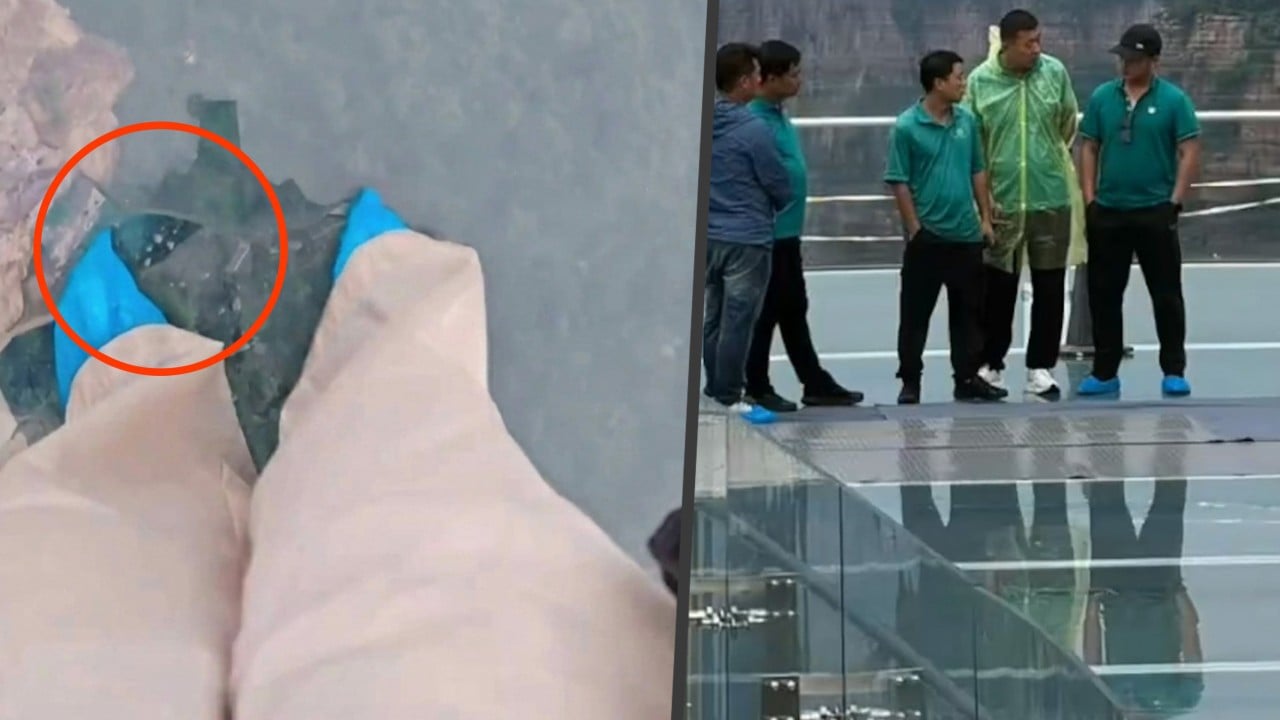
The internet loves a good panic.
When a tourist drops a stainless steel mug on a glass walkway suspended thousands of feet above a canyon, and the surface beneath their feet violently fractures, the headlines write themselves. The public panics. Social media commentators declare the entire structure a death trap. Outraged op-eds demand to know how "shoddy construction" could bypass safety regulations.
It happens every time a glass panel cracks on a mountain skywalk. The collective consensus rushes to a lazy conclusion: the bridge is failing, the engineering is cheap, and the public is in imminent danger.
That consensus is completely, embarrassingly wrong.
The panic reveals a fundamental misunderstanding of structural materials. A fractured upper layer on a glass bridge is not a sign of imminent collapse. It is proof that the safety system worked exactly as designed. The crack did not expose a flaw; it demonstrated a feature.
The Illusion of Fragility
Most people look at a glass bridge and see a giant window pane. They assume that if it cracks, the whole thing is about to shatter into a million pieces and drop them into the abyss.
This anxiety stems from a failure to separate architectural glass from structural laminates.
A modern tourist skywalk does not rely on a single, thick sheet of glass. The walkways are engineered using multi-layered laminated safety glass. Typically, these panels consist of three separate layers of tempered glass, fused together by high-strength polymer interlayers, usually made of SentryGlas or Polyvinyl Butyral (PVB).
+--------------------------------------------+  <- Top Layer (Sacrificial/Sacrificed)
|xxxxxxxxxxxx CRACKED LAYER xxxxxxxxxxxxxxxx|
+--------------------------------------------+
================ INTERLAYER ==================  <- High-strength Polymer (Intact)
+--------------------------------------------+
|        Middle Layer (Structural)           |  <- 100% Intact
+--------------------------------------------+
================ INTERLAYER ==================  <- High-strength Polymer (Intact)
+--------------------------------------------+
|         Bottom Layer (Structural)          |  <- 100% Intact
+--------------------------------------------+
Each layer serves a distinct purpose:
- The Top Layer (Sacrificial): This layer is designed to take the brunt of daily foot traffic, dropped items, high heels, and environmental debris. It absorbs localized impacts.
- The Polymer Interlayers: These flexible, incredibly tough sheets bind the glass layers together. If a glass layer breaks, the polymer holds the fragments tightly in place, preventing them from falling out and maintaining the rigid structure of the panel.
- The Middle and Bottom Layers (Structural): These are the heavy lifters. They carry the load of the pedestrians. They are deliberately isolated from the superficial impacts of the top layer.
When that tourist site panel cracked, only the sacrificial top layer broke. The structural integrity of the panel remained completely compromised—in the opposite direction. It was still entirely capable of supporting thousands of pounds of weight.
The Physics of Redundancy
To understand why the public panic is misplaced, you have to look at the redundancy factors built into these structures.
Structural engineers do not design bridges to merely survive the maximum expected load. They design them with massive safety factors. For glass skywalks, the redundancy requirements are staggering.
A standard glass bridge panel is designed to hold several times its maximum capacity even if the top layer is completely destroyed. In fact, rigorous destructive testing proves that even if two out of the three glass layers shatter, the remaining layer, backed by the polymer interlayers, can still support the weight of multiple people standing directly on the fractured zone.
Consider the actual material properties. Tempered glass is four to five times stronger than standard annealed glass. When it breaks, it disintegrates into small, blunt, relatively harmless cubes rather than long, jagged shards. This is a deliberate safety mechanism to prevent severe lacerations.
When an object impacts the top layer with enough force to breach its stress threshold, the energy is dissipated through the creation of those tiny fractures. The energy is spent shattering that top layer rather than penetrating deeper into the structure. The sacrificial layer dies so the bridge can live.
The Real Threat Isn't What You Think
If the cracking of a glass panel is a controlled, safe event, then what actually matters? Where should the public focus their scrutiny?
The lazy narrative focuses on the glass because it is visible. The real vulnerabilities in high-altitude tourist infrastructure lie in the elements people rarely look at: the anchoring systems, the steel support framework, and the maintenance protocols.
I have looked at infrastructure projects where organizations spent millions on premium materials but skimped on localized geological testing. A glass panel will not fail because a tourist drops a thermos. A glass panel will fail if the mountain rock face it is anchored to shifts due to unmonitored seismic activity or water erosion.
The real questions the public should be asking are:
- How often are the rock anchors ultrasonically tested for micro-fractures?
- What are the moisture mitigation strategies preventing corrosion within the steel frame channels holding the glass?
- Is the site managing crowd density to prevent harmonic resonance, where synchronous stepping creates destructive wave energy?
Fixating on a cosmetic fracture in a sacrificial sheet of glass is like demanding a commercial airliner be grounded permanently because a passenger scratched the window tint. It mistakes a superficial blemish for a systemic failure.
Dismantling the Panic
The internet frequently asks variations of the same flawed question: Are glass bridges safe?
The question itself is poorly framed. It assumes "safety" is a binary state. No engineering feat is perfectly safe in a vacuum. Safety is a continuous management of risk through redundancy.
When a panel cracks, the immediate closure of the walkway isn't a sign that a disaster was narrowly averted. It is standard operational procedure. The site operators close the bridge to replace the sacrificial layer because its defense mechanism has been used up. You don't keep driving a car after the airbag deploys without replacing it, even if the engine still runs perfectly.
Replacing a cracked top panel is a routine maintenance task, not a crisis. The hecho is that the bridge did exactly what the engineers calculated it would do under impact.
Stop looking at the cracks as a failure of quality control. Start looking at them as a triumph of redundant design. The next time you see a headline about a fracturing tourist walkway, realize that you are witnessing physics working exactly as intended to keep people alive.
The structural engineering community knows this. The regulators know this. It is time for the public to catch up to the reality of modern materials.

:strip_icc()/GettyImages-181861505-4e63227ed0a14dc9bfe86848ef54caf3.jpg)