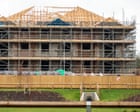
Every time a traditional housebuilder posts a profit warning, the predictable chorus starts up in the financial press. CEOs scramble to blame a subdued property market, high interest rates, and nervous buyers sitting on their hands. Crest Nicholson just walked up to the podium, flashed another annual loss, and blamed the exact same macroeconomic bogeymen everyone else hides behind.
It is a tired script. And it is completely wrong.
I have spent the last fifteen years watching legacy developers hemorrhage cash while blaming everything except their own operational incompetence. When a company points to a sluggish market as the root cause of its financial bleeding, what they are actually admitting is that their entire business model breaks the second easy credit dries up. They are addicted to artificial demand, inflated land banks, and a planning system that protects incumbents from facing reality.
Stop buying the excuse that high borrowing costs are destroying the housing market. They are merely exposing who was swimming naked when the tide went out.
The Myth of the Subdued Market
The lazy consensus in real estate circles is that transaction volumes dictate industry health. If people are not buying cookie-cutter suburban boxes at peak prices, the market is broken. This is the logic of a developer whose primary strategy relies on rolling over old debt and praying for government subsidies to artificially inflate buyer purchasing power.
Look beneath the surface numbers of these corporate losses. The demand for housing has not vanished; it has mutated. Buyers are simply refusing to pay top-dollar premiums for poorly insulated, structurally mediocre housing stock built twenty miles from the nearest decent transport link just to meet corporate margin targets.
When Crest Nicholson warns of falling margins, they mean they can no longer easily pass off the cost of their bloated corporate overheads onto retail buyers. They are trapped in a volume trap. Their balance sheets require constant forward momentum of property prices just to service the debt taken on to buy land parcels five years ago.
Imagine a scenario where a developer stops buying land entirely for three years, focuses exclusively on slashing overhead, and builds homes people can actually afford on stagnant wages. It sounds heretical to a board of directors obsessed with quarterly acreage expansion, but that is what a functioning business looks like when the cheap money tap turns off. Instead, legacy players double down on whining about interest rates while waiting for a bailout that treats the symptom rather than the disease.
Why the Planning System is the Ultimate Scapegoat
Ask any executive at a major housebuilding firm why their output is sluggish, and they will point a trembling finger at local planning departments. Bureaucracy moves slowly, environmental regulations add cost, and red tape strangles development.
There is truth to that complaint, but it is weaponized as a smokescreen. The big developers use land banking as a strategic moat. They hoard permissions not to build out communities, but to control local supply and protect their pricing power. When the market softens, they slow down construction deliberately to keep prices artificially propped up. Then, when their financials tank anyway, they turn around and blame the very planners holding up the paperwork they themselves submitted at a snail's pace.
I have seen companies blow millions on legal battles and land option schemes that sit dormant for decades, all while crying poor to shareholders. The problem is not that planners take too long to approve a roof. The problem is that the corporate structure of legacy volume builders requires infinite expansion of land portfolios just to keep their share prices from collapsing under the weight of their own debt obligations.
The Structural Rot of Speculative Development
To understand why traditional developers fail during market corrections, you have to look at how they account for risk. For decades, the British housing market operated on a simple assumption: land values only go up. If you bought a greenfield site, sat on it long enough, and slapped some brick facades on timber frames, market appreciation would bail out any execution errors.
That era is dead. High interest rates did not kill it; they just stopped the clock.
When money cost next to nothing, developers could afford to carry inefficient supply chains, bloated middle-management layers, and sluggish construction methods. They relied on Help to Buy schemes and government-backed equity loans to bridge the gap between what people earned and what corporations needed to charge to hit their targets. Now that those artificial props are fading, the underlying fragility of the business model stands exposed.
A healthy market requires creative destruction. When inefficient operators lose money, it frees up capital, talent, and land for smaller, nimbler outfits that actually innovate. Yet, the public markets panic at the first sign of distress, rushing to inject capital into zombie firms that only know how to build one specific type of suburban subdivision.
What Actual Market Correction Looks Like
If you want to fix housing, you should be cheering for these losses. Corporate distress is the only force powerful enough to break the cartel-like grip of land banking and outdated construction techniques.
When legacy players pull back, real opportunities emerge for modular builders, custom-build syndicates, and regional developers who prioritize quality and density over sheer volume. These agile operators do not need massive corporate headquarters or sprawling marketing budgets to move stock. They build what is needed, where it is needed, at a price point that reflects actual purchasing power rather than leveraged speculation.
The next time a major builder warns of a subdued market, translate it correctly. They are not telling you the economy is broken. They are telling you their business model no longer works without government life support.
Let them fail. The market will be better for it.



