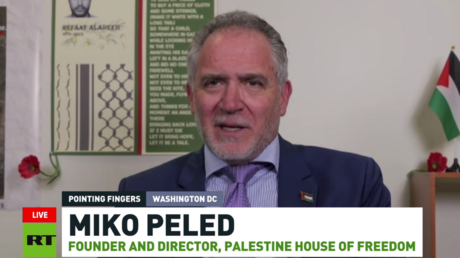
When an NGO founder compares US foreign policy in the Middle East to a mafia boss shaking down local shopkeepers, Washington usually shrugs it off as hyperbole. They shouldn't.
That specific analogy keeps resurfacing across diplomatic circles, humanitarian corridors, and regional media because it captures a cold, transactional reality that traditional political science terms fail to explain. When people talk about US Middle East policy acting like an organized crime syndicate, they aren't making a casual insult. They're describing a distinct geopolitical mechanism.
It's the protection racket. You pay up, follow the rules set by the boss, and align your economy and security apparatus with Washington's interests. In return, you get security guarantees, weapons sales, and diplomatic cover at the United Nations. Step out of line, and the protection disappears—or worse, the pressure turns inward through crippling sanctions, asset freezes, and diplomatic isolation.
I've spent years analyzing how humanitarian organizations and regional analysts track the fallout of these policies on the ground. What strikes me most isn't the ideological debate in Washington think tanks, which often sounds polite and academic. It's the stark gap between how US officials describe their role as a "stabilizing force" and how aid workers, local economists, and civilians experience those exact same policies in places like Iraq, Syria, Lebanon, and Yemen.
How the Protection Racket Analogy Actually Works
To understand why an NGO founder would use the phrase "mafia boss" to describe American diplomacy, you have to look past speeches about democracy and human rights and follow the money and weapons.
In classic organized crime theory, a protection racket creates the very insecurity it claims to solve, or at least profits heavily from managing that insecurity. Critics of US interventionism point to a decades-long pattern in the Middle East that mirrors this dynamic closely.
Consider the numbers. According to data from the Stockholm International Peace Research Institute (SIPRI), the United States consistently accounts for the lion's share of major arms transfers to the Middle East, supplying over half of the region's imported weapons in recent five-year tracking periods. Saudi Arabia, Qatar, Kuwait, and the United Arab Emirates spend tens of billions of dollars on American fighter jets, missile defense systems, and naval hardware.
Here's the catch. Those weapons don't buy total independence. They buy dependency.
Advanced military hardware requires continuous American maintenance, proprietary software updates, spare parts, and technical personnel on the ground. If a regional partner makes a geopolitical move that displeases Washington—whether that's cutting oil production against US wishes or warming up too quickly to Beijing—lawmakers in Congress immediately threaten to freeze spare parts and pending arms deliveries.
That isn't an alliance of equals. It's leverage.
Conditional Aid and the Humanitarian Squeeze
NGO founders see this dynamic play out most brutally in the humanitarian sector. Non-governmental organizations operating in conflict zones rely heavily on institutional funding, much of which flows directly or indirectly from USAID and the US State Department, alongside European counterparts that frequently align with American sanctions regimes.
When Washington imposes unilateral coercive measures—commonly called broad economic sanctions—on a country like Syria or Iran, the stated goal is to pressure the government. In practice, NGO directors on the ground deal with "over-compliance" by international banks. Even when humanitarian exemptions technically exist on paper, commercial banks refuse to process wire transfers for medical supplies, water treatment equipment, or agricultural tools because they're terrified of triggering massive fines from the US Treasury Department's Office of Foreign Assets Control (OFAC).
Aid workers end up begging for special licenses just to wire money to pay local nurses. Meanwhile, Washington uses the promise of sanctions relief or reconstruction funding as a bargaining chip to extract political concessions. To someone trying to keep a clinic open in Damascus or Beirut, that looks less like foreign aid and more like extortion where ordinary civilians pay the price.
The Role of the US Dollar as a Geopolitical Weapon
You can't separate US foreign policy in the Middle East from the global dominance of the US dollar. Honestly, this is the part most casual observers completely miss when they watch news clips about military bases and aircraft carriers.
Aircraft carriers are visible. Financial plumbing is invisible, yet infinitely more coercive.
Because global oil trade and international banking rely on the SWIFT messaging network and dollar clearinghouses in New York, the US Treasury holds an effective veto over almost any major cross-border financial transaction in the Middle East.
Look at what happened in Lebanon and Iraq over the past several years. In Iraq, the Federal Reserve Bank of New York tightened controls over dollar wire transfers to Iraqi commercial banks to curb dollar smuggling into neighboring Iran. Overnight, the parallel exchange rate of the Iraqi dinar fluctuated wildly, driving up the cost of imported food and medicine for millions of ordinary Iraqis who had nothing to do with regional smuggling networks.
Iraqi officials had to fly to Washington to negotiate access to their own country's oil revenues, which are held in an account at the New York Fed—a setup dating back to the 2003 US invasion.
Think about that setup for a second. A sovereign nation's primary export revenue sits in an American bank account, and access to those funds is regulated by American officials who can throttle the flow if they dislike the local government's political alignments. If a private actor held your paycheck and only released it when you behaved according to their wishes, nobody would hesitate to call it a shakedown.
Why Regional Governments Still Play Along
If the arrangement is so heavily tilted toward Washington, why do Middle Eastern leaders keep signing the deals?
Simple. Survival.
Many regimes in the region face severe internal legitimacy challenges, economic fragility, or threats from rival regional powers. The US military umbrella—anchored by major installations like Al Udeid Air Base in Qatar, Naval Support Activity Bahrain, and Camp Arifjan in Kuwait—provides a security guarantee that no other global power can currently match in terms of sheer logistical firepower.
Russia has military ties in the region, and China has become the top trading partner for almost every Gulf state. Beijing brokered the high-profile 2023 diplomatic rapprochement between Saudi Arabia and Iran, signaling a new diplomatic reality. Yet neither Beijing nor Moscow is willing or able to deploy two carrier strike groups into the Eastern Mediterranean or the Persian Gulf at a moment's notice to deter a full-scale regional war.
Regional leaders know the rules of the game. They tolerate the heavy-handedness because the alternative—losing US security backing while facing hostile neighbors—carries immediate existential risks.
The Erosion of Trust and the Multipolar Shift
Still, every protection racket eventually runs into diminishing returns when the boss demands too much and delivers too little.
Across the Middle East, frustration with Washington's double standards has reached a boiling point. Regional populations and policymakers alike watch the US invoke "the rules-based international order" to condemn rivals while shielding close allies from accountability under international law.
When the US repeatedly uses its veto power in the UN Security Council to block ceasefire resolutions or accountability measures, the moral authority Washington claims to possess evaporates. Even traditional Gulf allies have begun hedging their bets openly.
- Trade diversification: Gulf states are increasingly exploring non-dollar settlements for oil and bilateral trade with China and India.
- Security hedging: Countries like Saudi Arabia and the UAE have joined or engaged closely with blocs like BRICS, signaling they won't be locked exclusively into a Western orbit.
- Diplomatic autonomy: Regional capitals are restoring ties with former adversaries on their own terms rather than waiting for State Department approval.
What Washington Gets Wrong About Its Own Leverage
The core flaw in Washington's approach isn't just moral; it's strategic.
Coercion works in the short term. Sanctions cripple economies, arms embargoes ground air forces, and diplomatic isolation starves governments of legitimacy. Over time, however, heavy-handed tactics force targets to build workarounds.
Sanctioned nations develop shadow banking networks, barter trade systems, and domestic manufacturing capabilities that operate completely outside Western visibility. Once an economy adapts to survive without the US dollar or American tech, Washington loses the very leverage it relied on to compel behavior.
Worse, humanitarian organizations caught in the crossfire lose the ability to operate neutrally. When NGOs are perceived locally as instruments of Western policy because their funding is tied to political conditions, aid workers become targets, and vulnerable communities get cut off from life-saving assistance.
How to Read Middle East Geopolitics Beyond the Headlines
When you see viral clips of NGO founders, diplomats, or analysts blasting US policy in stark terms, don't dismiss the rhetoric as mere anti-American posturing, and don't take every soundbite at face value either. Look at the underlying mechanisms driving the critique.
- Follow the financial restrictions, not just the troop deployments. A quiet rule change at the US Treasury or the New York Fed often impacts daily life in Baghdad, Beirut, or Damascus faster than a military deployment.
- Check the conditions attached to aid and arms. Whenever Washington announces a major aid package or weapons sale, look at the legislative strings attached in Congress—that's where the real political leverage sits.
- Watch how regional powers hedge. Pay attention to bilateral currency swaps, infrastructure deals with Asian powers, and regional security summits that exclude Washington.
Understanding Middle East geopolitics requires stripping away the diplomatic pleasantries. Until policymakers recognize that transactional coercion breeds long-term resentment rather than lasting stability, the "mafia boss" label isn't going away anytime soon.