Silence has a weight. In the dead of a Tuesday night, when the hum of the refrigerator is the only pulse left in the apartment, silence stops being an absence of sound and starts becoming a physical pressure against the ribs.
We have all felt it. That sudden, cold drop in the chest when you realize the person breathing next to you is a stranger, or worse, when you realize nobody is breathing next to you at all. Read more on a connected subject: this related article.
Humanity has spent millennia trying to engineer an escape hatch from this specific variety of quiet. We invent dating apps that ping like digital heartbeats. We collect rings and certificates and legal contracts designed to serve as bulkheads against the dark. We look at another human being and whisper, Save me from myself.
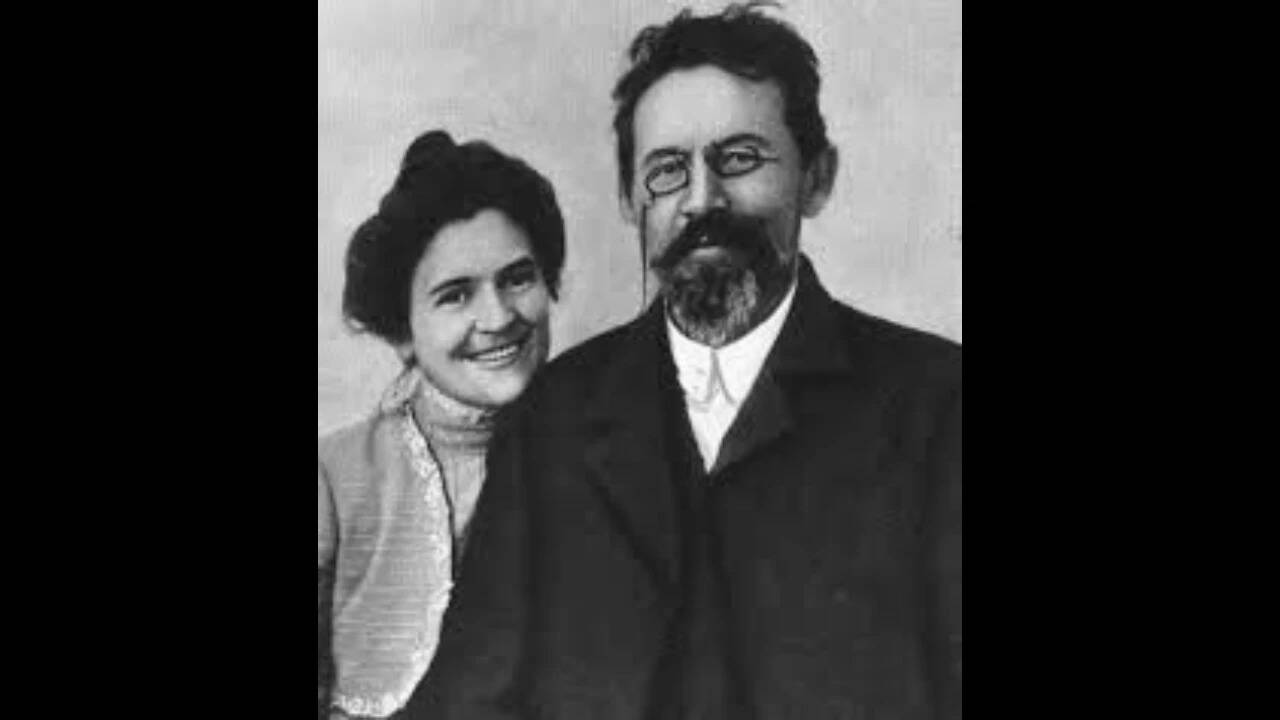
Then came Anton Chekhov, coughing into a handkerchief in Yalta, writing letters that sliced through romantic mythology with the cold precision of a surgeon's blade. Further reporting by WebMD delves into similar views on the subject.
"If you are afraid of loneliness, don't marry."
It sounds cynical. It sounds like the bitter observation of a man who spent his life watching human frailties play out in provincial drawing rooms before dying too young of tuberculosis. But look closer. Peel back the barbed wire of the statement, and you find a psychological truth that modern relationship science is only now beginning to catch up with.
Marriage is not an asylum for the lonely. It is an amplifier.
Imagine Arthur.
(Note: Arthur is a hypothetical composite character, built from the anonymized case files of marriage and family therapists who watch the same tragedy repeat itself every single week.)
Arthur is terrified of the dark. He grew up in a house where doors slammed, where parental silences felt like approaching weather fronts, where affection was conditional on academic achievement. By the time Arthur reached his thirties, an empty Sunday apartment felt like an indictment. It felt proof positive that he was unlovable.
So, Arthur married Sarah.
Sarah is warm, vibrant, and fiercely independent. In the beginning, the sheer kinetic energy of being coupled up erased Arthur’s ghosts. The Sunday apartment was suddenly full of chatter, the clink of silverware, the shared warmth of limbs under a duvet. Arthur stopped feeling lonely.
For about eighteen months.
Then, reality set in. Sarah needed a weekend away with her college friends. She needed space to decompress from a brutal quarter at work. To a normal partner, this is Tuesday. To Arthur, it was an existential freefall. The moment Sarah’s suitcase clicked shut in the hallway, the old silence rushed back in, magnified a hundredfold. Because now, the silence wasn't just an absence; it was an abandonment.
Arthur discovered a terrifying paradox. He was legally, emotionally, and romantically bound to another human being, yet he felt profoundly, agonizingly alone. In fact, he felt more isolated than he ever had in his bachelor studio, because now his loneliness had a witness. Or rather, it had an accused target: She isn't saving me.
Chekhov saw this coming a century ago.
When you marry because you are afraid of your own company, you are handing another person a heavy, impossible job description. You are hiring them to be a 24-hour security guard against your deepest insecurities. You are asking them to cure an internal disease with an external bandage.
And it fails. It always fails.
Psychologists call this the romantic fallacy. We treat romantic love as a destination rather than a discipline. We consume Hollywood narratives that whisper the ultimate lie: You are a half-circle, and someone else completes you.
Complete nonsense.
If you are a half-circle, slapping another half-circle against your jagged edges will only result in a very unstable shape that rolls unpredictably down a hill. Two broken halves do not make a whole. Two struggling, terrified people clinging to each other in the dark usually just step on each other's toes.
Consider what happens inside the brain when we seek attachment purely out of deficit-reduction. Functional magnetic resonance imaging studies on attachment styles show that anxiously attached individuals—those most terrified of loneliness—exhibit hyper-activation in the amygdala when perceived abandonment cues flash across their field of vision. Their nervous systems treat a partner's late arrival from work the same way our ancestors' nervous systems treated a rustle in the savannah brush. Danger. Threat. Death.
When you bring that level of raw, hyper-vigilant terror into a domestic partnership, you aren't building a sanctuary. You are building a pressure cooker.
You monitor tones of voice. You scrutinize text message punctuation. Why did they use a period instead of an exclamation point? They are pulling away. Every minor human withdrawal is processed as an existential catastrophe.
The tragic irony is this: the very fear of loneliness that drives people into hasty, ill-considered marriages is the exact mechanism that sabotages intimacy once they get there. You cannot truly see another person when you are too busy using them as a human shield against your own shadow.
So, what is the alternative? Does Chekhov’s warning mean we are all doomed to monkhood? Should we lock our doors, buy a collection of cynical poetry, and resign ourselves to the quiet?
No. That is the opposite extreme.
The antidote to Chekhov's warning isn't avoidance; it is sovereignty.
To marry well—to love well, in any capacity—you have to first learn how to sit in an empty room and not panic. You have to look at your own mind, with all its weird quirks, unhealed childhood scrapes, and midnight anxieties, and decide that you can tolerate your own company.
I learned this the hard way.
Years ago, after the abrupt dissolution of a relationship I had white-knuckled into existence purely out of a terror of weekends alone, I found myself in a small apartment with peeling wallpaper and a radiator that clanked like a skeleton in a closet. There was no one to text. No one to blame for the quiet.
For the first three weeks, it was excruciating. I kept the television on twenty-four hours a day just to have voices bouncing off the drywall. I filled every second with podcasts, social media scrolls, and frantic busywork. I was running from the exact ghost Chekhov was pointing at.
Then, the cable went out.
A severe ice storm knocked out the power grid for three days. No Wi-Fi. No television. Just a dying phone battery, a flashlight, and a pile of books.
The first night, I panicked. By the second night, something strange happened in the quiet. The panic burned through its fuel supply and turned into ash. I sat by the radiator, wrapped in a wool blanket, and actually listened to the silence. I realized that the silence wasn't a monster. It was just space. Empty, unformed, neutral space.
It was the space where I finally had to meet myself. Not the version of myself I performed for partners or coworkers, but the raw, unedited human being underneath.
It was terrifying. And then, slowly, it was liberating.
When you stop needing another person to rescue you from your own mind, everything changes.
Relationships stop being transactions of desperation and start becoming collaborations of abundance. You stop looking at a partner and thinking, What can you do to fix my emptiness? Instead, you look at them and think, My life is already full, rich, and functioning, but it is infinitely more interesting with you in it.
That shift is seismic.
It removes the invisible, crushing weight from your spouse's shoulders. They no longer have to carry your existential dread. They are free to just be human—flawed, tired, occasionally annoying, deeply lovable humans.
Chekhov’s quote is not a prohibition against love. It is an invitation to maturity. It is a challenge to do the hard, unglamorous inner work of building a life you can stand living in by yourself, so that when you finally do invite someone else into your home, you are doing it because you want to share a feast, not because you are begging for a crust of bread.
The next time the sun goes down, and the apartment gets quiet, don't reach for your phone to numb the drop in your chest. Sit with it. Let the silence press against your ribs. Learn its texture. Befriend the person sitting in the dark with you.
Because until you can look at that person and smile, you have nothing to offer anyone else anyway.
The door is unlocked. The room is quiet.
Step inside.

.png?width=1200&auto=webp&trim=73%2C0%2C139%2C0)