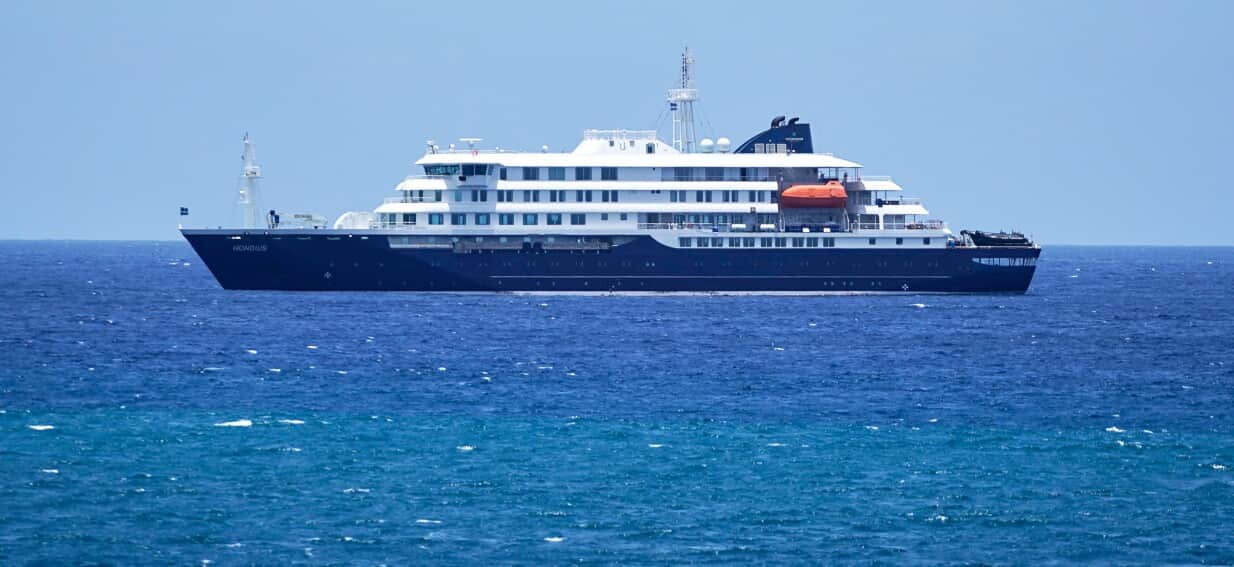
The headlines are predictable. They are almost scripted. A British crew member on a mega-ship falls ill, the word "outbreak" is splashed across every digital rag in a font size usually reserved for nuclear war, and the public descends into a familiar frenzy of germaphobia. We are told the cruise industry is a floating petri dish. We are told that one sick sailor is a harbinger of a maritime plague.
It is a lie. Or, at the very least, it is a gross misunderstanding of how epidemiology and maritime logistics actually function.
The media loves the "trapped at sea" narrative because it taps into a primal fear of isolation. But if you look at the data—not the scary adjectives, but the actual clinical data—you find that a cruise ship is likely the most surveyed, most sanitized, and most medically over-engineered environment on the planet. When a crew member requires "urgent medical care," it isn't a failure of the system. It is the system working exactly as intended, far more efficiently than the crumbling land-based healthcare infrastructure most of us settle for.
The Outbreak Obsession is Bad Math
The "lazy consensus" suggests that cruise ships are uniquely dangerous because of confined spaces. This ignores basic density metrics. A mid-sized cruise ship has a lower population density than a Manhattan subway car or a London Underground carriage at 5:30 PM. The difference? The ship has a dedicated medical team, mandatory reporting requirements to the CDC or local health authorities, and a cleaning protocol that would make a surgical theater look dusty.
When a "virus outbreak" hits the news, it usually refers to Norovirus or a respiratory bug. Let’s get real about the numbers. The CDC’s Vessel Sanitation Program (VSP) requires ships to report if just 3% of the population onboard has a gastrointestinal illness.
Think about that. If 3% of the people in your office or your child’s school got a stomach bug, it wouldn't even make the local community Facebook group. On a ship, it’s an international headline. We are holding the cruise industry to a standard of "Zero Sickness" that exists nowhere else in human civilization, then acting shocked when biology happens anyway.
The Crew Member as a Prop
The specific focus on a "British crew member" in recent reporting is a classic emotional hook. It builds a "one of us" narrative to drive engagement. But here is the insider truth: crew members are athletes of the service industry. They are screened more rigorously than almost any other workforce on earth.
When a crew member is evacuated, it is often a move of extreme caution, not a desperate scramble. In my years observing maritime operations, I have seen evacuations triggered for conditions that a GP on land would tell you to "sleep off" with some paracetamol. Why? Because the liability of a ship is massive.
The ship’s doctor isn't just treating a patient; they are protecting a billion-dollar asset. If they recommend a medevac, it’s often because the ship’s infirmary—while capable of performing minor surgery and advanced life support—is not the place for long-term recovery. Moving a patient to a land-based hospital isn't a sign of a "crisis." It is a logistics hand-off.
The Medical Theater of Modern Travel
We have entered an era of medical theater. We want the illusion of total safety, and we lash out when the curtain pulls back. The outrage directed at these "outbreaks" is actually a displaced fear of our own lack of control.
Consider the air we breathe. Modern cruise ships use advanced HVAC systems with HEPA filtration and UV-C sterilization. The air in a cruise cabin is often refreshed more frequently than the air in a high-end hospital ward. Yet, the public perceives the "sea air" as a vector for doom.
The reality? You are statistically more likely to contract a viral infection at the airport waiting to board the ship than on the ship itself. The "outbreak" didn't start in the middle of the Atlantic. It started in a security line in Heathrow or a crowded terminal in Miami. The ship is just the place where the symptoms finally showed up.
Why We Should Stop Fixing the Ships and Start Fixing the Narrative
The "People Also Ask" sections of search engines are filled with variations of: Is it safe to go on a cruise?
This is the wrong question. It assumes safety is a binary state. The real question is: Is the risk-to-reward ratio of a cruise ship better than a land-based resort?
The answer is a resounding yes. If you get sick at a hotel in Cancun, you are on your own. You have to find a pharmacy, navigate a foreign healthcare system, and hope the "doctor on call" isn't a glorified first-aid attendant. On a ship, you have a centralized command structure. You have a team that is legally mandated to track your illness.
If we want to be "brutally honest," the industry is actually too transparent. By reporting every sniffle and every stomach ache to meet regulatory standards, they provide the ammunition for the sensationalist press to shoot them down.
The Nuance of the Viral Load
Critics point to "shared buffet spoons" as the culprit. This is a 1990s take on a 2026 problem. Most modern lines have moved to served buffets or touchless technology. The real issue is the "Human Factor."
People save for years for a cruise. They get a tickle in their throat two days before embarkation. Do they cancel? No. They take a bunch of suppressants, lie on their health questionnaire, and walk up the gangway.
The "outbreak" isn't an engineering failure. It’s a behavioral one. The industry spends millions on sanitization to combat the fact that passengers are, by and large, dishonest about their health. We blame the "virus ship" instead of blaming the passenger in 4B who knew they had a fever and boarded anyway.
The Economic Reality of the Medevac
A helicopter evacuation from a ship at sea can cost upwards of $30,000 to $100,000. No cruise line wants this. It disrupts the itinerary, it terrifies the passengers, and it’s a PR nightmare.
When you see a report about a crew member requiring "urgent care," you aren't seeing a breakdown. You are seeing a corporation spending six figures to save one life. In any other industry, that would be a hero story. In the cruise industry, it’s used as evidence of a "plague ship."
This is the hypocrisy of the travel industry's detractors. They demand "safety first" but then use the protocols of safety as proof of danger.
The Downside of the Contrarian View
Is there a risk? Of course.
The downside to my perspective is that it requires a level of personal responsibility that many travelers aren't ready for. To admit that the ship isn't a petri dish is to admit that you are the primary variable in your own health.
If you are immunocompromised or high-risk, a cruise ship—like a theater, a stadium, or a plane—presents challenges. But the narrative that these ships are uniquely diseased is a relic of a time before modern maritime law and advanced filtration.
Stop Monitoring the News and Start Monitoring Your Hands
The advice you’ll get from the "travel experts" is to look for ships with the best health ratings. That’s fine. But it’s surface-level.
If you want unconventional advice that actually works:
- Ignore the "Outbreak" Headlines: They are based on a 3% threshold that is irrelevant to your personal risk.
- Watch the Crew: If the crew is calm, you should be too. They are the ones who spend 9 months a year on that steel island.
- Understand the Triage: An evacuation is a logistical success, not a medical failure.
The British crew member in the headlines is likely receiving a higher standard of acute care right now than they would in a bogged-down NHS A&E department. They are being treated as a priority because, in the ecosystem of a ship, every individual matters to the collective bottom line.
We need to stop treating cruise ships like floating hospitals and start recognizing them for what they are: the most intensely regulated hospitality environments on the planet. The virus isn't the problem. Our inability to understand risk and scale is the problem.
Stop looking for the "outbreak." Start looking at the data.
The ship isn't sinking, and neither is your health.
Go wash your hands.