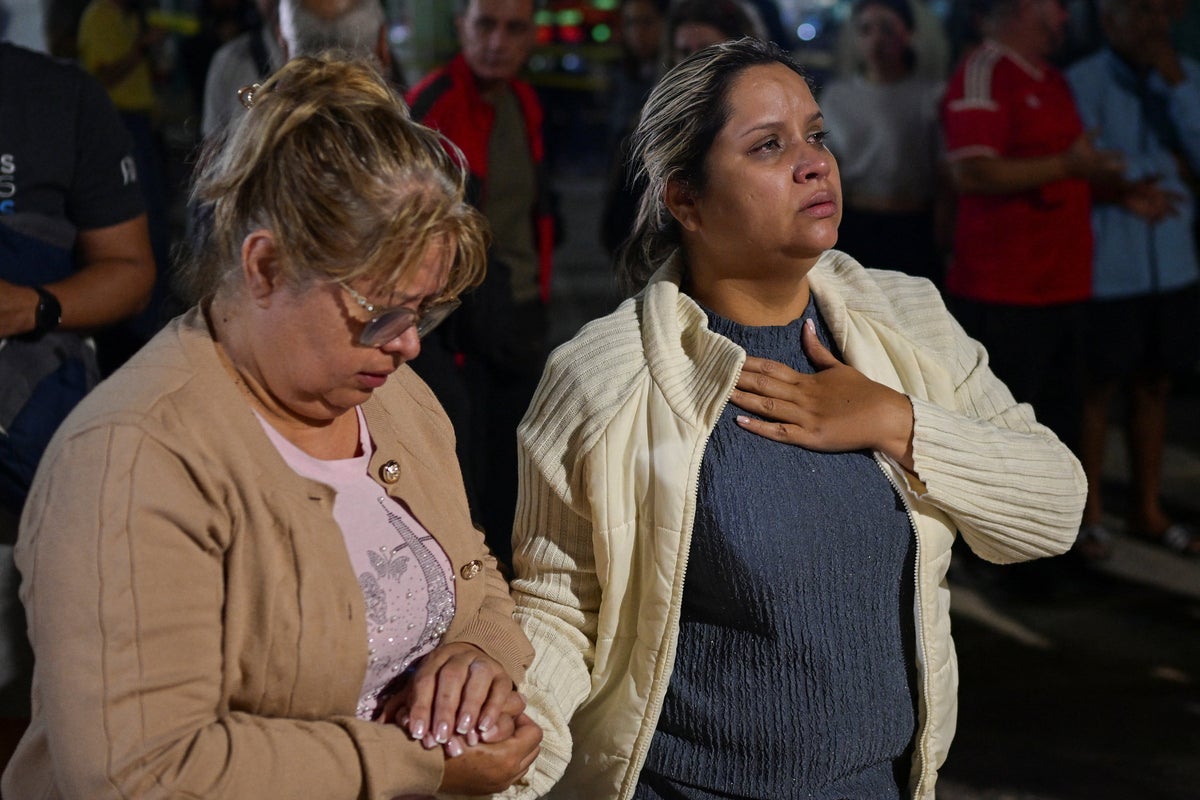
The ground shook, and then the concrete simply turned to dust. When a major earthquake rattles Venezuela, the immediate media narrative invariably focuses on the raw, localized terror of the moment—the imagery of split asphalt, shattered glass, and citizens running into the streets of Caracas screaming that it looked like a war zone. But the true catastrophe facing Venezuela is not a sudden act of God. It is an entirely man-made engineering and regulatory disaster decades in the making. The nation's real vulnerability lies within a decaying urban infrastructure that has been systematically starved of maintenance, stripped of oversight, and subjected to corrupt construction practices.
When seismologists analyze the tectonic fault lines running along the northern coast of South America, they see an inevitability. When structural engineers look at the high-rise barrios of Petare or the aging mid-century towers of the Chacao district, they see a death trap.
The Myth of the Unavoidable Disaster
Natural disasters are rarely just natural. The devastation left behind by seismic activity in Venezuela is directly proportional to the collapse of state regulatory bodies. For nearly half a century, Venezuela possessed some of the most advanced seismic engineering codes in Latin America, spearheaded by the Venezuelan Foundation for Seismological Research (FUNVISIS). The standards were clear, requiring specific reinforcement configurations for concrete frames to withstand the lateral forces of a major tremor.
The codes became ghosts. As the country descended into prolonged economic paralysis, compliance became an expensive luxury that local developers and state-funded housing projects routinely bypassed.
Concrete requires a precise ratio of cement, sand, and aggregate to reach its rated structural strength. In many of the state’s massive Gran Misión Vivienda housing complexes—built rapidly over the last fifteen years to house millions of low-income citizens—the materials were heavily compromised. Investigative audits and whistleblowers from the ministry of housing have repeatedly pointed out that sand was often stretched, premium cement was diverted to the black market, and structural steel rebar was thinned out to save costs.
The result is a landscape of brittle concrete. When a tremor strikes, these structures do not flex; they snap. The lower floors experience what engineers call a soft-story collapse, where the ground level pancakes under the weight of the upper floors, trapping everyone inside within seconds.
The Informal Cities Hanging by a Thread
While the state-built towers represent a massive liability, the true center of potential mass mortality lies in the informal settlements that cling to the mountainsides surrounding Caracas.
Caracas Valley Structural Risk Distribution

[Mountain Slopes: High-Density Barrios]
   │── Unreinforced masonry / hollow clay brick
   │── Lack of engineered retaining walls
   │── High risk of seismic-induced landslides
   ▼
[Valley Floor: Formal Urban Center]
   │── Aging mid-century concrete towers
   │── Widespread code non-compliance since 2010
   │── Deferred structural maintenance
In areas like Petare, the largest barrio in Latin America, homes are constructed out of unreinforced hollow clay bricks stacked on top of one another, separated only by thin layers of poor-quality mortar. These are not engineered homes. They are fragile vertical self-builds, often rising three to five stories on precarious slopes without any foundational anchors into bedrock.
A significant earthquake does more than just shake these walls down. It triggers widespread liquefaction and structural landslides on the unstable hillsides. During a severe tremor, the loose, uncompacted soil beneath these barrios behaves more like a liquid than a solid. Entire hillsides can liquefy, sending thousands of homes cascading downward onto the structures below.
The state has no plan for this. There are no emergency access routes into the heart of the barrios wide enough for heavy rescue machinery. If a catastrophic failure occurs on these slopes, rescue efforts will have to be conducted by hand, using shovels and buckets, while the remaining structures uphill continue to threaten secondary collapses.
The Invisible Decay of the Formal Sector
It is a mistake to think the danger is confined to the slums. The affluent and middle-class pockets of Caracas, such as Altamira, Las Mercedes, and Los Palos Grandes, are facing their own quiet structural crisis.
Many of the iconic high-rises in these districts were built during the oil booms of the 1950s and 1970s. While these buildings were constructed using better materials than today's state projects, they have now endured decades of deferred maintenance.
- Carbonation of Concrete: Decades of exposure to atmospheric carbon dioxide have penetrated the porous older concrete, lowering its pH and causing the internal steel rebar to rust.
- Spalling: As the internal steel corrodes, it expands, cracking the outer concrete shell away from the structural core and drastically reducing its load-bearing capacity.
- Water Ingress: Broken drainage systems and unpatched roofs have allowed water to pool around foundational elements for years, weakening the structural footings of multi-story apartments.
When a building suffers from advanced spalling and corroded reinforcement, its ability to dissipate seismic energy is gone. The structure becomes brittle. An earthquake that a well-maintained 1970s tower would easily survive can cause an unmaintained twin tower to experience immediate, catastrophic failure of its primary support columns.
The Collapse of First Response Capabilities
To understand the full scope of the threat, one must look at what happens after the shaking stops. The ability of a city to survive an earthquake depends heavily on its immediate emergency response grid.
Venezuela's emergency response system is functionally hollowed out.
Fire departments across the country operate with a fraction of the equipment they require. A vast majority of fire trucks and ambulances sit idle in bays, stripped of tires, batteries, or specialized hydraulic rescue tools like the "jaws of life" because replacement parts cannot be sourced. The country's main specialized search and rescue units, which once trained internationally, have seen their ranks decimated by mass migration as experienced officers fled the country's economic collapse.
Furthermore, hospitals cannot handle a sudden influx of thousands of trauma patients. The public healthcare system suffers from chronic shortages of basic medical supplies, including antibiotics, sterile bandages, and anesthetic drugs. Power outages are frequent, and many facilities cannot rely on their backup generators due to erratic fuel supplies. If an earthquake causes widespread structural collapse, the medical system will be forced to ration care, leading to a massive spike in preventable fatalities among those pulled from the rubble.
The Cost of Inaction
The solutions are known, but they are politically inconvenient and immensely expensive. Mitigating this risk requires an immediate, systematic overhaul of urban policy.
First, the state must implement a mandatory structural auditing program for all buildings constructed over the last twenty years, prioritizing high-density public housing. Structures found to have sub-standard concrete or insufficient reinforcement must be retrofitted with external steel bracing or carbon-fiber wraps. This is a technical reality that cannot be negotiated.
Second, the informal settlements require immediate engineering interventions. While retrofitting every home in a barrio is impossible, the construction of engineered concrete retaining walls and deep-piled drainage systems along the high-risk slopes can prevent the mass landslides that follow seismic activity.
Finally, the regulatory independence of FUNVISIS and municipal engineering departments must be restored. Building permits must be tied to strict, independent third-party inspections, completely insulated from political pressure or bribery.
Every year that passes without these measures is a roll of the tectonic dice. The fault lines beneath Venezuela do not care about political rhetoric, economic sanctions, or historical excuses. They operate on the cold, unyielding laws of geophysics. When they slip again, the resulting body count will not be an act of nature. It will be the final bill for a generation of criminal negligence.