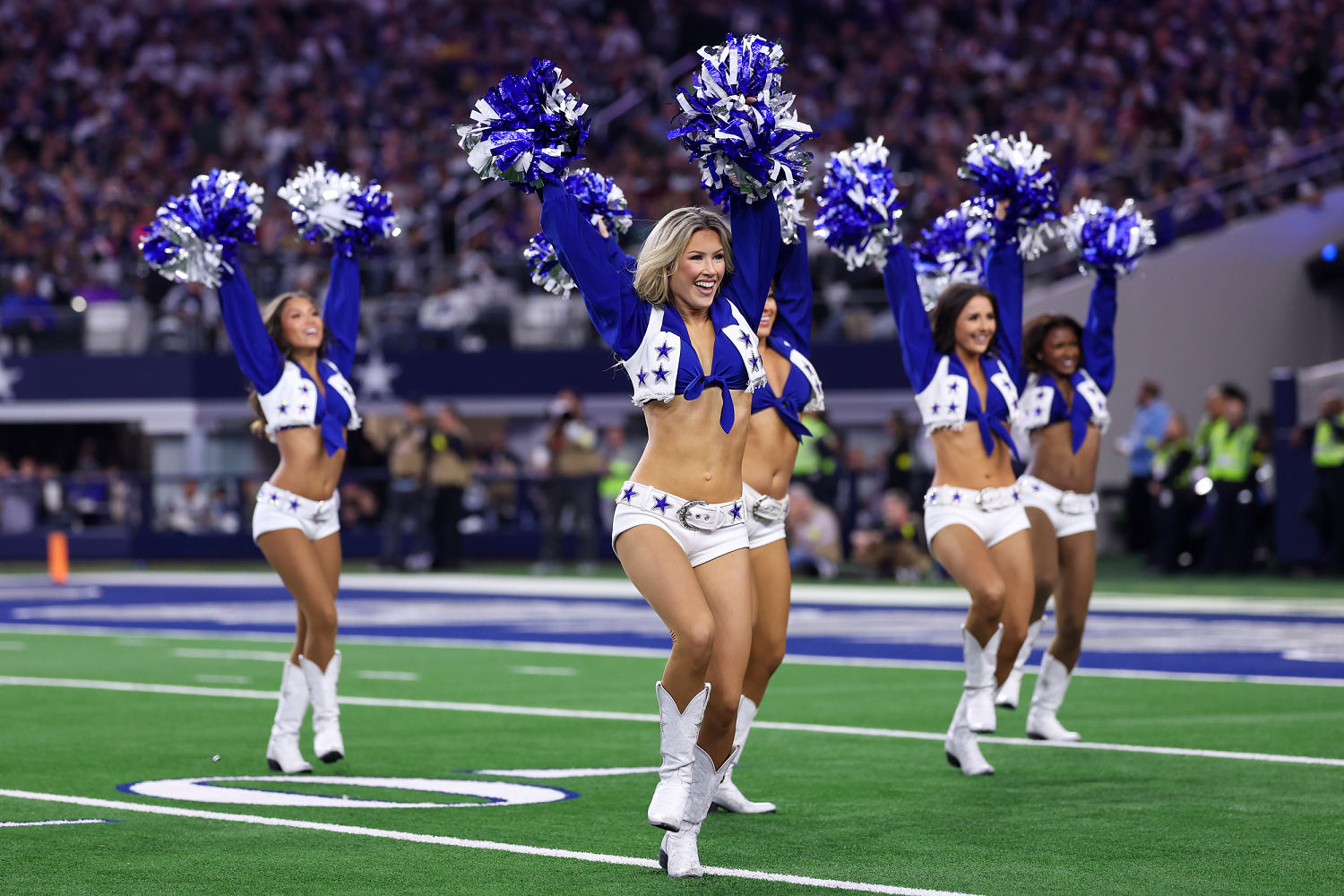
The Dallas Cowboys Cheerleaders took legal action against My Chemical Romance after frontman Gerard Way wore an altered version of their iconic blue-and-white uniform onstage during the band's Reunion Tour, triggering a cease-and-desist dispute over unauthorized trademark use and brand dilution. While the internet treated the clash as an absurd collision between NFL pageantry and emo theatricality, the real story sits buried inside a rigid corporate licensing apparatus. The Dallas Cowboys organization does not view a modified uniform as harmless rock-and-roll satire; they view it as a direct breach of a tightly policed intellectual property fortress that generates tens of millions of dollars annually.
To understand why an NFL franchise would go after a multi-platinum rock band over a single stage outfit, you have to strip away the pop-culture novelty and look at the mechanics of modern trademark enforcement.
The Anatomy of a Cease and Desist in Live Music
When Gerard Way stepped onto the stage in Arlington, Texas, wearing a custom-made cheerleader ensemble complete with a cropped blue blouse, white vest, star-spangled accents, and white boots, the crowd roared. It was classic theatrical subversion. Way has spent decades using gender-bending, hyper-specific Americana costumes to deconstruct mainstream culture during live sets.
The Dallas Cowboys front office did not applaud the performance art.
Within days, legal representatives for the franchise moved to halt any further use of the likeness, targeting not just the onstage appearance, but the inevitable downstream ripple effects of viral tour photography, bootleg merchandise, and unauthorized reproduction. Under federal trademark law—specifically the Lanham Act—a trademark owner has an affirmative legal duty to police their marks. If a corporation allows a high-profile entity to use a protected design without a licensing agreement, they risk weakening their legal standing against future, more commercially damaging infringers.
In the legal trenches of intellectual property, silence equals consent. If the Cowboys let My Chemical Romance wear a modified uniform in front of forty thousand people without sending a legal notice, a counterfeit apparel manufacturer in six months could point to that inaction as evidence that the uniform's trade dress is no longer strictly controlled.
Why the Uniform Is More Protected Than a Logo
Most casual observers assume copyright and trademark disputes in music revolve around song samples or stolen band logos. Clothing is notoriously difficult to protect under United States copyright law because garments are classified as "useful articles." You cannot copyright the cut of a blouse or the shape of a pair of shorts.
However, you can protect trade dress and surface design trademarks.
The Dallas Cowboys Cheerleaders uniform is one of the few garments in American entertainment history registered as a distinct trademark with the United States Patent and Trademark Office. Every specific element—the exact shade of royal blue, the placement of the fifteen white stars on the vest, the white fringe, and the knotted midriff—functions as a source identifier. When consumers see that specific combination of fabric and stars, they immediately associate it with the Dallas Cowboys brand.
Because the uniform is legally recognized as a trademark rather than mere clothing, altering it onstage does not automatically shield a performer from infringement claims. Way’s outfit was visibly modified, lacking the official NFL shield and featuring distressed styling, yet the overall visual impression remained unmistakably tied to the Cowboys' intellectual property. In trademark litigation, the central legal test is likelihood of confusion or brand dilution by tarnishment. Even if no reasonable concertgoer believed the Dallas Cowboys officially sponsored My Chemical Romance, the franchise's lawyers can argue that associating their tightly controlled, family-friendly brand with a dark, theatrical punk show erodes the distinct commercial value of the mark.
The Satire Defense vs Corporate Reality
Whenever a musician gets slapped with a legal threat over a costume or a piece of stage art, fans immediately invoke fair use and the First Amendment. The argument seems straightforward. Satire and parody are protected forms of artistic expression, and rock concerts are inherently expressive venues.
The problem is that fair use is not a magic shield that prevents a lawsuit; it is an affirmative defense you only get to argue after you have already spent hundreds of thousands of dollars in federal court.
In a hypothetical scenario where a band decides to fight an NFL franchise over a parody costume, the legal battle would hinge on whether the performance constituted true parody—which specifically mocks or comments on the original work itself—versus satire, which uses a recognizable symbol to make a broader cultural point. Courts historically treat parody much more favorably than satire in trademark disputes. If Way was simply wearing the outfit to subvert masculine rock tropes or pay ironic tribute to Texas culture, a judge might rule that the costume was satircal rather than parodic, stripping away the strongest First Amendment protections.
Furthermore, the commercial reality of modern arena tours complicates the "pure art" defense. A major tour is a massive revenue-generating enterprise. Concerts are filmed, photographed by press, streamed by fans, and used to drive ticket and merchandise sales for future dates. When a trademarked costume becomes the defining visual moment of a tour stop, opposing counsel will argue that the band is commercially profiting from the goodwill and recognition built by the trademark holder.
The Jerry Jones Licensing Fortress
You cannot analyze this dispute without looking at the specific business model of the Dallas Cowboys. Unlike every other team in the National Football League, the Cowboys operate outside the league's collective merchandise revenue-sharing pool.
In the late 1990s, owner Jerry Jones fought the NFL in court and secured the independent right to market, license, and distribute Dallas Cowboys merchandise. Because the franchise keeps every dollar generated by its apparel and brand partnerships rather than splitting it thirty-two ways, their legal department is notoriously aggressive. They protect their intellectual property with the ferocity of a luxury fashion house rather than a traditional sports team.
The cheerleaders are not merely sideline entertainers within this business structure; they are a standalone global licensing vertical. They have their own reality television franchises, calendars, corporate appearance fees, and retail partnerships. The uniform is the centerpiece of that entire revenue stream. Any unauthorized replication—even an ironic one worn by a rock singer in a stadium just miles from the team's headquarters in Arlington—is treated as an unauthorized incursion into a proprietary market.
How Live Music Tours Navigate Legal Minefields
Behind the scenes of every major arena and stadium tour, a quiet war takes place between creative directors and entertainment lawyers. Stage design, wardrobe, and video backdrops are routinely scrubbed for potential IP violations before a tour ever leaves rehearsals.
Touring artists regularly run into friction over:
- Interpolated Stage Visuals: Using recognizable corporate logos, cartoon characters, or movie clips on giant LED screens without clearance.
- Modified Sports Jerseys: Wearing altered local team jerseys during city-specific encores, which frequently triggers cease-and-desist letters if photos are used in official tour recaps.
- Cover Song Merchandise: Printing lyrics from a covered track onto tour t-shirts without securing separate print rights from the music publisher.
- Bootleg Aesthetics: Designing tour merch that mimics the exact font and color scheme of major consumer brands like Pepsi, Ford, or NASA.
In most cases, bands push the boundary deliberately, knowing the worst-case scenario is a stern letter from a corporate law firm demanding they stop. By the time the letter arrives, the tour has moved to the next city, the viral photos have already circulated across social media, and the band simply retires the costume to avoid actual litigation. It is a calculated game of chicken. The artist gets the cultural moment; the corporation gets to put a formal objection on the record to protect its trademark registry.
The Streisand Effect and Corporate Blind Spots
While the Dallas Cowboys' legal team acted strictly according to standard corporate playbook, aggressive IP enforcement in the music industry carries a severe reputational cost. Legal departments measure success in compliance and protected marks, entirely ignoring cultural optics.
By moving against My Chemical Romance, the franchise inadvertently amplified the exact imagery they wanted to suppress. A single night's wardrobe choice—which might have remained an inside joke among dedicated fans tracking the band's rotating tour outfits—was instantly elevated into mainstream news headlines. Millions of people who never followed the tour suddenly searched for photos of Gerard Way in the uniform.
This dynamic exposes the fundamental friction between legacy entertainment institutions and modern music culture. Sports franchises rely on uniformity, strict brand guidelines, and predictable licensing deals. Rock bands thrive on disruption, visual provocation, and the repurposing of mainstream symbols. When those two worlds occupy the same physical space, a legal collision is almost guaranteed.
What Artists and Brands Actually Take Away From the Clash
The dispute between the Dallas Cowboys Cheerleaders and My Chemical Romance did not end in a dramatic courtroom showdown, because neither side actually wanted one. For the Cowboys, a prolonged lawsuit against a beloved rock band would have looked petty and out of touch, alienating crossover fans in their own backyard. For My Chemical Romance, burning tour profits to litigate the First Amendment boundaries of a cheerleader outfit made zero financial sense.
Instead, the clash serves as a masterclass in how modern intellectual property actually functions in the wild. Trademarks are not passive shields; they are active weapons that corporations are legally obligated to swing, even when the target is an artist engaging in theatrical homage. Meanwhile, performers continue to operate in the gray zone between tribute and infringement, knowing that a single photograph from a single night can outlive any cease-and-desist letter ever drafted.
In the end, the uniform went back into a wardrobe trunk, the lawyers billed their hours, and the viral images remained permanently etched into rock tour history—proving that while a corporation can own the trademark to a costume, it can never fully control what the audience decides it means.