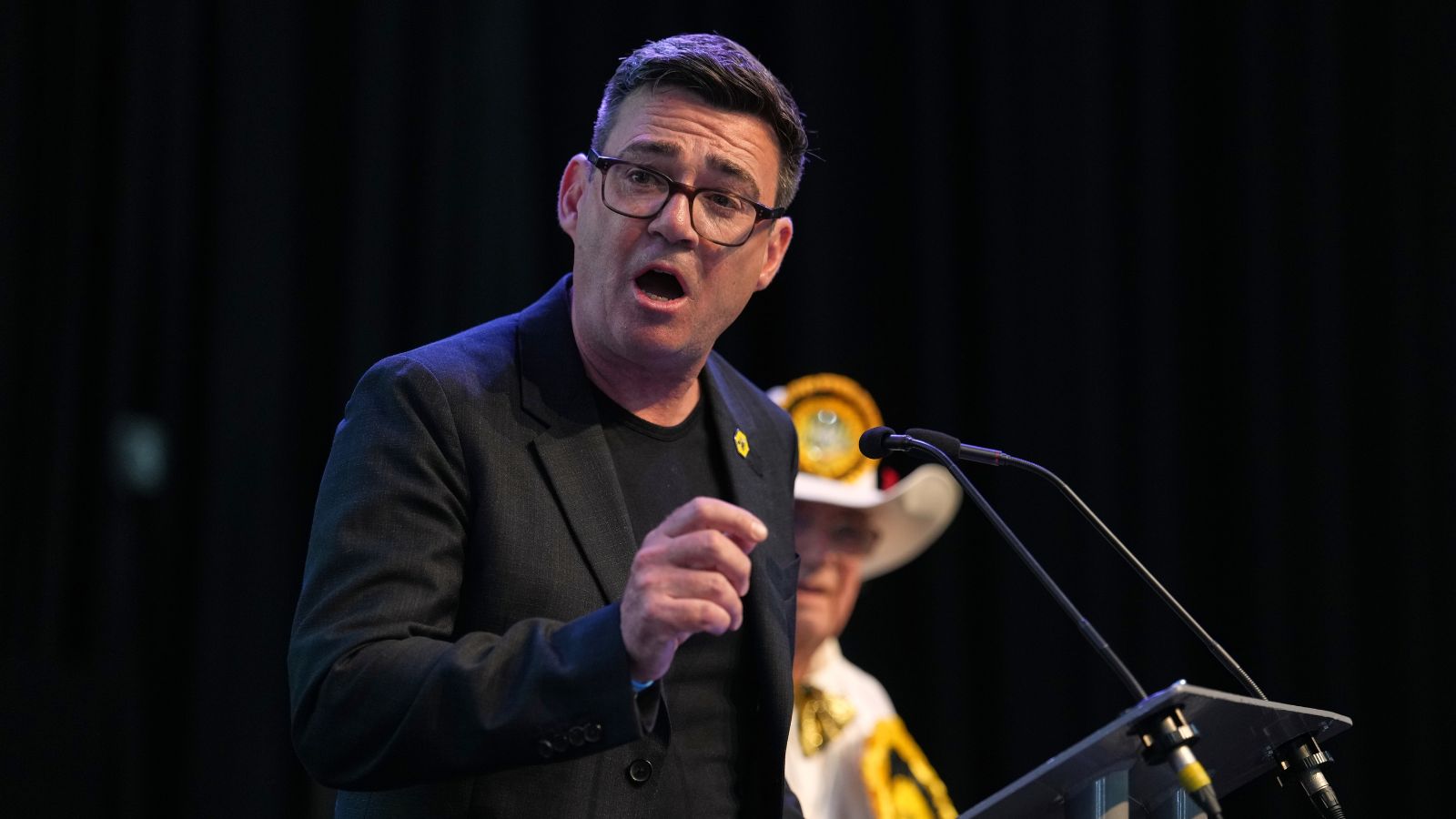
The British commentariat is suffering from a collective bout of amnesia. Every few months, like clockwork, a glossy profile emerges declaring Andy Burnham the "King of the North" and the rightful heir to the Labour crown. The narrative is as seductive as it is lazy: a flat-cap wearing, transit-fixing champion of the common man who will ride down from Manchester to rescue Westminster from its own technocratic rot.
This is a fantasy. It is built on a fundamental misunderstanding of British electoral mechanics, a selective wiping of political history, and a refusal to look at the hard fiscal numbers behind regional devolution.
The media wants a savior. What they actually have is a career politician who has spent two decades mastering the art of the strategic retreat. If you think Andy Burnham is the answer to the UK's long-term political stagnation, you are asking the wrong questions.
The Myth of the Outsider
Let’s dismantle the first and most persistent lie: that Andy Burnham is a political outsider.
The current branding positions him as a gritty regional insurgent fighting the corrupt London bubble. In reality, Burnham is the ultimate product of that very bubble. He went straight from Cambridge University to working as a researcher for Tessa Jowell. He was a special adviser to Chris Smith. He entered Parliament in 2001 for the safe seat of Leigh and climbed the ministerial ladder under Tony Blair and Gordon Brown, serving as Chief Secretary to the Treasury, Culture Secretary, and Health Secretary.
He did not fight the machine; he was forged in its deepest furnaces.
His sudden transformation into a regional populist in 2017 was not a philosophical awakening. It was a career survival strategy. Having run for the Labour leadership twice and failed spectacularly both times, Burnham realized his path to power in Westminster was blocked. The Metro Mayoralty of Greater Manchester was not a calling; it was a lifeboat.
By rebranding himself as the voice of the neglected North, he managed to outsource his political survival to a regional electorate while keeping his national ambitions on life support. It is a brilliant piece of political theater, but we should not mistake performance art for principled rebellion.
The Ghost of Mid Staffs
Those who champion Burnham as the next Prime Minister conveniently forget his actual record in government. When you operate in the high-pressure cooker of national administration, rhetoric must be backed by delivery. Burnham’s record is highly vulnerable.
During his tenure as Health Secretary between 2009 and 2010, the Mid Staffordshire NHS Foundation Trust scandal erupted. It was one of the worst systemic failures in the history of the National Health Service, where substandard care led to the unnecessary deaths of hundreds of patients.
Burnham’s response at the time was characterized by classic Whitehall defensiveness. He resisted calls for a full, independent public inquiry, opting instead for a private investigation. It was his successor, Andrew Lansley, who eventually ordered the full public inquiry under Robert Francis QC.
Mid Staffs Inquiry Key Findings:
- Prioritization of finance and targets over patient safety.
- Failure of regulators to detect systemic neglect.
- A culture of defensiveness and denial within the Department of Health.
If Burnham ever steps back into the national arena to run for the leadership, this record will not just be scrutinized; it will be weaponized. The "compassionate champion of public services" narrative collapses the moment a spotlight is shone on his actual management of the NHS. In national politics, you cannot run on a platform of public service savior when your ministerial legacy includes a refusal to immediately expose systemic NHS failures.
The 2015 Soft Left Trap
To understand why Burnham cannot lead the country, you have to look at why he could not even lead his own party when the prize was practically handed to him.
In 2015, Burnham was the overwhelming favorite to succeed Ed Miliband. He had the backing of the unions, the MPs, and the party apparatus. Yet, his campaign was a masterclass in political cowardice.
The turning point came during the debate over the Conservative government’s Welfare Reform and Work Bill. Burnham, terrified of being labeled "soft on welfare" by the right-wing press, instructed Labour MPs to abstain on a bill that cut support for low-income families.
It was a fatal miscalculation. It alienated the party’s progressive base and created a vacuum. A backbench rebel named Jeremy Corbyn stepped into that vacuum, opposed the bill outright, and swept to victory. Burnham tried to play both sides and ended up pleasing nobody.
This is the central flaw in the Burnham political DNA: when forced to choose between a hard principle and a tactical compromise, he will choose the compromise every single time, only to dress it up as pragmatism later. That lack of killer instinct is fatal on the national stage.
The Illusion of the Greater Manchester Model
Let’s look at his record as Mayor. The consensus is that Burnham has run a masterclass in regional governance, specifically with the introduction of the Bee Network—bringing Manchester’s bus network back under public control.
It is a popular policy. It makes for great press releases. But let's look at the financial architecture supporting it.
The Bee Network is heavily subsidized. The capital injection required to buy out private operators and subsidize capped fares relies on a mix of local council tax precepts and direct grants from the central Treasury.
In a regional bubble, you can run a high-spend, high-subsidy model because you are not responsible for the national balance sheet. You can demand more money from London, blame the Treasury for any shortfalls, and take 100% of the credit for the cheap fares.
The Devolution Fiscal Loophole:
1. Local Mayor implements popular, subsidized service.
2. Central Government provides the underlying capital grants.
3. If service succeeds: Mayor takes the credit.
4. If budget deficits loom: Mayor blames national austerity.
This model is non-transferable to Downing Street. A Prime Minister cannot write a letter to themselves complaining about funding allocations. When Burnham has to balance the national budget, manage bond market volatility, and fund the entire welfare state, the easy fiscal populism of Greater Manchester will dissolve. The Treasury is not a piggy bank you can endlessly bully when you are the one sitting in the Chancellor’s office.
The Math of the Return
The practical path for Burnham to become Prime Minister is virtually non-existent under current rules.
To run for the Labour leadership, he must first be a Member of Parliament. This means he has to resign his highly paid, highly visible mayoralty, find a safe parliamentary seat, win a selection battle against local activists who may prefer a local candidate, and then win a general election.
Only then can he begin the grueling process of building a faction within the Parliamentary Labour Party (PLP) to launch a leadership bid.
The current PLP is not the PLP of 2015. It is highly disciplined, tightly managed, and deeply skeptical of anyone who spent the difficult opposition years throwing rocks from the sidelines in Manchester. Many sitting MPs view Burnham not as a savior, but as an opportunist who dodged the brutal Westminster battles of the late 2010s to build a personal fiefdom in the North.
They will not hand him the keys to the kingdom. If he returns, he will be treated as an aging heavyweight boxer trying to make an uninspired comeback.
Stop Waiting for the King of the North
The obsession with Andy Burnham is a symptom of a deeper sickness in British political analysis. It is the belief that complex structural problems—regional inequality, public service collapse, productivity stagnation—can be solved by a charismatic leader with a soft northern accent and a well-fitting dark suit.
Burnham's brand works because it is insulated by devolution. It thrives on grievance without responsibility. The moment he steps back into the national arena, the magic fades, the past catches up, and the structural realities of the British economy assert themselves.
He is not the next Prime Minister. He is a highly skilled regional manager who found his ceiling and had the sense to build a throne there.