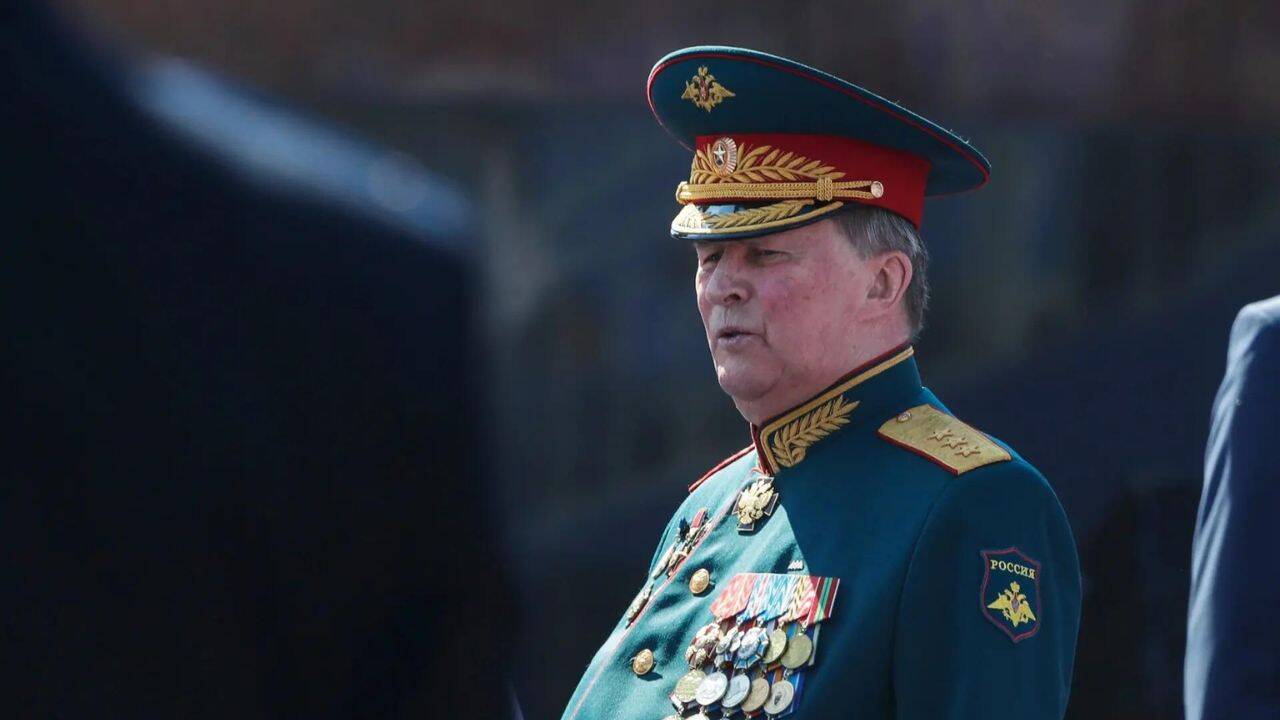
Sergei Ivanov is dead at 73. For anyone watching the Kremlin, this isn't just another obituary of an old Soviet-era bureaucrat. It’s the final chapter for a man who almost ran Russia. Back in 2007, he was the guy everyone assumed would take over when Vladimir Putin had to step down due to term limits. Instead, he got passed over for Dmitry Medvedev. He spent his final years looking after Siberian leopards and transport logistics instead of holding the nuclear codes.
The VTB United League basketball organization announced his death on Friday. The Kremlin confirmed it with a brief, one-sentence statement from Putin offering deep condolences. They didn't give a cause of death, though rumors had circled for a while that he was dealing with a long-term illness. Putin dismissed him from his final official post in February, just days after he hit the mandatory civil service retirement age. His passing closes the book on one of the most intense, hidden political dramas in modern Russian history.
Understanding Ivanov tells you exactly how power works in Moscow. It shows you what happens when an ambitious insider flies too close to the sun.
The Secret KGB Friendship That Built an Empire
Ivanov and Putin weren't just political allies. They were friends from the start. Both grew up in Leningrad. Both studied at Leningrad State University, though Ivanov focused on English and Swedish philology while Putin did law. They met in the 1970s while working in the Leningrad directorate of the KGB. They were young, ambitious spies during the height of the Cold War.
When the Soviet Union collapsed, their paths split for a little while. Putin went into local politics in St. Petersburg. Ivanov stayed deep inside the intelligence services, climbing the ranks of the Foreign Intelligence Service. He lived abroad and worked under deep cover. By the time Putin moved to Moscow to head the FSB in 1998, he needed people he could trust with his life. He called his old friend. He made Ivanov his deputy at the FSB.
When Putin became Prime Minister in 1999, he appointed Ivanov as Secretary of the Security Council. In 2001, Ivanov became Russia's first civilian Defense Minister. Putin framed it as a move to civilianize public life. In reality, it put a trusted KGB brother in charge of a massive, stubborn military apparatus that needed crushing control during the second war in Chechnya. He oversaw that war with a brutal efficiency. He threw billions of rubles into rearmament. He slashed the army by more than 200,000 troops. Still, military experts weren't entirely impressed. They gave his reforms a mediocre grade because corruption kept swallowing the cash meant for soldier housing and salaries.
The Brutal 2008 Succession Race That Ivanov Lost
By 2007, Russia faced a massive constitutional hurdle. Putin couldn't run for a third consecutive presidential term. The Kremlin political machine decided to stage a controlled succession contest. They set up two main favorites as deputy prime ministers: Sergei Ivanov and Dmitry Medvedev.
Public relations teams went to work. Ivanov was the hardline hawk, the guy who didn't mind being rude to Western diplomats. He once mocked Georgia's attempts to join NATO by saying they could join the "League of Sexual Reform" for all he cared. He was popular with the public. Polls and approval ratings showed him leading Medvedev by a clear margin. People wanted a strongman, and Ivanov fit the bill perfectly.
He genuinely believed he was next in line. Sources close to the administration later revealed that Ivanov's associates were already dividing up future cabinet seats. That arrogance was his downfall.
Putin didn't want a strong, independent successor who might turn around and lock him out of power. He chose Medvedev, the softer, more compliant aide who would willingly keep the seat warm and give it back four years later. Putin valued absolute loyalty and predictability over popularity. Ivanov was a solitary operator. He was a security guy but belonged to no specific faction or clan. He didn't have a massive network of loyalists to protect him when Putin made his final choice. He fell fast.
From Defense Minister to Saving Amur Leopards
After losing the presidency, Ivanov didn't get purged immediately. That's not how Putin treats his old Leningrad buddies. He became Deputy Prime Minister under Putin, who took the premier spot. Later, from 2011 to 2016, Ivanov served as the powerful Chief of Staff of the Presidential Administration. He ran the daily operations of the Kremlin with a firm hand.
Then, in August 2016, the axe fell quietly. Putin removed him as Chief of Staff and handed him a newly created role: Special Presidential Envoy for Environmental Protection, Ecology, and Transport.
It was a golden parachute, a polite way of forcing a heavyweight into political exile. He went from controlling the country's domestic political machinery to running conservation programs for Amur leopards and checking on railway lines. He kept his seat on the Security Council, but his real political teeth were gone. He accepted his fate without a public peep. He knew that complaining in modern Russia gets you far worse than a nature conservation portfolio.
What His Passing Reveals About Modern Kremlin Politics
Ivanov's trajectory teaches a vital lesson about how the Russian state functions. In the West, high-level political rivalries often play out in the media or through public elections. In Moscow, the real battles happen in total silence behind thick Kremlin walls. By the time the public hears about a shift, the war is already over.
His death marks the steady departure of the original Leningrad KGB cohort. These were the men who took over Russia in the early 2000s, bringing their Soviet security mindsets into the 21st century. As this older generation ages out or dies, the dynamics inside the Kremlin are shifting toward younger technocrats who didn't serve in the Cold War trenches but know how to run a wartime economy.
If you want to track where Russian power goes next, look away from the old names. Stop focusing on the ghosts of the 2008 succession race. Pay attention to the quiet managers currently handling defense logistics and regional governorships. They are the ones building the new system while the old guard fades away. For Ivanov, the race ended long ago, but his life remains a textbook study in the fragility of power under a czar who shares his throne with no one.