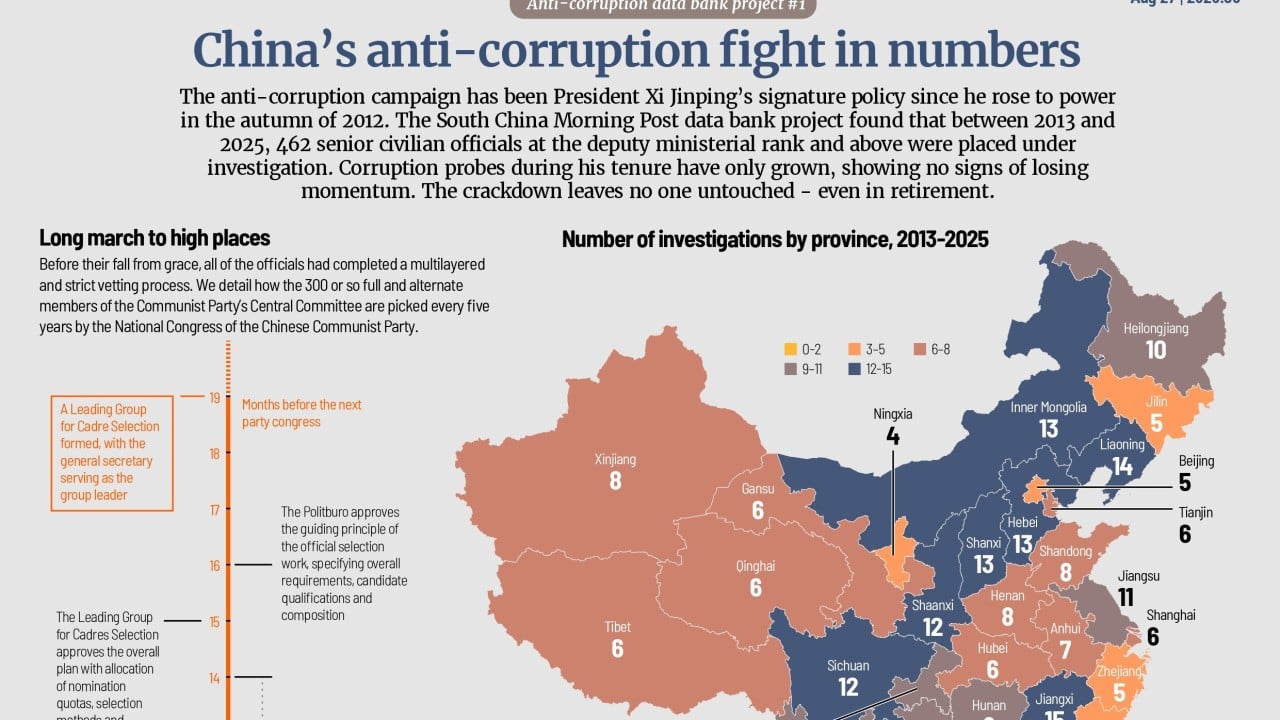
When the Central Commission for Discipline Inspection releases its annual ledger, the scale of state discipline reads like a military campaign report rather than routine administrative oversight. Disciplinary authorities filed over one million cases and sanctioned nearly 983,000 individuals in a single recent calendar year, outstripping historical baselines.
For over a decade, this sweeping anti-graft apparatus has served as the defining political architecture of modern China. Analysts often obsess over the headline tallies—counting the provincial leaders toppled or the billions in recovered assets. Yet raw figures obscure the structural mechanics of how administrative punishment functions as an instrument of state control, economic recalibration, and bureaucratic compliance. Meanwhile, you can explore similar events here: Why Big Tobacco Is Racing to Put Stronger Nicotine Pouches in Your Local Store.
The Escalation Spiral
The volume of disciplinary actions tells a story of deepening institutional penetration. Total filings climbed past one million cases, jumping significantly from prior years. State investigators are not merely maintaining pressure; they are accelerating it.
Consider how the dragnet has expanded. It no longer focuses exclusively on high-profile political rivals or elite ministerial targets. The apparatus reaches deep into state-owned enterprises, higher education institutions, financial regulatory bodies, and municipal governments. Lower-ranking civil servants, colloquially categorized as flies alongside the high-level tigers, face intense scrutiny. To see the full picture, we recommend the excellent analysis by CNBC.
This saturation creates a peculiar administrative climate. When nearly a million public servants face disciplinary action annually, the ripple effect paralyzes routine decision-making. Local officials, terrified of triggering a compliance review, often default to extreme risk aversion. Projects stall. Budgets remain unspent. The very mechanism designed to ensure policy execution frequently induces administrative inertia.
Beyond the Public Ledger
Official numbers capture visible investigations, but they omit the subterranean market that has grown around political intelligence. Bureaucratic leaks have transformed into an illicit digital commodity.
Informal online networks, sometimes mocked as shadow personnel departments on social platforms, trade in advance rumors, leaked career histories, and coded announcements regarding which officials are next in line for investigation. This underground economy highlights a central paradox. Despite rigid state control over information, the opacity of the disciplinary process breeds an insatiable public hunger for leaks. The government responds by launching joint police and anti-graft crackdowns against digital brokers who monetize internal state data, proving that information control remains as fiercely contested as financial integrity.
Simultaneously, the legal framework is shedding its domestic boundaries. Lawmakers are advancing cross-border anti-corruption legislation designed to codify and institutionalize the pursuit of fugitive officials and hidden assets overseas. Programs like Operation Sky Net have already repatriated thousands of suspects across dozens of countries. By moving from informal persuasion and diplomatic pressure to formalized extraterritorial legal tools, Beijing is signaling that geographic distance no longer offers insulation for compromised capital.
Structural Realities and Economic Drag
To understand why this campaign endures without an endpoint, one must look at the structural intersection of resource allocation and state power. Regions rich in critical minerals, coal reserves, and heavy industrial capital consistently generate high concentrations of disciplinary cases. Wherever massive state funds intersect with valuable commodities, the structural temptation for rent-seeking remains high.
The enforcement mechanism treats corruption not as isolated moral failure, but as a systemic vulnerability that threatens macroeconomic plans. Yet the dual mandate of enforcing absolute loyalty while demanding economic growth creates friction. Officials must execute complex developmental targets under the watchful eye of inspectors who penalize both malfeasance and administrative overreach.
Governance models that rely on perpetual crisis-mode mobilization eventually hit diminishing returns. When compliance is enforced primarily through the threat of investigation, initiative suffers. The challenge for central leadership is preventing the cure from permanently immobilizing the patient.
The numbers will likely remain high as long as political survival and administrative compliance are measured through the lens of continuous inspection. The machine does not slow down because stopping implies that the task is complete.