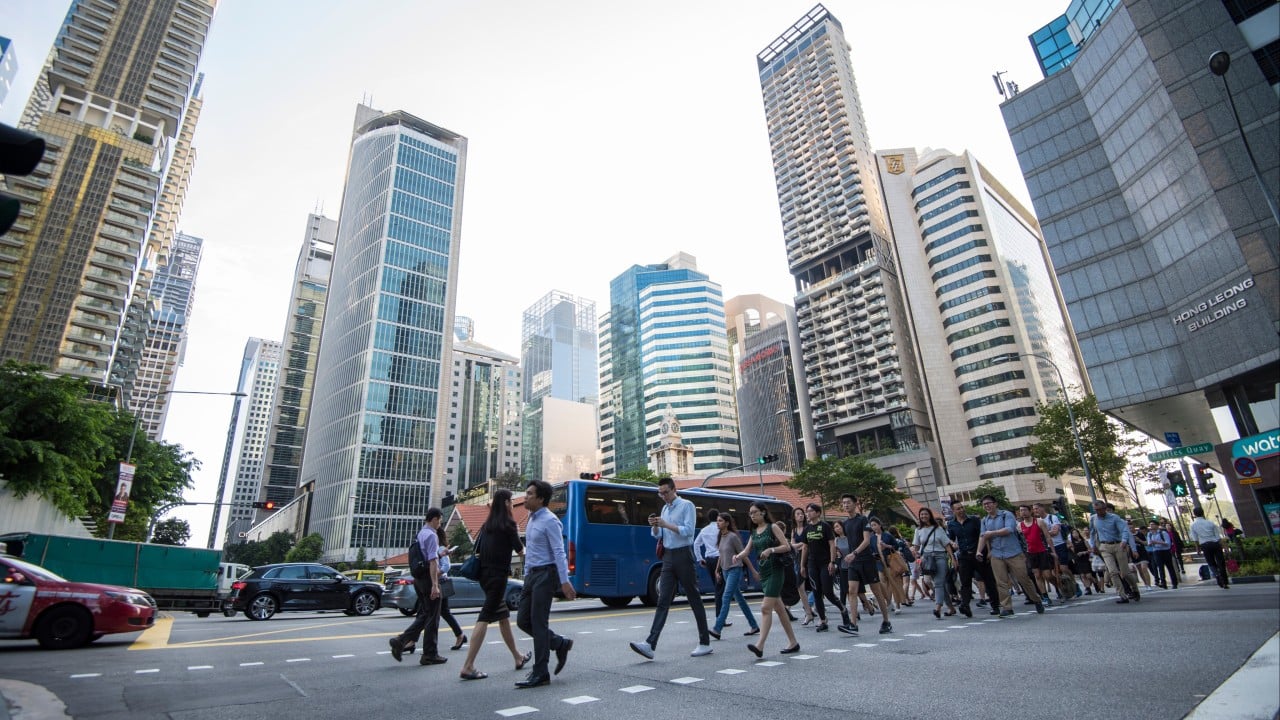
Singaporean graduates are walking away from the corporate ladder. You’ve seen the numbers from the Ministry of Manpower (MOM) and the latest Graduate Employment Surveys. A growing slice of our local talent pool is intentionally taking roles that don't require their honors degrees. It’s not just about a tough job market or "mismatching." Many are doing it because they’ve realized the high-paying, high-stress path is a direct route to burnout. They’re choosing peace, purpose, and hands-on work over a fancy title in a Central Business District skyscraper.
If you’re a fresh grad feeling guilty about wanting a "simpler" job, stop. The old narrative that a degree equals a specific salary bracket is crumbling. Success in 2026 isn't defined by how many people you manage. It’s defined by how much of your life you actually own.
The Myth of Underemployment
Economists love the term "underemployment." It sounds like a failure. It suggests someone is "wasted" if they have a Bachelor’s in Mechanical Engineering but spend their days craft-brewing coffee or working in urban farming. But this clinical view ignores the mental health reality in Singapore.
We live in one of the most expensive cities on Earth. The pressure to perform starts at age seven. By the time a student hits 23, they’ve endured nearly two decades of high-stakes testing. For many, the thought of jumping straight into a 60-hour work week at a Big Four accounting firm or a tech giant feels like a prison sentence.
Choosing a job "below" your qualification level is often a strategic retreat. It’s a chance to breathe. Some use these roles as "bridge jobs" to figure out what they actually like. Others find that the physical nature of trade-based or service-oriented work provides a tangible satisfaction that staring at Excel spreadsheets never could. When you finish a shift as a barista or a fitness instructor, the work is done. You don't take "ghost emails" home to your dinner table.
Why Meaning Trumps the Monthly Paycheck
Singapore’s social compact is changing. The older generation—our parents—worked for survival and stability. They wanted the 5 Cs (Car, Condo, Cash, Credit Card, Country Club). My generation and the ones coming up now? We’re looking for a different kind of capital.
Psychological well-being is the new status symbol.
Take the rise of the "purpose economy." We’re seeing graduates from top-tier universities like NUS and NTU move into the social service sector or artisanal crafts. They aren't doing it because they’re "lazy." They’re doing it because they want to see the immediate impact of their labor.
If you work in a massive multinational corporation, you're a tiny cog. Your contribution to a 400-page report might never be read by the CEO. But if you're working in a local social enterprise helping seniors stay active, you see the smile on someone's face every single day. That's a high that a $5,000 starting salary can't always buy.
The Reality of the Skills Gap
Let’s be brutally honest for a second. Having a degree doesn't always mean you're actually "qualified" for the high-end jobs you think you deserve. The gap between academic theory and industry practice is a canyon.
Sometimes, taking a "lower" role is the smartest way to gain actual skills.
- A marketing graduate working as a retail associate learns more about consumer behavior in three months than they did in three years of lectures.
- A business grad running the logistics for a small bakery understands supply chains better than someone reading case studies.
Experience is the only currency that doesn't devalue. If you spend two years in a "lower" role but master the art of sales, negotiation, and operations, you're more employable than the person who sat in an entry-level admin role at a prestigious firm doing nothing but formatting PowerPoints.
Breaking the Parental Pressure Loop
The biggest hurdle for Singaporean grads isn't the job market. It’s the "What will the relatives think?" factor.
Our society is obsessed with prestige. Telling your parents you’re taking a job as a dog groomer or a woodworking apprentice after they spent thousands on your tuition is a tough conversation. But the cost of living for someone else's expectations is too high.
Resentment is a heavy burden. If you force yourself into a high-status career you hate, you'll eventually crash. We see it in the rising rates of depression and anxiety among young professionals in Singapore. It’s better to have a "low-status" job and a high-quality life than a "high-status" job and a crumbling mental state.
Rethinking the Long Game
Choosing a job below your qualification isn't a permanent mark on your record. The career path isn't a straight line anymore; it’s a jungle gym. You can move sideways, down, and then up in a completely different direction.
Employers are starting to catch on. They’re looking for grit and adaptability. A candidate who says, "I took two years to work in a kitchen because I wanted to learn how to manage high-pressure environments and diverse teams," is often more interesting than someone who stayed on the "correct" path but has no personality or real-world resilience.
Stop looking at your degree as a specific destination. It’s just a foundation. What you build on top of it is entirely up to you.
Actionable Steps for the Lost Graduate
If you're considering taking a job that feels "below" you, do it with intention. Don't just drift.
- Define your "Why." Are you doing this for mental health, to learn a specific skill, or because you truly love the craft? Know your reason so you can explain it to yourself (and your parents).
- Set a timeline. If this is a "bridge job," decide how long you'll stay. Is it six months? Two years? Having an end date prevents the feeling of being stuck.
- Track your transferable skills. Even if you're waitressing, you're learning conflict resolution and multi-tasking. Document these. They’re gold for your future CV.
- Ignore the noise. Your peers on LinkedIn are posting about their promotions and "excited to announce" moments. Half of them are miserable. Focus on your own metrics of success.
Don't let a piece of paper dictate your happiness. If the "qualified" path feels like a dead end, turn around and find a different way. Singapore is small, but the opportunities for a meaningful life are as big as you're willing to make them.