The fight over displaying the Ten Commandments in Texas classrooms took a sharp turn following recent Democratic electoral gains across key state legislative and school board races. For years, conservative lawmakers pushed to mandate the religious text in every public school room, arguing it reflects foundational American legal history. Now, newly elected Democratic officials, shifting local school board majorities, and ongoing federal court challenges have stalled enforcement and forced a complete rethinking of how Texas handles religion in public education.
It is a sudden reversal. Yet anyone who has watched Texas education politics over the last decade knows this collision was inevitable.
The Legislative Push That Started the Fire
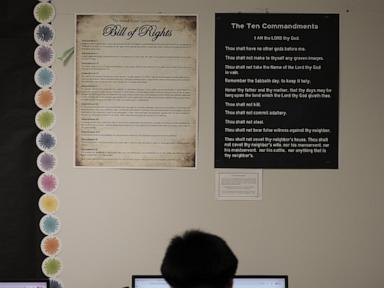
To understand why the current political shift matters so much, you have to look at how aggressive the initial mandate was. During previous legislative sessions, Texas lawmakers championed bills—most notably Senate Bill 1515 in 2023 and follow-up measures in 2025—requiring every public elementary and secondary school classroom to display a durable poster or framed copy of the Ten Commandments.
The rules were specific. The text had to be at least 16 inches wide and 20 inches tall, printed in a typeface legible from anywhere in the classroom, and stripped of any additional commentary or historical context. Schools were required to accept privately donated copies if they did not purchase them with public funds.
Supporters framed the effort around historical heritage rather than religious coercion. Conservative advocates, including state leadership and legal organizations like First Liberty Institute, argued that the Ten Commandments influenced the development of Western law and American governance. They pointed to the 2022 U.S. Supreme Court ruling in Kennedy v. Bremerton School District, which abandoned the decades-old Lemon test in favor of a "historical practices and understandings" standard for Establishment Clause cases. Under that precedent, proponents believed mandating the displays would survive constitutional scrutiny.
Opponents saw it differently. Civil rights groups, including the American Civil Liberties Union (ACLU) of Texas and Americans United for Separation of Church and State, immediately warned that a state-mandated religious display in a compulsory public school setting amounts to unconstitutional religious endorsement. Parents from diverse faith backgrounds—and non-religious families—argued that posting a specific Protestant translation of the commandments alienated students who did not share those beliefs.
How the Electoral Shift Changed the Math
Politics in Texas rarely moves in a straight line, and the recent Democratic wave did not happen overnight. Rapid demographic growth in suburban counties around Austin, Dallas, Houston, and San Antonio steadily altered the voter base. In the 2026 election cycle, Democrats capitalized on voter frustration over public school funding, voucher proposals, and culture-war mandates to flip critical seats in the Texas House of Representatives and secure majorities on several influential local school boards.
The impact on the Ten Commandments mandate was immediate.
First, the legislative momentum evaporated. In a more closely divided Texas House, bills designed to enforce strict compliance penalties on non-compliant school districts lost their path to the floor. Democratic lawmakers, joined by a handful of moderate Republicans representing suburban swing districts, signaled they would block any legislation that tied state education funding to religious display mandates.
Second, control over implementation shifted at the local level. Under Texas education law, local school boards and district superintendents hold significant discretion over how state policies are interpreted, funded, and enforced. When Democratic-backed candidates won seats on school boards in major suburban districts, they immediately paused district-wide rollouts of donated Ten Commandments posters.
Instead of rushing to hang plaques on classroom walls, newly constituted school boards directed district legal counsel to review the displays for potential Establishment Clause liability. Nobody wanted to foot the bill for a federal lawsuit.
The Legal Quagmire Facing Texas School Districts
Even before the political tide turned, Texas school districts were caught between conflicting legal pressures. Similar laws in neighboring states—most notably Louisiana's House Bill 71, signed into law in 2024—triggered immediate federal litigation.
In Roake v. Brumley, a federal district court blocked Louisiana's Ten Commandments mandate, ruling that the law was facially unconstitutional and violated students' First Amendment rights. The U.S. Court of Appeals for the Fifth Circuit, which has jurisdiction over Louisiana, Mississippi, and Texas, became the central battleground for these disputes.
Because Texas sits inside the Fifth Circuit, every legal development in the Louisiana litigation directly affects Texas public schools. School district attorneys across Texas closely tracked the appellate arguments, recognizing that enforcing a state mandate while federal courts questioned its constitutionality exposed local districts to steep legal fees.
Under federal civil rights law (42 U.S.C. § 1988), plaintiffs who successfully sue a government entity for violating their constitutional rights can recover their attorneys' fees from the defendant. For a cash-strapped Texas school district already struggling with inflation and stagnant per-pupil state funding, losing a First Amendment lawsuit means diverting hundreds of thousands of dollars away from teacher salaries and classroom supplies.
The Democratic wave gave local trustees the political cover they needed to prioritize fiscal caution over ideological compliance. By freezing implementation pending final resolution from the Fifth Circuit or the U.S. Supreme Court, newly elected board members framed their decision not as an attack on religion, but as a responsible effort to protect taxpayer dollars from avoidable litigation.
The Overlooked Reality of Classroom Translations
One of the most contentious—and frequently overlooked—aspects of the Texas Ten Commandments debate involves the specific wording mandated by the state. There is no single, universally accepted version of the Ten Commandments across all religious traditions.
The text written into Texas legislation relies heavily on a specific Protestant rendering derived from the King James Version of the Bible. However, Jewish, Catholic, and various Protestant traditions number and translate the commandments differently.
- Jewish tradition identifies the opening statement ("I am the Lord your God, who brought you out of the land of Egypt") as the first commandment, whereas most Protestant traditions treat it as a prologue.
- Catholic and Lutheran traditions combine the prohibitions against false gods and graven images into a single commandment, while splitting the prohibition against coveting into two separate rules.
- Language and phrasing differ substantially between the Hebrew Torah, the Catholic Douay-Rheims Bible, and the Protestant King James Version.
When a state government selects one specific version of a sacred text and mandates its display in public classrooms, it inevitably takes a theological stand. During legislative hearings and local school board meetings, rabbis, Catholic leaders, and minority faith advocates testified that the state's chosen text erased their religious traditions while claiming to represent a universal moral code.
As Democratic representation grew in the legislature and on local boards, these interfaith objections gained institutional traction. Lawmakers representing diverse urban and suburban districts amplified the concerns of Jewish, Muslim, Hindu, and non-religious constituents who felt sidelined by the original legislation.
What Happens Inside the Classrooms Now
Walk into a public school in Texas today, and the reality on the walls depends entirely on geography and local governance. The state is effectively split into a patchwork of compliance.
In rural, deeply conservative counties where local school boards remain firmly aligned with state Republican leadership, donated posters of the Ten Commandments are already hanging in classrooms. Superintendents in those districts view the displays as settled law and an affirmation of community values.
In major metropolitan areas and fast-growing suburbs where Democratic majorities now hold sway, classrooms look very different. Administrators have placed donated materials in storage, awaiting clear appellate court rulings before taking further action. Teachers, already overburdened with curriculum standards and state testing requirements, have largely welcomed the pause, preferring to avoid turning their classrooms into flashpoints for political and religious arguments.
Meanwhile, the Texas Attorney General's office continues to defend the constitutionality of religious displays in public institutions, arguing that historical acknowledgments of religion do not violate the First Amendment. Yet without aggressive legislative enforcement mechanisms or unified cooperation from local school boards, the state's ability to compel compliance across more than 1,200 independent school districts remains limited.
The Broader Cultural Battle Over Public Education
The standoff over the Ten Commandments does not exist in a vacuum. It is part of a much larger struggle over the future and identity of Texas public schools.
Over the past several years, Texas education policy has been dominated by fights over curriculum content, library book removals, gender policies, and state-funded private school vouchers. For many suburban voters, the cumulative effect of these debates created a perception that state lawmakers were more focused on ideological victories than on basic educational outcomes like reading scores, school safety, and teacher retention.
Democratic strategists recognized this vulnerability and built their campaigns around a straightforward message: keep politics and religious mandates out of public classrooms, and focus on funding neighborhood schools. That message resonated strongly with independent voters and moderate parents in counties like Williamson, Collin, Denton, and Fort Bend—areas that historically leaned Republican but have become decisive battlegrounds.
When those voters delivered victories to Democratic candidates, they fundamentally altered the political calculus in Austin. Republicans still hold statewide executive offices and majorities in the Texas Senate, meaning conservative priorities will not disappear. However, the era of frictionless passage for sweeping religious mandates in public schools has hit a wall.
Navigating the Constitutional Gray Area
The legal doctrine governing church-state separation in American schools remains unsettled. When the Supreme Court struck down the Lemon test in 2022, it left lower courts without a rigid formula for evaluating religious displays.
Instead, judges must now examine whether a government action aligns with historical practices at the time of the nation's founding. Legal scholars remain divided on how that standard applies to permanent, state-mandated religious texts in modern public schools—institutions that did not exist in their current compulsory form when the First Amendment was ratified in 1791.
Until the Supreme Court issues a definitive ruling on the wave of state Ten Commandments laws, Texas remains locked in a state of legal and political limbo.
For now, the momentum belongs to the coalition of newly elected Democrats, cautious school district lawyers, and interfaith advocates who successfully slowed the mandate's rollout. By shifting the fight from abstract ideological debates to local governance, fiscal responsibility, and constitutional risk, they proved that even in Texas, statehouse mandates still have to pass through local schoolhouse doors.