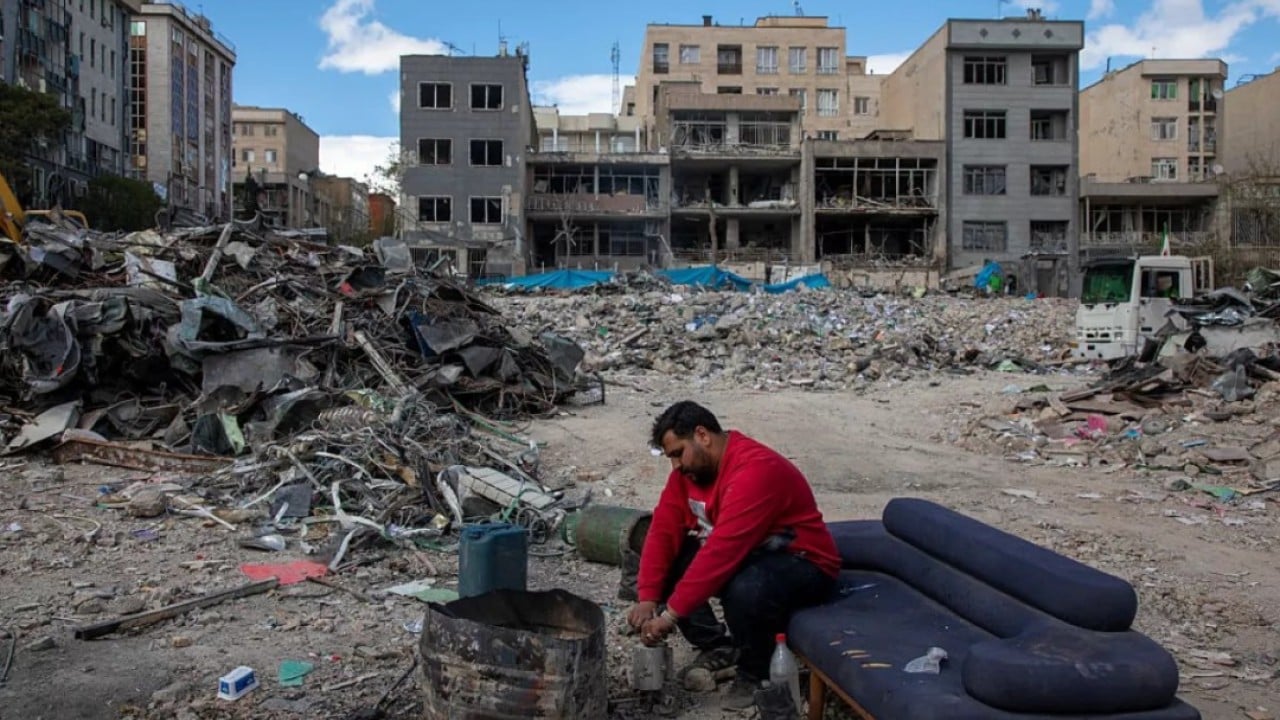
Governments don't wait for economic fires to consume them before looking for water. They act early. Right now, a quiet stampede is happening behind the scenes of global finance. An internal World Bank memorandum reveals that 27 countries have moved fast to activate emergency funding channels since the outbreak of the Iran war on February 28.
The conflict has sent massive shockwaves through global energy corridors and disrupted vital fertilizer shipments, leaving developing economies highly vulnerable. But the real story isn't just that these nations are scrambling for money. It's how they are getting it, and why they're intentionally avoiding traditional lenders like the International Monetary Fund (IMF). For a closer look into similar topics, we recommend: this related article.
The data tells a clear story of a major shift in how sovereign states handle sudden economic shocks.
The Anatomy of a Stealth Run on the World Bank
An internal document viewed by Reuters highlights that 27 nations have initiated administrative procedures to secure rapid-access funding instruments linked to existing World Bank programs. While the institutional paperwork takes time, three countries have already fully approved and finalized these contingent lines. The remaining 24 are rushing through the final bureaucratic hoops. To get more background on this development, in-depth analysis can also be found on Financial Times.
This group is part of a larger cohort of 101 countries with pre-arranged contingent financing facilities. Specifically, 54 of these nations are enrolled in the World Bank’s Rapid Response Option. This framework allows sovereign borrowers to immediately repurpose up to 10% of their undisbursed project balances when a crisis hits.
Think of it as an emergency credit line built into existing infrastructure loans. Instead of waiting months for a new loan package, a government can legally pivot money meant for long-term roads or digital infrastructure to keep lights on and food on shelves today.
Why Kenya and Iraq Represent Two Sides of the Same Crisis
The World Bank memorandum hasn't publically named all 27 nations, but high-ranking government officials in Kenya and Iraq have confirmed their participation. Their contrasting motives show just how weirdly this war is twisting global markets.
- Kenya: The East African nation is facing severe pain from skyrocketing domestic fuel costs. Because global energy distribution is snarled, transport costs are bleeding into everyday consumer goods, threatening severe inflation and public dissatisfaction.
- Iraq: You might expect an oil producer to thrive when energy prices climb, but localized maritime export blockades in the region have choked Iraq’s ability to move its crude. The resulting sharp drop in state oil revenues has left a major hole in its national budget.
From import-dependent African states losing access to affordable fertilizers to major producers cut off from their customers, the war is breaking supply chains everywhere.
The Structural Avoidance of IMF Austerity
The most telling aspect of this economic shift is the absolute lack of movement at the IMF. Last month, IMF Managing Director Kristalina Georgieva stated she expected up to a dozen hard-hit nations to seek between $20 billion and $50 billion in near-term emergency assistance.
That massive wave of applications never happened. Insiders confirm that global requests to the IMF remain incredibly low. Countries are in a firm wait-and-see posture regarding traditional bailouts.
The reason is simple: IMF money comes with structural pain.
Kevin Gallagher, director of the Global Development Policy Center at Boston University, points out that IMF programs routinely demand severe austerity measures as a condition for capital. For a country like Kenya, which has already seen significant social unrest over tax hikes and cost-of-living adjustments, accepting IMF terms is political suicide. Governments are realizing that borrowing from the IMF right now could trigger widespread domestic riots.
The World Bank’s crisis toolkit offers a much friendlier alternative. World Bank President Ajay Banga recently mapped out the institution's overhauled emergency capacity, noting that countries can draw between $20 billion and $25 billion through pre-arranged contingent lines and fast-disbursing facilities.
Furthermore, by reorienting existing portfolios, the bank can scale that response up to $60 billion within six months. Longer-term structural shifts can push total emergency capital availability to roughly $100 billion. Because this mechanism relies on reallocating money that has already been approved, it doesn't trigger the aggressive, sovereignty-straining fiscal mandates that make IMF bailouts so toxic to domestic voters.
Managing the Geopolitical Shockwaves
If your organization or sovereign portfolio is exposed to developing markets, you shouldn't wait for standard quarterly updates to adjust your risk profile. The economic damage from this conflict is spreading far beyond the immediate geography of the Middle East.
Analyze your supply chains for hidden dependencies on agricultural inputs like fertilizer and energy-heavy transport logistics. Track how individual nations utilize the Rapid Response Option. If a country is already burning through its 10% undisbursed project balance just to subsidize fuel or food, its long-term development projects will stall. That means delayed infrastructure, weaker public services, and increased sovereign risk down the line. Keep your capital allocations flexible, monitor local inflation metrics closely, and don't mistake a quiet IMF queue for economic stability.